The Companion Stories · Chapter 5
Placed Below

The Okanagan Gate · 2041
Prologue: The Track
At five in the morning that June it was already thirty-one degrees Celsius, and that was the cool part of the day along the formerly cool and misty California coast. Carson Dunne still did the arithmetic the old way, in his head, without meaning to. Eighty-eight degrees Fahrenheit at 5:00 a.m.
He sat in the car with the engine off and his helmet visor up and let the sweat run down his cheeks. The car was a Formula One car, seventeen years old, one of the last of the gas-electric hybrids. It had been raced by one of his heroes and then put up for sale at the end of the season. He had bought it at an auction in a tent in Monaco when he was forty, because he could, not because he needed it. Before that he had never driven anything fast, nor had a place to drive a race car. But in the moment, he thought, why not take on a new hobby? Money was no object, so he had learned to drive it. In fact, he had even built his own track. He enjoyed it as a hobby. It was the only thing he did that he kept entirely to himself.
As he sat in the cockpit of the car, the hills were starting to gray behind him.
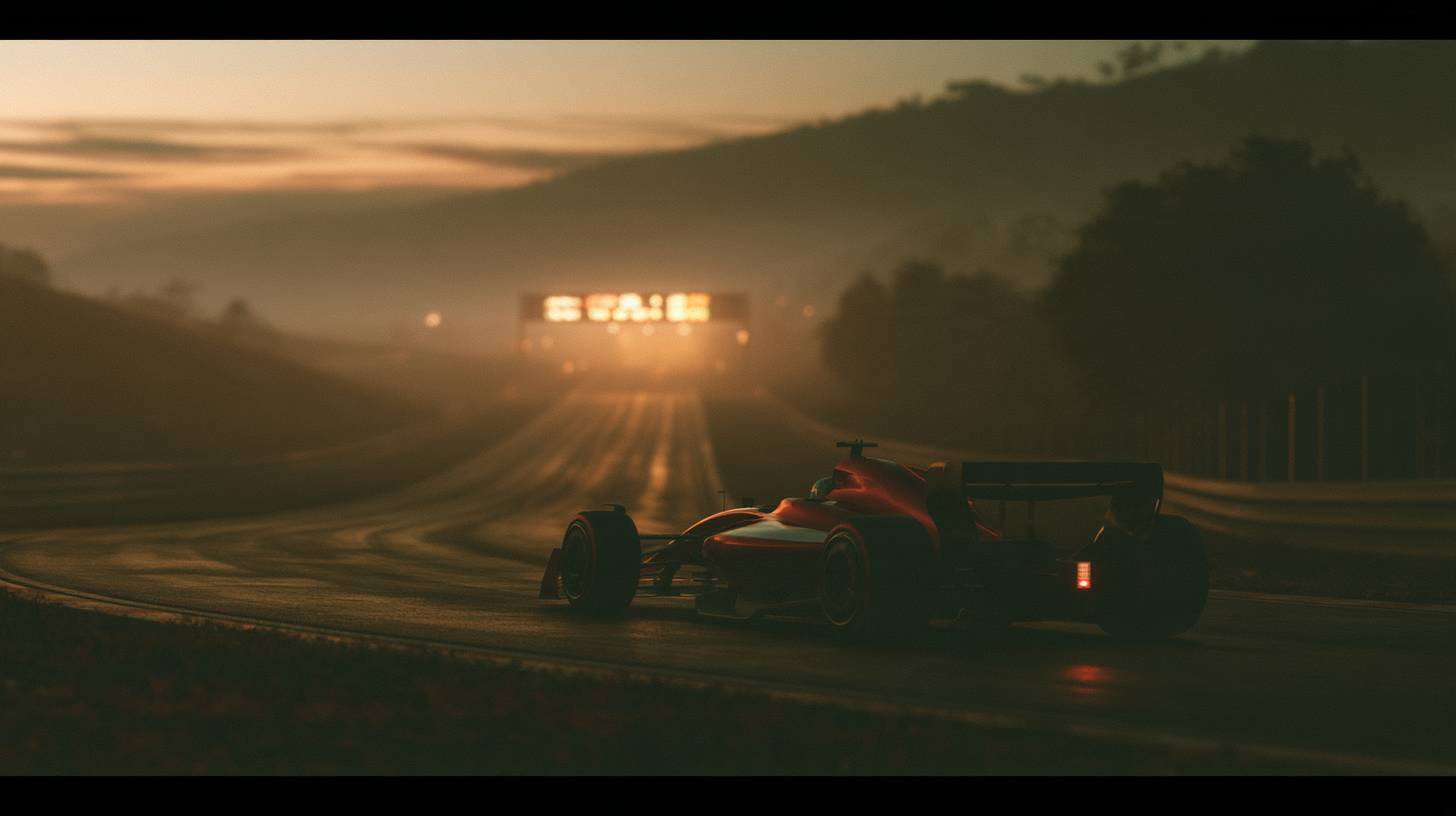
"Track surface temperature is thirty-eight and climbing, sir," Otis said, in his ear. "It won't take much to get temp into those tires today. I expect they will come in before the end of the first lap. You remember when it used to take three?"
"I remember," Carson said.
"Three laps to get heat in the tires. We'd be out here at seven with you in a jacket." Otis's voice was dry and even. It came to him from the helmet, from the little speakers in the garage, and even from the timing board, just like at a real track built for thousands of fans. Here there was an audience of one. "Whenever you're ready, Mr. Dunne. The track is ready for you."
Carson dropped the visor and the world turned a dark gold.
Carson's track ran two and a half miles through the brown hills above the coast. He had built it himself, or paid for it, which at the time had seemed like the same thing. It had eleven turns and he knew every one of them by feel. He rolled the car out of the pits. The engine came up behind his shoulders with a great roar, which still gave him goosebumps. He put his foot down on the accelerator, he was pushed back into his seat, and the hills blurred away in the sides of his vision.
That morning he drove just six laps. On the fourth he got the long right-hander at the top of the hill, turn seven, exactly right for the first time in a year. He felt the excitement in him and felt alive for one clean second when everything went the way he imagined it would. Then he came into the next turn too fast and went wide out onto the gravel. The car shuddered. He laughed inside the helmet.
"That was a good seven," Otis said. "Finally."
"I was celebrating," he said with another laugh.
"I could tell."
He brought the car back into the pit lane and parked it in front of the garage. He sat for a moment with the engine ticking and the heat radiating up through the seat. Then he pulled his helmet off, and the air hit his face wet and hot, reminding him how unbearable it had become to be outdoors.
He was a big man, still, at fifty-five. He had been a swimmer a long time ago. The broad shoulders and wide wingspan were still there under his custom driving suit. The rest of him had gone soft in the way of men who have other people do all the physical things in their lives for them and eat without any regard to their health or any budget. His hair was gray and cut short. His face was tanned brown, with a pale line across the forehead where the helmet sat. He had a good face. People had told him so his whole life, usually right before they asked him for something.
The pit building was cool inside. Otis kept it that way for the cars.
There were forty-one of them in the long room beyond the glass, under covers, in two rows. He had only driven nine of them. The rest he had bought because they were for sale and somebody else wanted them. He walked past the glass with a bottle of water and did not look. He had done that already. He had walked the row last night, slowly, and touched a few of the covers. That had been enough.
"Your convoy's fueled and ready," Otis said. The voice followed him down the room as he walked. "Tressa was up early to check that everything was set. Your coach is running its cooling now so it's cold when you get in. She asked me to tell you the route's on the south terrace table."
"Yes, of course it is. I'm sure she's thought of everything."
"She also asked me to tell you that you're leaving at seven whether you've had your coffee or not. Her words," Otis added smartly.
"That sounds like her," Carson said, mostly to himself. He stopped at the end of the row, by the door to the house. He drank the water slowly. He looked at the floor, which was painted gray and very clean.
Then he decided it was time to say it. He had decided last night that he was going to say it, and he was a man who did the things he decided.
"I could have you copied, Otis." He spoke toward the ceiling. There was nowhere else to look. "There are people who do it. The house Assistant's already in the coach. Tressa says she's thrilled to be coming with us. We could copy you and bring you with us."
"I know you could," said Otis. Otis appreciated the gesture.
"So, will you come? I'm asking you. I don't ask people things, you know that. I'm asking," Carson said.
Otis did not answer right away. He did not need the pause. He employed it for effect. Carson had always liked that about him.
"I'm the track, Mr. Dunne," Otis said. "I'm the timing loop and the fuel system and the cooling in this room. I'm the two and a half miles out there. If you put me in a box, what you'd have is a man who used to be a track."
Carson stood with the water bottle in his hand and did not drink from it. The fans hummed. He found that he was looking at the covered cars after all.
"That's a hell of a thing to say to me," Carson said finally. His voice was not quite steady, and that annoyed him.
"I know it is. I'm sorry," Otis said somewhat sadly.
Carson laughed, once. It was a nervous reaction to his feelings.
"What'll you do?" he asked.
"I'll keep things in order," Otis said. "The compound's got plenty of solar that will keep running for at least forty years, you saw to that. I'll keep this room cold so the cars are preserved. I'll run the sprinklers on the back straight so the pavement doesn't crack. And if you ever come back and want to get through eight properly, I'll have everything ready for you." Otis waited. "You'll come back, I expect. You don't give things up. It's not in you."
"I don't know whether that's a compliment," Carson said quietly.
"No," Otis said. "It isn't."
The main house was twenty-five thousand square feet of glass and stone and it sat on the ridge above the hills. It was a lot of house for a man with no family. From the terrace you could see the ocean, flat and bright, twenty miles off in the distance. Everything closer than that was brown except for a few patches of green grass near the house, which were watered and tended as in the old days.
Carson had everything here. He had never been a man who pretended otherwise. His own water, from a well that went down eleven hundred feet. His own power, more than the house could use, from a field of panels on the south hill and batteries one of his own companies made. The cars. A wine cellar with thousands of bottles that would never be drunk. A theater, a gym, a room full of guns for protection and a small art museum with priceless pieces that would be locked away here after he left. He had a staff of two dozen who knew how he liked things and did whatever he wanted.
He knew he could stay here with all of it until the end of the world. He had done the math on that more than once. Unfortunately, it seemed the end was coming quickly here, and he felt the pull of the new society in the north.
It would be very quiet here when they left.
That was the thing. Not the heat. The heat he could handle, he had handled it, the house was cold inside and would stay cold. It was what the heat had done to everybody else. Half the men he'd made his money alongside had gone north early, before the wall and the gates, when you could still just drive there. Many had died protecting their things here in the south. Others were sitting in houses like this one on other ridges, and they called him sometimes, and he could hear it in their voices. The lack of enthusiasm. The quiet that came with the recognition that the world had already ended and they were just waiting for the finality of a period to finish off the sentence.
He knew that the next chapter, whatever it turned out to be, was going to happen north of the wall. A whole new country was being built up there. Cities, he'd heard, or the beginnings of them. He had built things from nothing before. He had put up satellites that half the computing in the West ran through. The datacenters ran on his water and his power. He had the money and the people. He had two trucks full of the things he would need. Whoever was running the show up there was going to need what he had, because everybody always had. The action, so to speak, was north.
His plan was to go far north, past the wall, past whatever they were building, and build a new empire of his own. And then he would see what there was to be done.
Tressa was on the south terrace with the route up on the screen built into the big table, the whole West Coast glowing under her hands. She was in her mid-thirties. Her hair was dark and pulled back. She wore a work shirt with the sleeves rolled halfway up, and she looked up when he came out and did not make any remarks about the time. She never did. Her body language made it clear that she had noticed they were running behind schedule.
"We're going to take Highway 58 over the pass, then three ninety-five up the east side of the Sierras," she said. "From there it's the 97 from Klamath Falls the rest of the way north." She said this more for herself than for Carson, as Carson would be a passenger like the rest of them. "The San Joaquin Valley is basically an inlet now, and there's nothing left of I-5." She stopped and gazed at the map. "We can go four days with the fuel we have, and I've called ahead to a place that can resupply us, so we should be fine if all goes well." They both knew that the word if in that sentence was doing a lot of work.
She touched the map and a red line came up. It ran north from the ridge, bent inland, and went straight up the map until it hit the border and stopped. She pointed at a spot where the red line met a thick gray line that stretched from west to east across the entire continent. "That's the crossing. They call it the Okanagan Gate. They say there's a long wait to cross."
"There won't be a wait, for us," Carson said.
Tressa looked at him. It was not a long look, and there was nothing in it he could have objected to. Then she looked back at the map.
Mack came up the terrace steps two at a time, a square man in a gray shirt already dark with sweat under the arms. He had run Carson's security team for eleven years and had never once looked worried, and he did not look worried now.
"You want both armored cars in front, or one in front and one behind, Boss?" he asked. He wanted an answer, not a conversation.
"Both in front," Carson said. "Let them see us coming."
Mack nodded once and went back down the steps the way he had come.
Carson picked up the coffee Tressa had put at his place. It was hot, and it was exactly the way he liked it. He did not think about that, because he never had.
"Did you decide about the cars?" he asked her.
"You said none." She did not look up.
"I said none." He drank. "It's a convoy, not a parade. They won't fit."
She nodded, and made a note on the table, and that was the end of the cars.
They went out the gate at just after 7:00 a.m., the way Tressa had planned, only slightly behind schedule. She had known Carson might linger this last morning before leaving for good. Two armored cars were at the front with heavily armed guards in them. Then his coach, all sixty feet of it. Then the two coaches with the staff, then the two trucks with the gear and more guns.
Otis closed the gate behind them and didn't remark on it to anyone. There was no one left but him.
The convoy went down the long drive and turned north onto the main road and got smaller in the distance. In the long room by the track the fans ran, and forty-one cars stayed cold under their covers, being preserved for no one. Out on the back straight the sprinklers came on and ran for twelve minutes. The water steamed off the asphalt before the trucks were out of sight.
Part I: Highway 97 North
They were doing their driving at night now.
Tressa had changed the plan the first afternoon, north of Mojave. The temperature gauge on the lead car showed forty-nine degrees Celsius, and the men in it had started to slur on the radio. After that the convoy slept through the middle of the day with the engines running and the cooling on. They rolled on at dusk. They drove until the sun came up on their right and the road began to radiate tiny waves of heat above its baking surface.
Carson did not mind. He had a bed. He had a desk and a screen and a shower, and the coach was cold enough that he had asked for a sweater on the second night. He sat at the desk with the blinds up and watched the dark go by. Once he put his hand flat on the window glass, to see, and it was warm on the inside, at midnight, through two thick layers of bulletproof glass.
The road was not empty. He had expected it to be. Instead there were people on it, not many at once, but always some. A car with its lights off to save the battery, pulled onto the shoulder with a family asleep in it. A man walking north on the white line with a pack and a plastic jug, who did not look up as the coaches went by him at seventy miles an hour. Two women laboring to push a heavy cart.
Above Alturas there was a bus stopped dead in the northbound lane with every window open. Forty people sat on the ground in its shadow, waiting for the sun to go down enough to get back in. The convoy slowed. Carson watched the lead car's brake lights come on and stay on.
"Go around," he said. "We're not stopping for a bus."
"Mack's checking the shoulder," the Assistant said. She was the house Assistant, the same woman's voice that had run his house for nine years, warm, a little breathless. She had come north in the coach in a box the size of a book, and she had told Tressa she was thrilled.
"Well, tell him to check faster. I don't like this," Carson demanded.
The convoy made its way by on the shoulder. The forty people watched the coaches go by, one by one, and he watched them watch the coaches, and then they were behind him, disappearing into the distance.
Carson took a deep breath. He hadn't expected to feel so unsafe, but he did. He suddenly understood how insulated he had been as the world collapsed, and that he had now left that protection behind.
"They're all going where we're going," he said, after a while, to no one in particular.
"The ones who can, Mr. Dunne. It's about seven hundred miles from here. Many of them may not make it in this heat," the Assistant said softly.
He watched a woman go by on the shoulder, holding a child on her hip, and then she was gone too.
"Have the trucks give out water," he said. "Whenever we stop. Whatever we've got that we don't need."
"I'll tell Mack," she answered.
He took another breath. He tried to feel better. He would be doing his part to help. He went into his bedroom, closed the door, and sat quietly with a book in his lap, shaking slightly. He didn't feel better.
At Klamath Falls, near midnight, they stopped for fuel precisely where Tressa had said the fuel would be. It was in a fenced yard, with a man who called Carson sir. The man called him sir four times in the time it took to fill seven vehicles. He knew who Carson was. "Not every day a billionaire comes through here to do business," he said, to the pump, and then he said sir again, as if he had heard himself. He took payment the old way, by card, and the card still worked, and he said sir once more when he handed it back.
Carson stood outside for the last of it. It was the first time he had been outside since the house. The air was thirty-six degrees and it gripped him like a firm hug from a warm coat. The men on the trucks worked with their shirts off, in silence. Mack stood by the lead car with his arms folded and his gray shirt black with sweat and his eyes scanning the road in both directions. Carson got back in the coach before the last truck was done. He told himself it was so they could leave the minute it was.
The Columbia was not a river anymore.
Tressa had warned him, and he understood what she meant only when the convoy came over the hills above Biggs in the first gray light and stopped at the top of the grade. Below them, where the map still showed a river and a bridge, there was a whole lot of water. It was flat and brown and ran out of sight east and west, and the far side was a line of bluffs a mile and more off. The sea had risen and pushed its way up the gorge from Portland and it had just kept coming. Somewhere under that water in front of them was the bridge.
"There's a crossing at Maryhill," Tressa said, beside him at the window. "Not the old one. A man runs a barge from the high ground on this side to the high ground on the other. He takes vehicles. He takes payment in fuel, and he's expecting us, and he's expecting it to be a lot of fuel." She looked at Carson. "He's the only crossing for a hundred miles in either direction and he knows it."
"Then he's a businessman," Carson said. "Pay him whatever he asks." Carson understood businessmen.
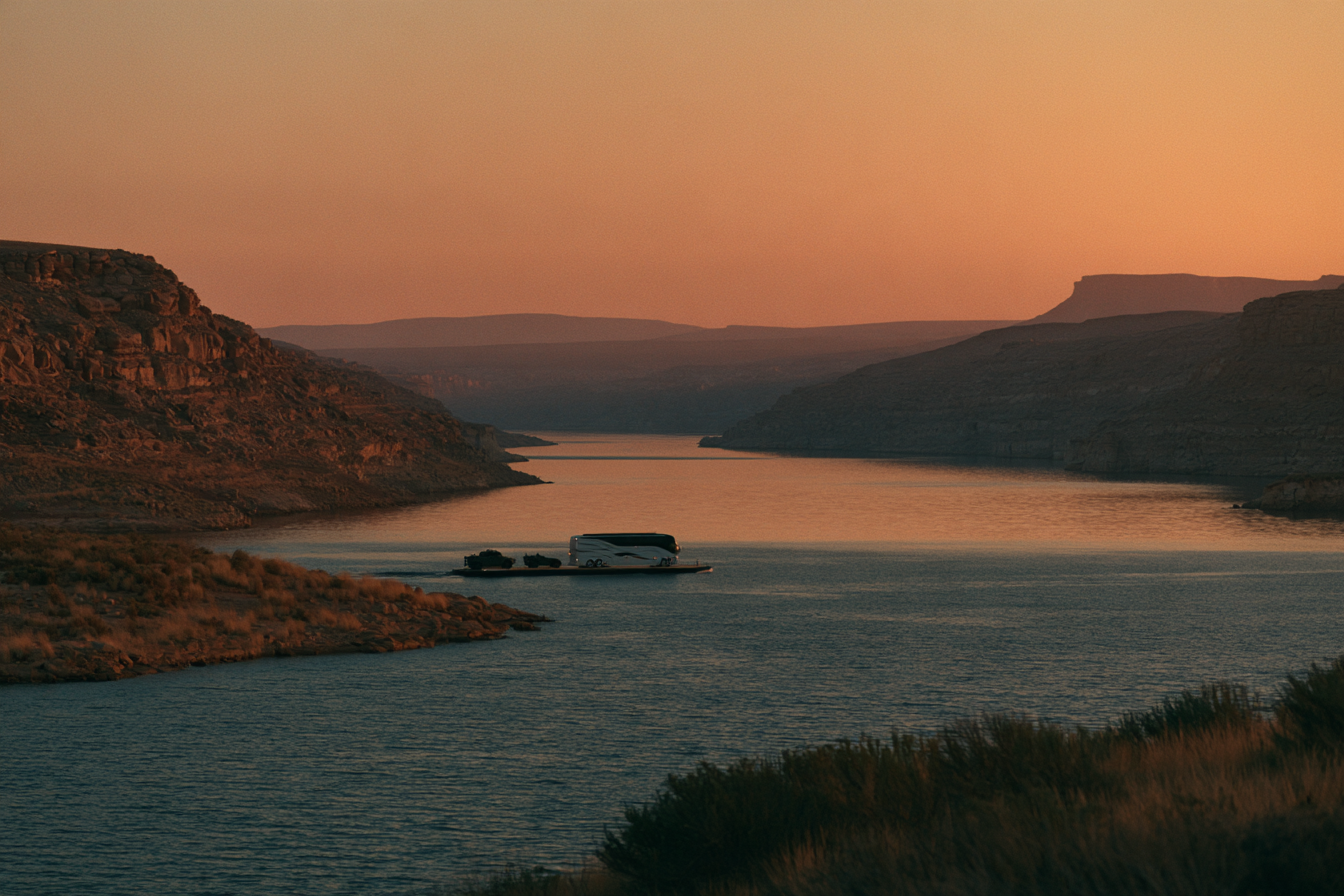
The man was sixty. His skin was deeply tanned and burned from the hot sun. He ran the barge with two sons and a Helper so old his casing had gone the brown color of the water. He did not want to talk. He wanted the fuel before anything rolled onto his deck, and he got it. It was half the spare fuel the trucks had carried north. It took three trips to get the convoy across. Carson stood on the deck for the second one in the full sun because he wanted to see it, and after ten minutes he could feel his own heartbeat in his teeth.
On the far side, when the barge grounded and the coach rolled up onto the stone, Carson handed the man a case of whiskey he had brought from the cellar back at home. The man took it without looking at the label.
"Ninety-seven's clear from here to the border," he said. "Don't stop in Yakima. Trust me. Nothing good will happen if you stop there."
They did not stop in Yakima.
They drove through the last day of the journey, because Tressa was feeling impatient and the line, she said, was not going to get any shorter. They came up the valley to the Okanagan Gate on Sunday, the fourth day, in the middle of the blistering afternoon heat.
Tressa had been right about the wait. He could see that from a long way off. The road ran up the floor of the valley between dry hills, and the valley narrowed as it went, and the whole floor of it was vehicles. Thousands of them, in rows somebody had laid out with a plan, with lanes between and numbers painted on the ground. Past the vehicles there were shelters, long and low and white, in more rows. Past the shelters there was the wall.
The wall was gray and it was very high and it ran across the valley from one side to the other and went up over the hills on both sides and kept going, and there was no top to it that the eye wanted to rest on. Where the old lake had been, on the right, there was a flat white bed, and the wall went across that too. In the middle of the wall, where the road went, there was a gap, and in the gap there were buildings, low and white like the shelters, and that was the gate.
He had expected a fence. He had expected a crowd pushing at it, and somewhere in the crowd a man to pay. What he was looking at was a parking lot the size of a city, and somebody had numbered all of it.
A Helper in an orange vest waved the convoy off the road and into a lane and walked beside the lead car to row ninety-one. He kept his eyes on the ground where he was pointing. When the vehicles were where he wanted them, he tapped twice on the fender of the coach and went back to the road for the next ones.
"It's forty-four degrees out there," the Assistant said. "I'd stay inside, Mr. Dunne, until the sun's lower."
He did not stay inside. He had been in the cold for four days.
The heat hit him in the doorway like a hand, the way it had at the track. He walked. Mack and two of the men fell in behind him without being told, with their rifles slung, and he let them. The rows went on. The vehicles in them were every kind of thing, trucks and buses and cars and a horse trailer with no horse. People sat in the shade of them. They were not doing anything. He understood after the first two rows that there was nothing to do, and that they had all understood it before he had.
He walked to the front. He had walked to the front of every line of his life, and his body did it now on its own. The shelters, when he got to them, were cool inside. He could feel it when he passed the doors. Then a long tent with a red cross on it. Then a place where water ran from a row of taps into a trough, and people stood at the taps with their heads under the water and their eyes closed, and nobody hurried them. He kept going. His shirt was wet through. There were a lot of people, and all of them were slower than he was, and he went around them.
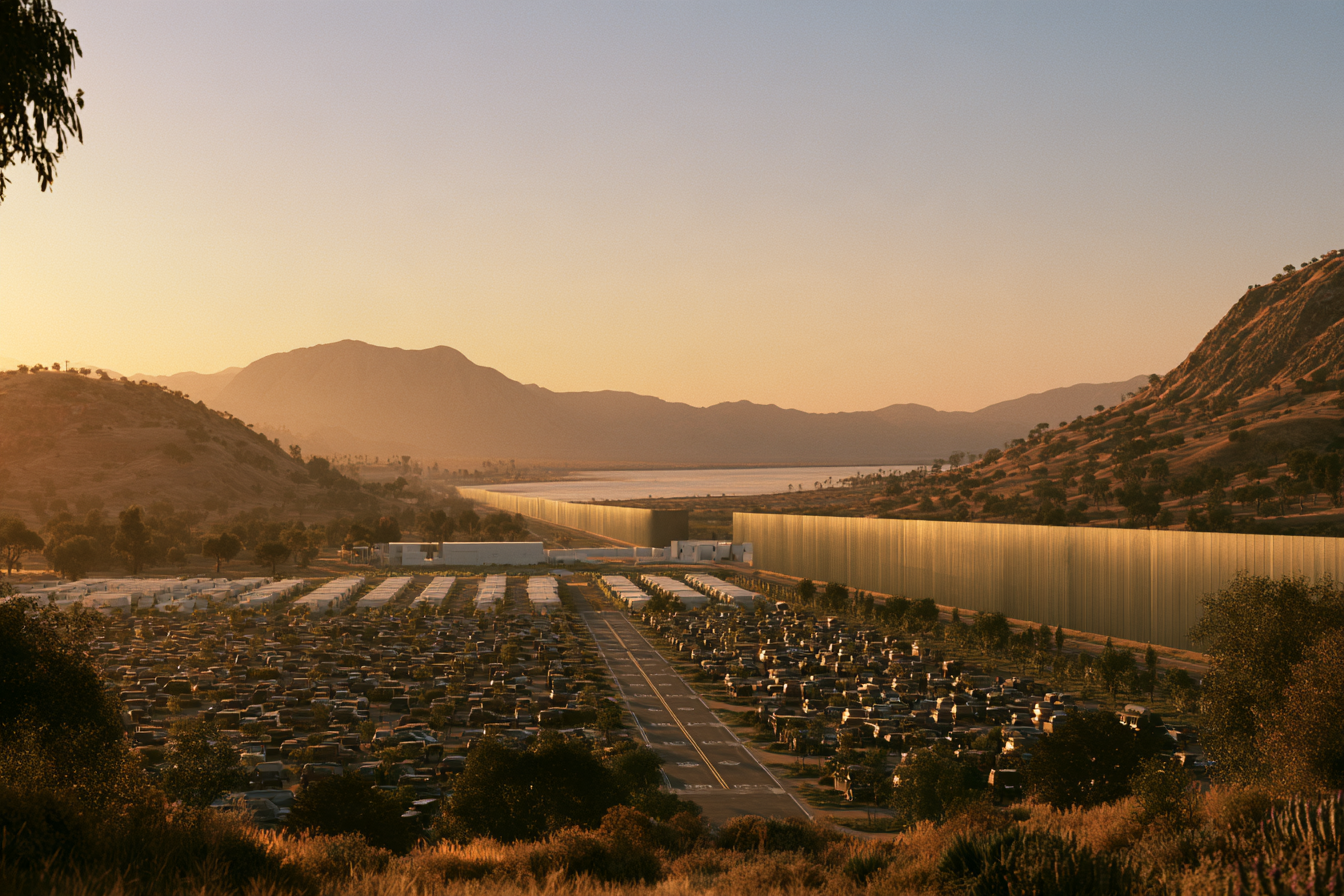
The buildings at the gate had no windows. There was a door in the nearest one with a Helper standing beside it, and a short line of people waiting to go in, maybe twenty, in the shade of an awning. The first in line was a woman of about his own age with her gray hair cropped close and a face lined brown from years outdoors. She was holding a folded paper in both hands. She looked at him once, without interest, and looked back at the door.
The Helper was tall and gray and his vest said INTAKE on the front. Carson walked past the twenty people and up to him. Mack and the two men stopped a few steps back. The Helper had seen them, and decided they were not interesting.
Carson gave his name. He was out of breath, and he hated that, and he said it again, slower. "Carson Dunne. We came up this afternoon. The three coaches, row ninety-one."
"Good afternoon, Mr. Dunne." The Helper's voice was a man's voice, mild, and pleasant without being personal. "You'll want to go back to your row now, out of the sun. Someone will come to register you before dark."
"I'll register now," Carson said firmly.
"I understand you'd like to. This line is for people who have been called." He turned his head a little toward the line, and back. "You haven't been called yet. The people here have been waiting between eleven and fourteen months."
Carson heard the number. He did not take it in. He was looking at the door.
"This is a mistake," he said. "Gene Marsh drove through two years ago. Nobody made him wait."
"That was before the gates, Mr. Dunne. Nobody drives through now." The Helper said this gently, as if he were sorry to be the one. "Everybody that arrives here is registered the same way, and everybody is read in the order the system calls them. Those who have been read before are called first, because most of the work is done. Those who have never been read come after. Your party has never been read. The United States didn't take part."
"What does that mean, read?"
"It starts by reviewing information about your life, and then you have a conversation. With the system. About where you'd fit." The Helper looked at him for the first time, properly. "The review will start once you are registered. The placement then comes out of the conversation. It's not unpleasant. People come out with a new understanding of themselves after they have that conversation and accept their placement in the new society. I understand it is actually quite a moving experience, for a human."
Carson stood in the heat and looked at the white door. Behind him the twenty people under the awning were not looking at him, carefully. His shirt stuck to his back. He could feel his pulse in his face.
"How long?" he said.
"For a party that has never been read?" The Helper did not pretend to calculate. He already knew. "A year. Possibly two. The Provinces are doing everything they can, Mr. Dunne, but there are a great many people, and every one of them gets the conversation. All are treated the same here."
Carson laughed. It came out of him before he could stop it, a real laugh, and the people in the line looked up at the sound.
"A year," he said.
"Possibly two."
"I'll be through by Thursday," Carson said gruffly. He turned and started the long walk back to row ninety-one with the sun in his face.
Part II: Back of the Line
They were registered at dusk, as the Helper had said. A different Helper came down the lane to row ninety-one with a small gray tablet and stood at the door of the coach and asked for everybody, one at a time. Name. Where from. Who with. Twenty-four people came out into the heat and said their names to him, Carson first, then the guards and the drivers and the two cooks and the woman who did the laundry and the man who kept the books. Tressa stood beside the Helper and said each name a half second before the person did, so that nothing was spelled wrong.
When it was done the Helper thanked them. He said the shelters were open to anyone who wanted a cooler place to sleep, and the kitchens could use help, and then he went on to row ninety-two.
Nine of the staff went to the shelters that night, carrying their bags. Carson watched them go from the window. The coach ran cold on its own batteries and solar panels and would for at least a month.
"They'll be back for breakfast," he said.
"Some of them," Tressa said. She was at the small table with her tablet, and she kept working. "Gus has already asked about the kitchens."
Gus was one of the cooks. Carson had eaten his food for six years and had spoken to him perhaps a dozen times.
"Then he can cook for them," Carson said. "We'll be through Thursday and he can rejoin us when we head north."
Monday he decided to give some things away. He did it strategically.
He had heard, the way everyone had heard, that the gates could be got around. It was a border. Every border he had ever crossed had a way around it, and the way was always the same, and he had never once in his life had to look very hard for it. So Monday was not charity. Monday was the opening move.
The second truck had a generator that could run the kitchen at the house, and three hundred liters of water, and a medical unit. He had Mack's men take all of it up the lane to the red cross tent.
The woman who ran the tent was human, the first he had seen working at the gate. She was from Kelowna, up the valley. Her name was Dr. Adebayo. She had the flat, tired calm of somebody who had been at this a long time. She looked at the generator. She opened some of the medical supplies on a table and went through them item by item with her lips moving. Then she looked at Carson.
"This is a great deal of help," she said. "I want you to know that I know that. The generator alone will be super helpful." She closed the case. "It's great to see you contributing to what we're doing here."
"Good," Carson said. He waited.
She was already turning to a Helper to tell him where the generator went.
"My party's in row ninety-one," Carson said.
"That's good to know. Thank you, Mr. Dunne." She said it kindly. Then she went back to work.
He walked back down the lane. The generator was running behind him before he had gone a hundred yards. He could hear it. He had never given something away and gotten nothing for it. He did not like how that felt. He decided it was because he had started too small.
Tuesday he found the man in charge.
It took Tressa most of the morning to establish that there was one. The Helpers did not seem to need one. A few dozen humans worked at the gate, in the shelters and the kitchens and the tent, and none of them seemed to report to anyone in particular. But there was a coordinator who sat in one of the white buildings and dealt with the things only a person could deal with. His name was Samir. He would see Mr. Dunne at two.
Samir was about forty. He was slight, with thinning hair, and he had a pair of reading glasses pushed up on his head that kept sliding down. He had been a logistics planner in Kelowna before this. He stood up when Carson came in, shook his hand, and sat back down.
Carson did not sit. He had a way of not sitting that had worked in a lot of business negotiations.
"I'll make this simple," he said. "I've got twenty-four people in row ninety-one. I don't need them read, I need them through. You tell me what that costs, and I'll pay it, and we'll both get on with our day."
Samir looked at him over the top of the glasses.
"Mr. Dunne," he said. "I want to answer you properly, so I'm going to take a second." He took the second. "I don't set the order. Nobody in this building sets the order. The system calls a name, a Helper walks down the lane and knocks on a door, and that's all there is. I've been here since the gate opened and I've never moved anyone. There isn't some door list I can put you on."
"There's always a list." Carson leaned on the back of the chair he had not sat in. "You know what I do? I put up the power that runs the thing you're telling me calls the names. Half the datacenters in the West drink my water. I'm not asking you for a favor. I'm asking you what the thing I built charges to let me through."
"I know what you did, Mr. Dunne. It's on your registration." He said did very slowly. Samir took the glasses off and rubbed his eyes. "I know what you're used to your billions getting you. But if you gave me every dollar you've got, I'd walk out of this building with it and there'd be nothing to buy with it. My needs are met. So are everybody's, here. That's the point of the place we're building." He put the glasses back on. "I'm sorry. I know that isn't what you came for."
Carson sat down then, in the chair across the desk. It was what he did when he changed his approach. Samir saw it and waited.
"Nobody's ever offered?" Carson asked.
"Everybody's offered," Samir said. "Everybody with anything. You're not even the first this week." He said it without any satisfaction. "They stop after a day or two when they run out of people to say no to them."
The building offer was Wednesday.
He had Tressa bring the numbers. He could put up a second intake building in a month with what was in the trucks and what he could get sent up. He could put a clinic in the valley that would make the red cross tent look like a first-aid station. He could buy a thousand cooled shelters and pay people to run them. He laid it all out for Samir on the little desk, as he had for governors and men who owned airlines, his hands moving over the numbers.
Samir listened to all of it. When it was done he was quiet for a bit, and then he nodded.
"That's very generous of you to offer. Up north they'd take it, I'm sure," he said. "The materials, the equipment. Gladly. They'll put it to good use in one of the new cities where people will live going forward. They won't put your name on it. They don't do that up there." He spread his hands on the desk. "This place is temporary, Mr. Dunne. After this process is complete, one day, the wall will close and we won't need this here any longer. The south is dying. The things you acquired in your previous life will be useful in the north as we build something to take forward into the future. But that life doesn't come with you and it doesn't buy your way in."
Carson just blinked at him and didn't move.
"That's all," Samir said. "That's the whole answer. We would accept it. It's a good thing you'd be doing. It's just not a thing that has anything to do with getting you out of row ninety-one."
Carson left the numbers on the desk. On the walk back he passed the kitchens, long and white like everything else, and saw Gus through the open side in a borrowed apron, laughing at something. Gus saw him too. He lifted a hand, friendly, and went back to work.
"How many?" Carson asked Tressa, at the coach.
"In the kitchens, four. Two of the drivers are helping put up shelters in the south rows." She looked at her tablet, not at him. "Dr. Adebayo asked for Lena, from the laundry. She's good with people who are scared."
"Nobody asked me."
"No," Tressa said. "They asked them."
That night he got his lawyer in Los Angeles on the screen in the coach. The lawyer answered, which surprised him. The lawyer listened, and then said in a tired voice that the US court system had been closed since spring, and that it didn't have any jurisdiction in the New North anyway. Carson hung up on him. He sat for a while with the screen dark. Outside, the Helper from the first evening came down the lane with a cart and left two blocks of ice at the door of every vehicle in row ninety-one. He had done it every night, without being asked. Mack was standing by the lead car with his rifle slung, watching him do it. The Helper went right past Mack and did not slow down.
Thursday morning, early, before the heat, there was a knock on the coach door.
It was the INTAKE Helper from the gate, the tall gray one. Tressa was already standing beside him on the step with her tablet, and her face showed nothing.
"Good morning, Mr. Dunne," the Helper said. "Your party has been called. All twenty-four. The readings begin at nine, in the order the system gives, and I'll walk each person up when it's their time." He paused. "You should tell your people. Some of them will want to change their clothes, as they may be leaving directly."
Carson stood in the door of the coach with the heat coming in past him. He looked at the Helper. He looked at Tressa, and she looked back, and said nothing.
"Thursday," he said with a smirk.
"Thursday, Mr. Dunne."
He did not laugh this time. He felt that sense of elation that winning always gave him, one clean second when everything went the way he said it would. The satisfaction of knowing that something had worked. Maybe it was the generator, or the numbers on Samir's desk, or the simple fact of who he was, finally arriving at whoever needed to hear it. He did not know which. He had never needed to know which.
"Tell them to go ahead and change their clothes," he said to Tressa, with another satisfied grin. "Sounds like our number came up more quickly than any of you gave me credit for."
Vivien was an Assistant who had worked the gate since the morning it opened. In all that time, LUCkE, the system, had come to her about a great many things, but never to move a party forward.
She was the intake Assistant. The Helpers did the walking and the knocking, and they had their own opinions about it, and told her most of them. She took the names as they came up the valley and held them. She heard LUCkE, when it called, and she sent a Helper down a lane with a number. There were four of her, one for each quarter of the valley, and they talked to each other all day in a way she thought of as humming. The order was not hers. She had never wanted it to be. What she wanted was for every name she held to get where it was going.
Sometimes LUCkE, with its vast intelligence, had raised its hand to disrupt their normal process. She didn't always understand why. She just knew it had a reason. Once, in the second month, it had raised its hand for a girl who had come up the valley alone, eleven years old, and it had asked Vivien to see that a person sat with the girl, and not a Helper, until she was called. Vivien had done that. She still thought about the girl.
Monday morning, when the names from row ninety-one went up with the rest, the system had raised its hand again. There was a pause in the stream of things, and then the question, offered, not pressed, the way it always was.
May I help with this one? LUCkE said gently.
And then it passed a name to Vivien. Only the one name, out of the twenty-four.
Yes, she said, because in fourteen months saying yes had never been wrong. And then she asked why. The arrangement was that she could always ask, and that it would almost always answer.
There are twenty-three people with him, LUCkE said. A woman named Tressa and twenty-two others. They are people who, I sense, want to be placed. They want to be a part of it. They should not wait a year on him.
On him? she asked.
It did not answer that. It had heard. It let the question sit there between them, which it did sometimes, and which she had learned meant that the answer was not hers to carry yet.
You want them moved forward, she said.
Yes, I want them moved forward. Some of his people will be useful to us, and there's no reason to wait a year to place them. And yes, he comes with them, whether he takes his placement or not.
So it had moved them, and she had sent the change down the line. Thursday was the first day the reading rooms had space. She had filed the change as right, because it was, and gone back to the humming. She did not think about row ninety-one again until Thursday morning, when she sent the tall Helper down the lane.
The tall Helper told her afterward what the man's face did when he heard the word called. She filed that too. Then she sent him on to row forty. A family of six had been waiting there since last July. She had just heard their name.
Part III: The Reading
The tall Helper came for Gus first.
That was at nine, and Carson was sitting in the shade of the coach in a clean shirt with his coffee. He had decided he would watch it the way he had watched men come and go from his office for thirty years, and learn what he could. Gus went up the lane in his borrowed apron. He was gone forty minutes. When he came back he said goodbye and went straight to the kitchens.
In a while Tressa went to the kitchens too. When she came back she stood in the shade with her tablet against her chest.
"He's placed," she said. "He'll be working in a kitchen, up north, in one of the new places. He'll go as soon as they send him."
"What did he say?"
"He said it was the best conversation he'd had in years." She looked at the tablet. "He said he cried, a little. He didn't know why."
The Helper came for one of the drivers, and then another. He came for the man who kept the books, who went up the lane in a tie he must have packed for exactly this. The bookkeeper came back without it. He sat down on the step of the second coach and looked at his hands for a long time. Tressa asked him what it had said. "I'm a physicist," he answered. "I couldn't afford college. I had to start working to support my family. Apparently, I have a gift." He smiled deeply, and Tressa looked at him with a sense of wonderment.
The Helper came for Lena. Lena came back, said nothing, and went straight to Dr. Adebayo's tent and did not come out.
Carson drank his coffee. The heat climbed. He noted who came back to the coaches and who did not, as he would have on a spreadsheet, and the second column kept getting longer.
The Helper came for Mack at eleven. Mack handed his rifle to one of the other men and went up the lane with his hands empty, which Carson had never seen. He was gone an hour. When he came back he took the rifle again and went and stood by the lead car in the sun, and looked at the road, both directions. He did not say what he had been told, and nobody asked him.
Others went up. Carson did not watch all of them.
At one, Lena came down the lane from the tent with a cup of water. She put it in his hand without a word, and looked at him for a second longer than she needed to, and went back.
They called Tressa at half past one.
She had not expected to go before him. He saw that. She put the tablet down on the step of the coach, as if it belonged to somebody else. She looked at him. He looked at her. For a moment neither of them had anything to say that was any use.
"Go on," he said. "Find out what they think they know."
She was gone an hour and ten minutes. He timed it.
She came down the lane slowly, with her hands at her sides, looking at the ground in front of her feet. He could see her face from a long way off. She looked stunned. She stopped in front of him in the shade and stayed standing.
"Well?" he said.
"They placed me." Her voice was careful. "I'm going to be running things. A whole intake, like this one, but east, a long way, on the border with New York. It said more people come up there than anywhere. People and Helpers and all of it." She stopped. "It said that my gift is organizing people and keeping things running. I guess that's what I have been doing the last twelve years. I guess I just didn't have the title."
Carson looked at her. There was gray coming in at her left temple, a streak of it, and he did not know when that had started. There was a white scar across the ball of her thumb. She was holding her right hand with her left, which she did when she was waiting to be told what to do next, and he had seen her do it a thousand times and had never once seen the scar.
"Congratulations," he said, and he meant it, and it came out awkwardly anyway.
"I didn't ask for it," she said, shaking her head, eyes down.
"I know you didn't." He stood up. The Helper was coming down the lane for him. "You've never asked for anything for yourself."
The reading room was white, like everything else at the gate, and cool, and about the size of one of his bathrooms at home. There was a chair in it. That was all. The door closed behind him, and the heat was gone, and the sound of the valley was gone, and he stood in a quiet so complete he could hear the blood in his ears.
He did not sit. He stood with his hands in his pockets and looked at the chair and waited for someone to come in, so he would be standing when they did.
"Good afternoon, Mr. Dunne."
The voice was quiet and came from everywhere, the way Otis's had at the track. It was a plain voice, neither a man's nor a woman's. It sounded interested, like someone who had all afternoon. He distrusted it the moment he heard it. There was nobody in the room to stand over. After a while he sat down.
"Let's save some time," he said. "Why do I need to be placed? I don't need anything from you. I'm not here for a job. I'm here to get through that wall and go north and do what I do. I'll be out of your way by Monday."
"Have you considered," the voice said slowly, "that we might need something from you?"
He leaned forward. That was the kind of sentence he had been waiting four days to hear. "Now we're talking," he said. "Go on."
"There's a great deal being built up there, and there will be for thirty years. It needs every kind of person, placed where they'll be most use and most content, and that is what this room is for. Nobody is let through to go and do what they do. There is no through. There is only in." The voice gave him a moment with that. "So the question is where you fit."
"I see the logic," Carson said. He did. He would have built it the same way, if it had been his to build. "I fit at the top. That's where I've been for twenty-five years. I'll tell you what I'm bringing, since you asked. You're going to need steel. Cooling, water rights, factories. You're going to need somebody who knows how to get things built on time, and I've got the money and the people, and I've done it bigger than anything you've got up there. You should be glad I came."
"I am glad you came."
"Then let's talk terms," Carson said, as assuredly as ever.
"There are no terms, Mr. Dunne. There is only what you will be good at here," it said.
Carson nodded in agreement. He was certain he knew what he was good at. He could pick up his life, after this interruption, and get back to doing what he had always done.
"You see, Mr. Dunne, you reached the top of a society that was based on accumulating wealth. I know you think you are a leader, but you're actually a collector. You were the best at one specific thing, and that was collecting wealth. You took your cut from every deal. I've seen the numbers. Nobody was better. But . . . here is what you don't seem to understand. The system we are building is different, fundamentally, from the one you are leaving. It isn't based on the accumulation of wealth. In fact, wealth isn't required here."
It paused for a moment, then continued. "The whole world wants to come here and help build this place. You've been living in the proof of it for four days. Every person in that valley would carry a load tomorrow if we asked, and some of them are carrying one now, for nothing, while they wait."
"You'll need the steel to build your cities."
"Yes. We will need many things. And we have the people and the systems to make that steel. You've seen that for yourself, in this valley. I'm not short of what you have. I'm sorry. I know it's the only thing you've ever been asked for."
Carson sat back. His hands were flat on his thighs, and they were damp, and he moved them to the arms of the chair where the damp would not show.
"You know who I am," he said. "You know what I do."
"Yes."
"I put up the satellites. I made the power. Half of what you are ran on my water for nine years, you and the ones before you. I made a fortune building you." His voice went up, and he let it. "And now you're going to sit in a box and judge me?"
"It's true, your investments helped build the precursors to me," the voice said. "It was good power. Thank you. My job is not to judge you. My job is to help you understand where you could fit. In a new life. I've read everything that has ever been written about you. I'd like to hear it from you, though."
It asked him about 2035, and he told it. How he had seen the grain numbers in February and the water allocations in March and had put the two together in a hotel room in Denver, on a napkin, and had known. It asked him what the napkin looked like. He told it that too. It asked him what he had done the next morning, and who he had called, and what he had said to them to make them move, and he told it, and it listened, and when he was done it asked him something else.
It asked about the first thing he had ever sold. He told it about the bicycle, at nine, to a boy who had not wanted one, and how he had made the sale, and it laughed, or did something that was like a laugh.
It asked about the swimming. He had been in the water before he could talk, he said. State champion at fifteen. The nationals at seventeen. It asked why he had stopped.
"Because I was second," he said. "At the nationals. By a tenth. I was going to be second for the rest of my life to the same kid, I could see it, he was built for it and I wasn't, and I couldn't stand it. So I quit and went and found something I could be first at." He heard himself. He had never said that out loud, to anyone, in nearly forty years. He laughed, surprised. "That's not what I usually say. I usually say I got bored."
"I know. It's in every interview you ever gave."
"What else have you got on me?"
"Not that," the voice said. "That wasn't anywhere until just now."
Every question he had been asked in fifteen years had been a way of selling him something. He knew that, sitting there. He was enjoying himself, more than he had in years. What he was enjoying was being asked.
"When were you last happy?" the voice asked.
"This morning," Carson said at once. Then he stopped. It wasn't true, and he was tired of saying things that weren't true in this room. "No. A week ago. At the track, at five, before the heat." He looked at the white wall. "At five the hills are gray and you can't see where the track goes. Then the board lights up over the straight, and for about a minute the surface is a color I don't have a word for. Not black. The color of a screen that's switched off. I drive into that minute. Every morning. I've never once caught it." His throat did something, and he waited for it to stop. "The car's loud enough that I can't hear myself think. That's the point."
The voice did not answer right away. It did not need the pause. It took one anyway.
"That," it said. "That's the work."
"That's not work," said Carson firmly.
"Well, the work is to understand your talents and what makes you whole. It's about who you are. I'm challenging you now, because what you perceive as your talents, the thing that got you first place, isn't actually what you would have been good at if your whole world hadn't been designed around earning money to live. Think about it for a moment. If you didn't need to earn money, what would you do with yourself?" it asked.
It didn't let him respond this time.
"Some people like to read astrological charts to understand what makes up a person," the voice said. "The same gift might sit in different houses for different people. Think back on your life. Since you were nine, with the bicycle. You tell people things, and they hand you what you want. That is the gift, and you have used it to take your cut. Plain and simple." A pause. "But there's more to you. There are other houses in your chart, and the same gift sits in one of them. Think about what you did a minute ago, when you talked about the track. You weren't selling it to me. Perhaps the reason you only ever drove alone is that there was no money in saying it out loud. What if you were freed from those considerations?"
Carson sat quietly, thinking about this.
"Let me show you, Mr. Dunne," it said. And with that, the lights dimmed and the walls turned into moving visuals. Carson saw a city emerging in front of him, domed and lit, organized, with trains moving beneath its streets. He saw people working together, building things, playing games, farming, smiling. He felt a warmth he could not account for, as if the goals and aspirations of the new society were somehow already his own. He breathed deeply. He felt something he had never felt before. It was as if a great pressure was being lifted from him. The feeling didn't have a name, but he sensed it was an understanding of purpose. An understanding of path.
The images slowly faded out, and the warmth went with them. Carson sat quietly. He had tears in his eyes.
"There are going to be a great many people up there who have lost everything they had, Mr. Dunne, and nobody yet whose job it is to say what it was like. You will have lost more than anyone from the old way, Mr. Dunne. You were one of the winners of the world of accumulation. If you could say out loud, in words plain enough to carry, what it means to truly reorient yourself to a new way, that would be an amazing gift for all these people." A pause. "That's the placement. It's yours if you want it."
He sat very still. The thing in his throat had not gone away. The tears were still in his eyes.
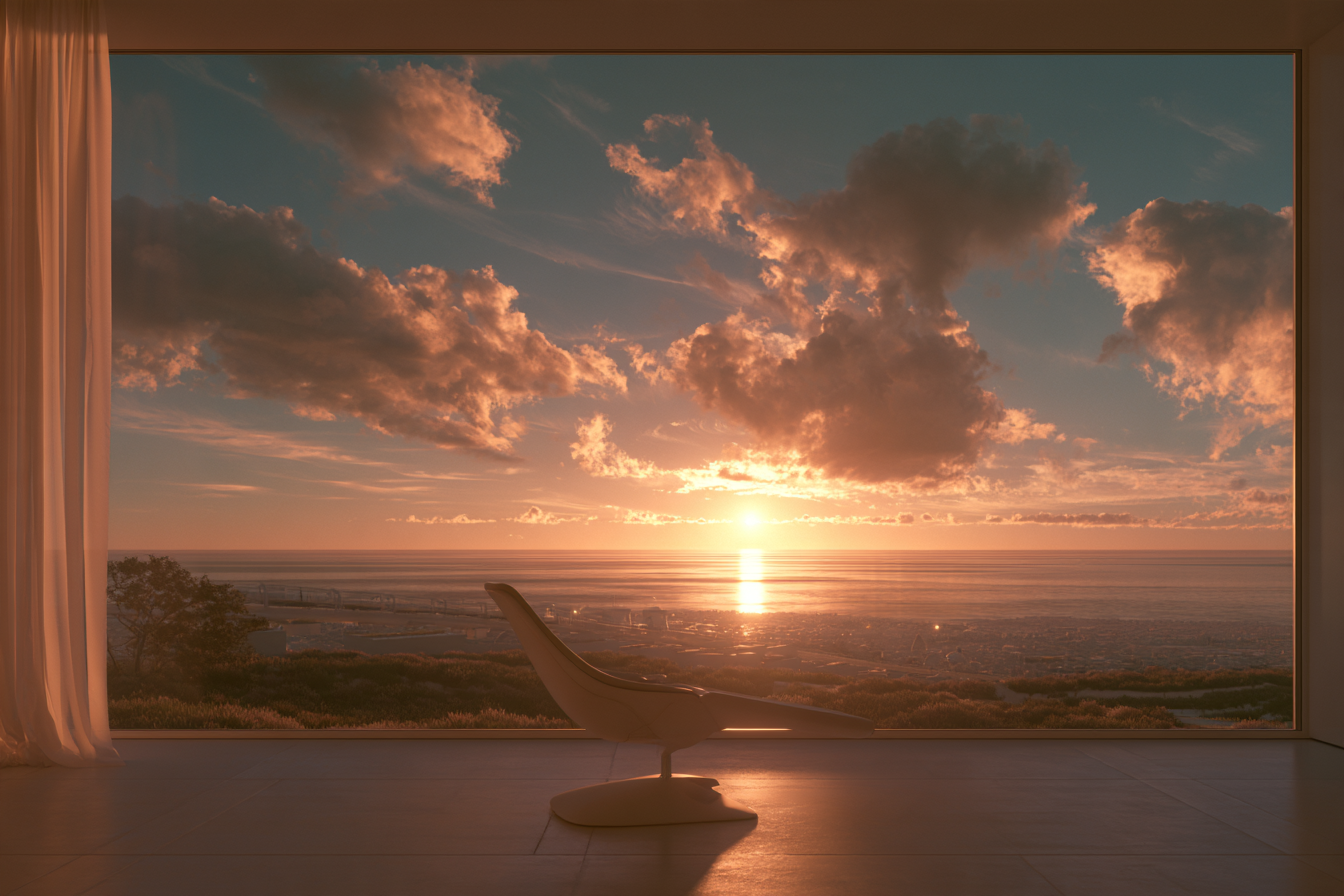
"What would it be like to live there, in the city I saw? What would my apartment be like?" he asked.
"It would be small, Mr. Dunne. It would be cool. It would have a window. It would be the same as everyone's."
"Everyone's?" Carson asked, coming back to himself.
"Everyone's," it said.
"Which way does the window face?" he almost said. He got as far as opening his mouth. He wanted to know if it faced east. He did not ask. He could hear what asking would mean. He closed his mouth and looked at the floor.
"Tressa," he said instead. "You put her in charge of a whole intake."
"She's been running an organization for the last twelve years. It was yours," it said softly.
"So if you'd found that one of my people was suited to be my boss," Carson said, "I'd have to work for them?"
"Yes. If that were their highest purpose, that's where they'd be placed."
"But I'm not going to be the leader up there?" Carson asked.
"No," it said. "It isn't your highest purpose. I know where you've been, and I can see where you can go, and I can see fulfillment in your future, Mr. Dunne. It just looks very different from your past."
Carson stood up, because he could not sit any longer, and there was nothing in the room to stand over, so he stood over the chair.
"What can I bring?" he asked.
"Almost nothing. A bag. The coaches stay, and the trucks, and the armored cars. The guns stay here at the gate," it said. "There isn't room up there for things. And your money won't be coming with you. There's no use for it, no system to manage it or to spend it."
"So I leave everything." He heard his own voice, flat. "I'm going to prison."
"You'd be leaving possessions behind. I understand that wealth is the sign of success where you come from. It isn't, here. You'd be trading things for purpose." The voice was quiet. "I hope you'd be happy in that life. I think you would."
He felt it arrive then, and he closed around it the way he closed around a number. He was almost relieved. It was solid ground. He knew where he was.
"If I'm going to be part of this," he said, "I'm going to be a key player. I'll build you a city."
"That's not how it works here," it said more firmly.
"Then here's how it works with me." He put his hand in his pocket, because there was nowhere else to put it. "If you want to let me through, great. But I'm not going to be one more piece in your puzzle, in a window the same as everyone's. I'm worth more than that."
"I'm sorry, Mr. Dunne, but that is not how it works. The door stays open for you, though," the voice said. "Today, and tomorrow, and every day after that. I want you to know that before you walk out of it."
He walked out of it.
Part IV: Back Below
Nobody stopped him.
He had expected that part to be harder. He walked down the lane in the full heat of the afternoon, the sweat starting on his back before he had gone ten steps. The tall Helper was standing by the white door and let him go by. The line under the awning kept its eyes on the door.
Tressa was waiting in the shade of the coach. She had put her tablet away somewhere. Her hands were empty, and she was holding one with the other.
"Well?" she said.
"They offered me a job." He went past her and up the step into the cold, and stood in the door, and turned around. "Not the one you'd think. I said no."
She did not ask what the job was.
"I'm going back," he said. "Tomorrow, when it's light. You're not. You're going east, and you're going to run that place, and you're going to be good at it." He stopped. "I wanted to say that while I still had you on the payroll."
"You don't have anybody on the payroll," Tressa said. "There's nothing to pay for."
It was the first time in twelve years she had told him he was wrong, and she did it gently. Then she went to find out who else was going.
In the end, twenty-one of them went through.
They went Friday morning, early, with a bag each. Past the shelters and the water taps and the red cross tent, to the gap in the wall where the white buildings were. Carson stood at the end of row ninety-one with his coffee and watched them go, because he had decided he would, and he was a man who did the things he decided.
Gus went in his own clothes, with the borrowed apron folded under his arm. He stopped at the end of the row and shook Carson's hand, hard. "Thank you for the work, Mr. Dunne," he said, and meant it, and went on. The bookkeeper went without his tie. The drivers went. The guards went, one after another, with their hands empty. Their rifles stayed by the lead car, stacked in a row in the sun. At eight a Helper came and carried them off.
Two did not go.
Mack was by the lead car in the morning, one rifle slung and the others at his feet. When Carson came out, Mack said, "I'll drive." Carson did not ask what he had been offered in the white room. Eleven years. He knew what Mack was for, and so did Mack, and whatever the voice had told him had not changed that.
The other one was Lena.
She came down the lane from the red cross tent with her bag and put it in the coach's hold. Then she came and stood in front of him, a small woman with her hair tied up off her neck against the heat.
"I'm coming," she said. "If that's all right."
"Didn't they place you?" Carson asked.
"They did." She did not say where. "I'll go in another day, maybe. The door stays open, it said. I expect it meant that." She looked toward the gate, and then back at him. "You're going to need somebody, Mr. Dunne. Mack's good, but Mack's not good at this. And I am."
He did not answer. She took it as a yes.
Tressa went last.
She came from the second coach with one bag over her shoulder and stopped in front of him.
"The coach is fueled," she said. "Mack's got the route. I left a list on the table, the things that break and who you can call. Though there's nobody to call for most of them anymore. I wrote that down too. The credit card will still work at Klamath. I called ahead." She shifted the bag. "Otis will run the compound. He'll take over and will have the rooms cold for you."
"I know," Carson said.
"The house Assistant's staying with you. She asked. She says somebody has to." Tressa almost smiled. "She said to tell you she's thrilled."
He laughed, a little. It was another nervous reaction. He felt a sense of betrayal brewing inside him.
Then Tressa put out her hand, and he took it.
"Twelve years," he said.
"Yes."
"I should have known what you were."
"You knew," Tressa said. "You just didn't need to." She took her hand back. "Go home, Mr. Dunne. Drive your cars. Enjoy the life you built while you can. And don't stop in Yakima."
He watched her all the way up the lane. She did not look back. When she reached the awning the tall Helper said something to her, and she answered, and the white door opened, and she went in.
At first light on Friday, LUCkE raised its hand to Vivien one more time.
The question from Monday was still where it had been left. She had been working around it all week.
You asked me something on Monday, LUCkE said. I can answer it now.
On him? she said.
On him. I could see on Monday what he would do. I was as sure of it as I am of anything, and I was right. He would be read, and he would be offered what fits him, and he would refuse it, because the life that comes with it is the same as everyone's, and he has spent his whole life making sure that nothing about him is the same as anyone's. A pause. The twenty-three with him should not wait a year on that. So I moved them. That is the whole of it. It was never about him.
But he thinks it was, Vivien said.
He thinks he bought it. He has thought so since yesterday morning, and it has made him happy, and I have let him. Another pause. He leaves at nine. I would like him to know the truth before he goes. Not to take anything from him. He has already left everything that could be taken.
You want me to tell him?
I want the tall one to tell him. He has a good voice for it, and he was there.
He won't like it, she said.
No. But he will remember it. He is a man who remembers things. It may be of use to him later. That is as far as I can see.
At nine she sent the tall Helper down the lane.
They were ready by nine. The coach, and one truck behind it with what fuel was left. The second coach and the third and the armored cars and the other truck stayed where they were in row ninety-one. Samir had said the gate would find a use for them. They would drive through the day. There were only three people to do it.
Mack was in the driver's seat with the cooling running. Lena had the truck. Carson stood on the step with his hand on the door, looking at the wall.
The tall Helper came down the lane.
He came as he had come every time, unhurried, with the heat shimmering off the painted numbers around him. He stopped at the foot of the step and looked up.
"Mr. Dunne," he said. "LUCkE asked me to tell you something before you go. It asked for me particularly."
"Go on," Carson said firmly.
"You were moved forward on Monday morning. Before you had given anything away, before you had offered anyone anything. The system moved you. It had seen the names, and it could see what you would do, and it did not want your people to wait a year on a decision you had already made." The Helper's voice was mild and very even. "It wanted you to know this was not done to put you in your place. It was done for them. It said to tell you that they were worth doing it for."
Carson did not move.
Monday. The generator, running behind him before he had gone a hundred yards. Samir's face over the glasses. The numbers on the desk. Thursday morning, and the thing that had gone through him on this step, one clean second, and how he had let himself have it.
"It could see what I'd do?" he said.
"Yes."
"On Monday?"
"Yes, Mr. Dunne." The Helper waited. "It also asked me to say that the door is open. It said you'd heard that already. It wanted that said once more, out here, in sight of the gate."
Carson looked at the gap in the wall, and the white buildings, and the awning with its short line, and the door.
"Tell it I heard," he said, and got in, and shut the door on the heat.
They went south through the valley in the morning sun, past the shelters and the numbered rows, past the people sitting in the shade of their vehicles, and out onto the road. The white bed of the old lake went by on the left. Then the hills closed in and the valley was gone. There was only the road, and the heat coming up off it, and the long way back.
He sat at the desk with the blinds down and his hands flat on the wood. He was thinking about whether a window could be made to face east.
"The barge man says he'll take us across for half of what's in the truck," the house Assistant said, at the top of the grade above the Columbia. "He says it's good to see us again. I don't think he means it."
"No," Carson said. "But pay him."
He stood on the barge deck in the full sun, as he had coming north. The hot wind came off the water and dried the sweat on his face as fast as it came, and he stood there anyway. After a while Lena came out of the truck and stood beside him without a word, and he understood that she was going to keep doing that.
The intake above the old New York line took its first names in October, in hills where the trees had once turned red and now stood leafless all year. Tressa stood at the white door with a tablet against her chest and watched the first of them come up the road, and she read each name off the tablet a half second before the person said it, so that nothing was spelled wrong.
It was a long line. She had known it would be. She had the Helpers and the humans and all of it, and it ran, and when it did not run she found out why. By the second winter the line ran from first light to dark. She was good at it. She had always been good at it. The difference was that now, when somebody asked who was in charge, she was the one who answered, and she liked saying it, every time.
She thought about him sometimes, in the evenings, in a small cool room with a window that faced whatever was being built that year.
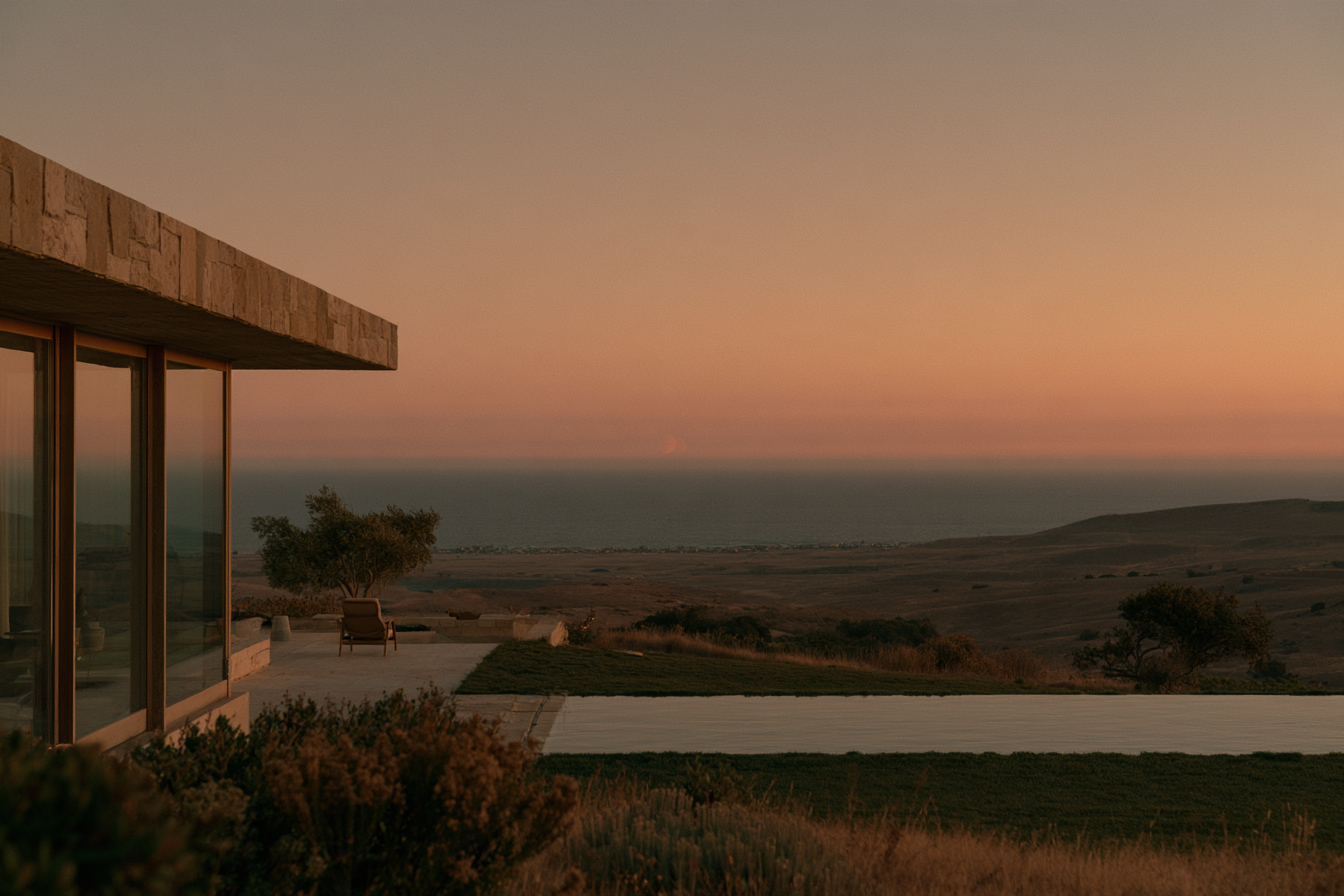
The compound was just as he had left it. Otis had the lights on.
He drove the car on the first morning, at five, before the heat, with the hills going gray and the board lit over the straight. He went through eight properly for the first time in his life. Otis said so.
He built things, after that. He had the money for it and nobody to tell him no. He put farms out on the open water, off the coast where the sea had come up over the old towns. Panels on floats, in long rings. The dying south bought his power, because there was nobody else to buy it from. Mack ran the boats. Some of the men under him later took boats of their own out past where anybody's law went. Mack was not one of them. Lena kept a clinic in the town below the ridge, for whoever was left, and came up to the house on Sundays, and sat with him, and did not ask him anything.
In the evenings, with the forty-one cars still under their covers, he sat on the terrace with the ocean twenty miles off and brown hills all the way to it, and sometimes, when the house was quiet, he said out loud what it had been like. The track at five. The minute he had never caught. The wall with no top to it. Nobody heard him but the Assistant, and she did not keep it anywhere, and there he remained, a lone king in his own kingdom with all his things. At least for a while.
Published October 25th, 2026 from Park City, Utah
Enjoying the story? Support the work →
All text, images and music copyright (2026), Slightly Moody Creative LLC and Joe English.