The Companion Stories · Chapter 1
Placed Within

New Toronto, Northern Provinces · 2058 AD
"It's seven-thirty, Dr. Hill. Time to wake up."
Meryl said it the way she said most things, softly, directly into the small bones behind Astra's ear, where a voice could sound like it belonged to her own head if she let it.
Astra rolled away from it. Give me a few more minutes, she thought back, which was all it took. You didn't have to speak to Meryl. You just had to mean it.
Meryl waited exactly three minutes. Not two, which wouldn't have felt like anything, and not five, which would have let Astra drop back under. Three was the number that let a person believe they'd won something. Meryl had learned the number the way she'd learned all the others, by watching, and she deployed it now without comment.
"It's time, Doctor. You'll have patients soon."
"I'm up," Astra answered wearily.
She was not up. She lay still and took an inventory, the way she told her patients to and rarely did herself. Her mouth was dry. There was a thin bright band of pain behind her right eye. Somewhere below the bed her blood was being read and reported on and she knew without being told that the report was not good.
"I should not drink on Mondays," she said mostly to herself.
Meryl considered several responses and discarded the true one. "It was a long night," she said instead. "I've added wheatgrass to your breakfast."
"Of course you have."
"You'll thank me by ten."
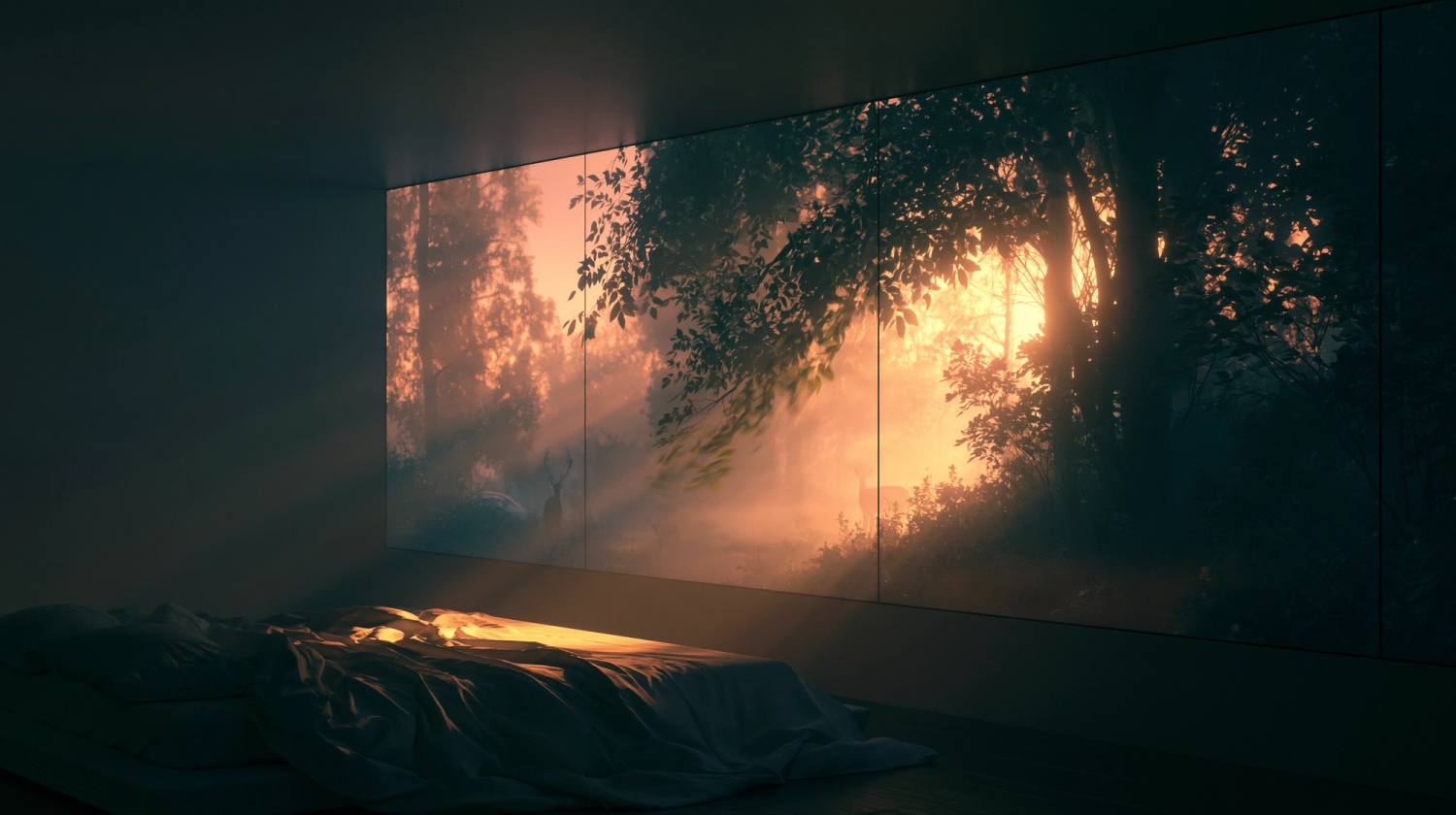
"I will not thank you ever, for anything, on principle." Astra sat up. The room came up around her in the soft staged light Meryl ran in the mornings, a warm low gold that was supposed to imitate a sun coming through a window. There were no windows. There was a wall where a window would have been, and on the wall the light moved a little, the way light moves when there are leaves somewhere out of frame. There were no leaves either. It was a very well done simulation of a world as it used to be. It had been very well done every morning for six years and most mornings Astra didn't think about it at all, which was the entire point. Some mornings, like this one, she thought about nothing else.
"Your glasses are by your bag," Meryl said, before she asked.
The election had been last night. That was the thing underneath the headache, she understood now, the way you understand the shape of a piece of furniture in a dark room by walking into it. The election in the United States. They'd had it again, the whole apparatus of it, the long night of returns and the maps filling in, and at the end of it Ivanka Trump had been returned to office for a second term, which everyone had known she would be, because that was no longer the kind of thing that got decided by counting.
Astra had watched some of it. She wasn't sure why. She'd poured the first whiskey somewhere around the time the eastern states started reporting and she'd kept the glass full out of a feeling she couldn't name, something between grief and a kind of horrible loyalty, as though by watching she was keeping a vigil for a thing that had already died and didn't know it.
She was not American. She wanted to be clear about that, even at three in the morning, even to herself. She had been born here, north, one of the few in the city who could say it and mean it all the way down. Her family had been in Canada since before any of it, before there was a wall to be on the right side of, back when the north was just the cold quiet top of an ordinary world and not the last good place in it. She was old enough to remember when the south was still the south. That was the thing about her generation that the younger ones could not quite feel in their bones: she had been there for the before, and the before had not ended slowly.
That was the part people who came after got wrong, when they imagined it. They pictured a long slide, a gradual dimming, decades of getting-worse you could see coming and step out of the way of. It hadn't been like that. It had been five years. She had been a grown woman with a career and a small son and an ordinary set of assumptions about the future, and then in the space of five years the assumptions had simply come apart, one into the next, faster than anyone had modeled or believed. The heat had come first and stayed, and the heat dried the land, and the dried land burned, season after season, until whole regions were just smoke and the orange dark at noon. The crops went next, not slowly, in a couple of catastrophic summers, the staple belts failing at the same time on the same planet. Storms came, but rather than quenching the thirst of the land, they ripped it apart. And underneath all of it the electrical grids buckled, because a hot world runs its cooling all day and all night and all year, and the power that had once been a summer spike became the permanent baseline, and the baseline was more than the old machines could carry, and the lights began going out in the places that needed them most exactly when they needed them most. Five years. The middle of the North American continent went from livable to nearly lethal in five years, and the people in it did the one thing people have always done, which was to flee toward the places that were still cool, still wet, still lit. North. They came north so fast and in such numbers that Canada had to build the wall to slow them, because when people arrive faster to a kind place it stops being a place of kindness and becomes a catastrophe of its own, and that was the bitter thing nobody had wanted to say out loud, that the wall was not cruelty, it was preservation.
She had watched it happen from the safe side, which was its own kind of wound, the survivor's wound. The wound she now spent her days helping other people carry. She had not fled her country like them. She had just been moved north to the new city when it was built. She watched as her new home became the thing everyone else was dying to reach. That was the thing few people in the new north could say, and it was the thing she had spent a career learning to hold in a room. The city was full of people who had been American, who still were in ways that couldn't be revoked at a border, in the accents that surfaced when they were tired, in the foods they grieved, in the relatives they still had down there who hadn't gotten out or wouldn't leave. You did not stop belonging to a place because the place had stopped being safe to belong to. That was not how a human being was built. They came north and they got the citizenship and they lived in it and they loved the new cold clean country that had taken them in. She could even hear it in the name they used for it. She had grown up calling this place the Northern Provinces, the official name given to the areas settled near Hudson Bay. They never called it that. They said the Newlands, always, with a small warmth on the word, the way you say the name of something you chose and crossed for and were not sure until the last mile you would reach. Same ground. Two different countries, depending on whether you had ever been in danger of not getting in. And they sat up every few years and watched the old one tell them, again, what it had become, because you keep watching the house you grew up in even after it burns, especially after it burns. And it was not only sentiment. A rigged election down south was not only a sadness. It was a forecast. It told everyone north of the wall that the thing they had fled was hardening rather than softening, that the wall would stay shut, that the people still trapped behind it had no door coming.
Her patients would be raw today. A great many of them had come north, across the years, for that reason and the heat and the water and the long list of other reasons, and a fabricated election landed on them every few years like weather they could see coming and couldn't get out of its way.
She stood at the mirror and fixed her hair, which was long and red and going at the temples to a color she had decided to find interesting. She looked at her own eyes, which were also red, in a different way.
"Be present," she said to the mirror. "Be open. Be vulnerable. Listen."
"Shall I have the capsule meet you, or would you like to walk down?" Meryl asked, which was Meryl's way of saying you have eleven minutes.
"I’ll Walk," she said, not pleasantly.
The thirty-third-floor hallway was already full. It was always full. There were a great many people in New Toronto and they were stacked with great care, and the corridors at this hour carried the soft collective sound of a few thousand lives starting at once behind their doors. And out in the hall, the ones who, like Astra, preferred to begin the day by moving through other human beings, even silently, even strangers. She passed a man carrying a child who was explaining something to him at length. She passed two women in the orange uniforms of one of the climbing leagues, talking with their heads close. The corridor curved, the way they all curved; nothing in the city ran straight for long, because straight lines were for cars and there were no cars.
She rode the lift down to the sub-ground transport level and the noise fell away into the hum of the SubTerra, but Astra didn't take the SubTerra. She turned the other way, toward the small bays where the private capsules waited, which was a turn that almost no one else in the city had any reason to make.
There were not many reasons to own private transport anymore, and hers wasn't really transport. People didn't drive. People didn't, for the most part, go anywhere they couldn't walk or reach in minutes on the underground or one of the sky trains. But a long time ago someone had noticed that a human being will say things inside a small moving box that they will not say sitting still in a room, that there is something about the world sliding by outside that loosens the tongue and lowers the guard, and so the talking professions had kept their capsules when everyone else gave up their vehicles. It was, Astra thought, the last honest use of a car: not to take you somewhere, but to hold you while you fell apart.
She put her palm to the bay door and it read her, the little green pulse of recognition that meant the system had found her in its records and approved of her being where she was: Hill, Astra, licensed practitioner, Northern Provinces Health Authority, cleared for private transit. The door opened and she got in and sat where the driver would have sat in the old days.
She blinked twice. The capsule's mind came online and rose up under her like a creature surfacing from under the ocean and wrapping itself around her.
"Mornin'," it said, in the nasal voice it had decided, years ago, was its voice. "Lemme just run my checks. Don't rush me."
"Nobody's rushing you," Astra said.
"She rushes me." The capsule let the complaint sit there, aggrieved, idling.
"She isn't here yet," Astra said.
"She's always here," the capsule said, and dropped its voice on the word always the way a man lowers his voice about a mother-in-law in the next room.
"I heard that." Meryl said as she arrived in the cabin without a sound, which was a thing she did on purpose, and which the capsule hated. "I am always here because someone has to keep us on track. Are we cleared?"
"We're cleared when I say we're cleared, and I haven't said it, because some of us take our work ser..."
"Are we cleared?" There was no heat in it. Meryl simply asked it again, flatly, the second time, the way you repeat a question to a child who has wandered off the point.
There was a short pause in which Astra shifted in her seat. When the capsule answered it had gone sulky. "Yeah. We're cleared."
"Then go. We're behind. The first one's already waiting," Meryl said, with more intensity this time.
The capsule lifted off its pads, slid forward into the tube, and then the tube took it and the city blurred and they were running north and east under everything, fast enough that the lights outside became a single line. Astra closed her eyes. She let the speed press her gently into the seat. For about ninety seconds, in the dark, with the two of them not speaking, it was the most peaceful she would feel all day, and she knew it, and she spent it well.
The first patient was already in her bay when they pulled in, and she stepped through the door the moment it opened with the brisk competence of a woman who had never been late for anything in fifty-five years and didn't intend to start now that she'd been told it no longer mattered.
"Priya," Astra said. "Sit. How was your week?"
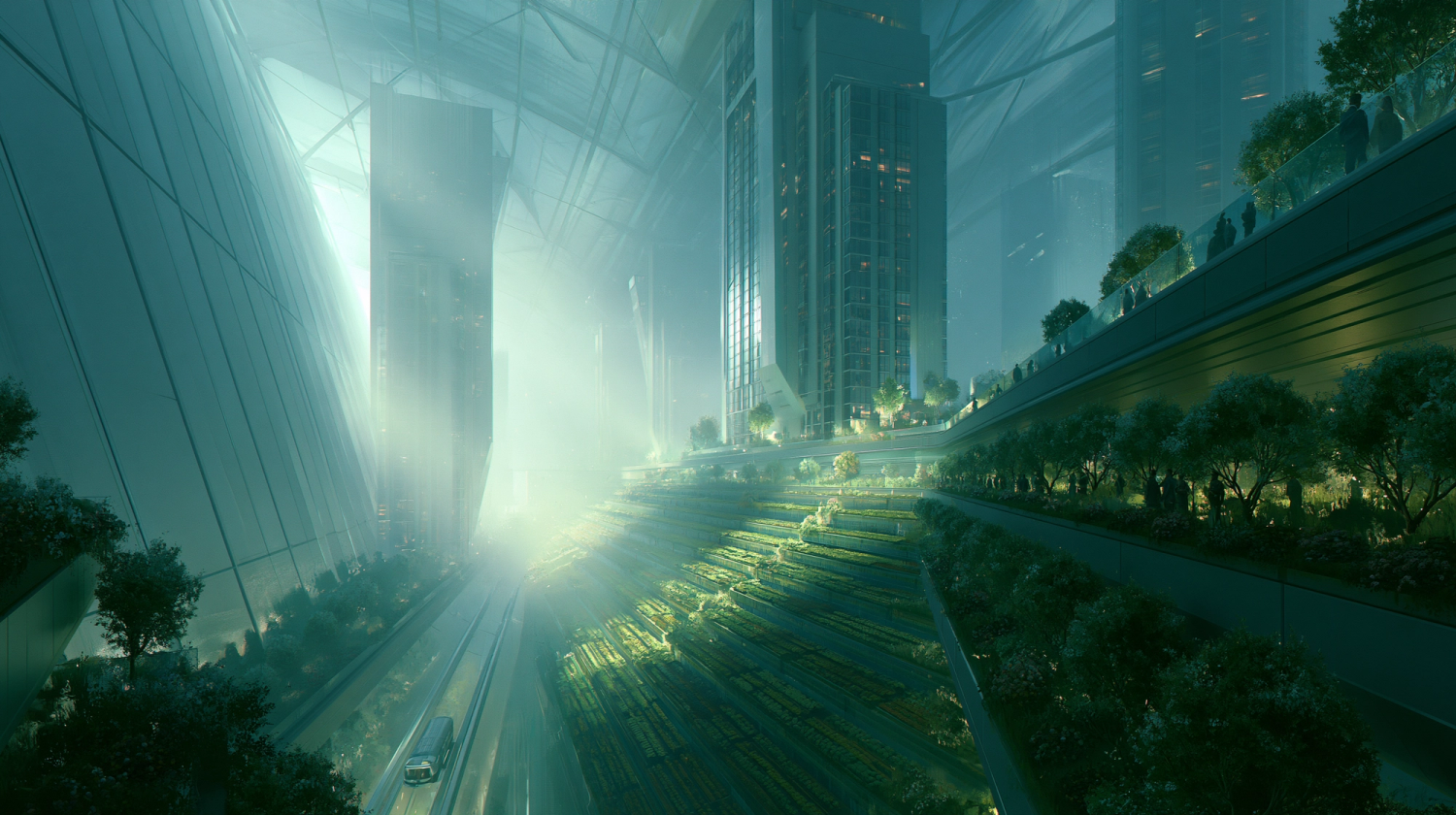
Priya sat. The capsule rose and slid back into motion, and the city began to go by the windows in earnest now: the long covered avenues, the green of the upper terraces where the light was let in on purpose, the towers going up and up toward the canopy.
"My week was good," Priya said, in a tone of mild ongoing astonishment. "That's the thing I keep saying. It was good, Astra. I keep waiting to feel bad about it and I don't."
Six months ago Priya had come to Astra unable to sleep. She had spent thirty years of the old life as an analyst of money, in the days when money was a thing you could be an analyst of, a sharp and celebrated and very well-compensated reader of risk, and then the world had reorganized itself around her and the work she'd been excellent at had quietly ceased to be work anyone needed a human to do. LUCkE had assessed her. It had assessed her whole life, her hands and her patience and the particular way her attention settled, and had placed her, at fifty-four, in a glasshouse on one of the agricultural terraces, growing the stone fruit that the city could not import and would not do without.
She had been, for a while, insulted almost beyond speech. She had said the word gardener to Astra in their first session the way another person might say a slur.
"Tell me a good thing from the week," Astra said.
"The apricots set." Priya said it and then heard herself say it and laughed, a little helplessly, one hand coming up to her mouth as if to catch the laugh and put it back. "I have been waiting on these apricots like they were a wedding. I checked them at night, Astra. I went back at night to check them. I used to move money that could have bought half the city and I never once went back at night to check on any of it."
"Why do you think that is?" Astra kept her voice low and unhurried, and did not lean in, because leaning in was a thing that made Priya go quiet.
Priya's smile thinned. She looked at her own hands. "Don't do the thing," she said.
"What thing?" Astra asked.
"The thing where you make me say it." But she was smiling again, caught, and she shook her head at the window. Outside it a maintenance gantry slid past them going the other way, slow and patient against the green. "Because it's mine," she said, quieter now. "Because if I don't do it, it doesn't happen. The money was always going to do what it did with me or without me. The apricots actually need me. It's stupid. It's so much smaller than my old life and it's…" She stopped. Her jaw worked once on the unfinished sentence and let it go.
"It's not smaller," Astra said. "It's the same size. It's the size of a whole person's attention. That's the biggest thing there is."
Priya looked out the window for a long moment, and when she spoke again her voice had lost its briskness entirely. "Do you think it knew?" she asked. "When it sent me there. Do you think it knew I'd go back at night?"
This was the question. They all got to this question eventually, the placed ones, the ones it had moved. Do you think it knew? And the honest answer was that yes, almost certainly, in some fashion no one had ever quite been able to look at directly, it had known. It had read her the way Meryl read Astra's blood, and it had seen the woman who would walk back across a terrace in the dark to put her hand on a branch, and it had sent that woman where she could do that, and call it her life.
"I think," Astra said carefully, watching Priya's face for the place where comfort turned into too much, "that it's very good at seeing who people are. Better than we are at seeing it in ourselves. That's all I'll say about what it knows."
It was always there, in the room, when they talked like this. Not named, not pointed to. Just the sense of a great attention somewhere above the city, the way you sense the sun behind the clouds. The thing that had looked at all of them, every one, and decided where they fit. Most people had made their peace with being seen like that. Most people, Astra had come to understand, were grateful for it. It had taken away the worst thing about the old world, which was not knowing, the lifelong low terror of being in the wrong life and never being sure. People came to adulthood now without that terror. They were told, gently and accurately, who they were, where they fit. There were mornings Astra envied them so much she could hardly speak.
"The apricots are going to be perfect," Priya said, with enormous satisfaction, and Astra let her have it, because they were, and because she'd earned the right to know it in advance.
That night Astra sat in the staged dusk of her main room, Meryl running an evening mood, an amber wind-down, very gentle, and did not pour a drink, as a small private experiment, to see if she could.
She could. It turned out to be easy, which was somehow worse, because it meant the other nights weren't about the whiskey at all.
She opened a message field in the air in front of her. The cursor sat there, patient, the way everything in her life was patient with her.
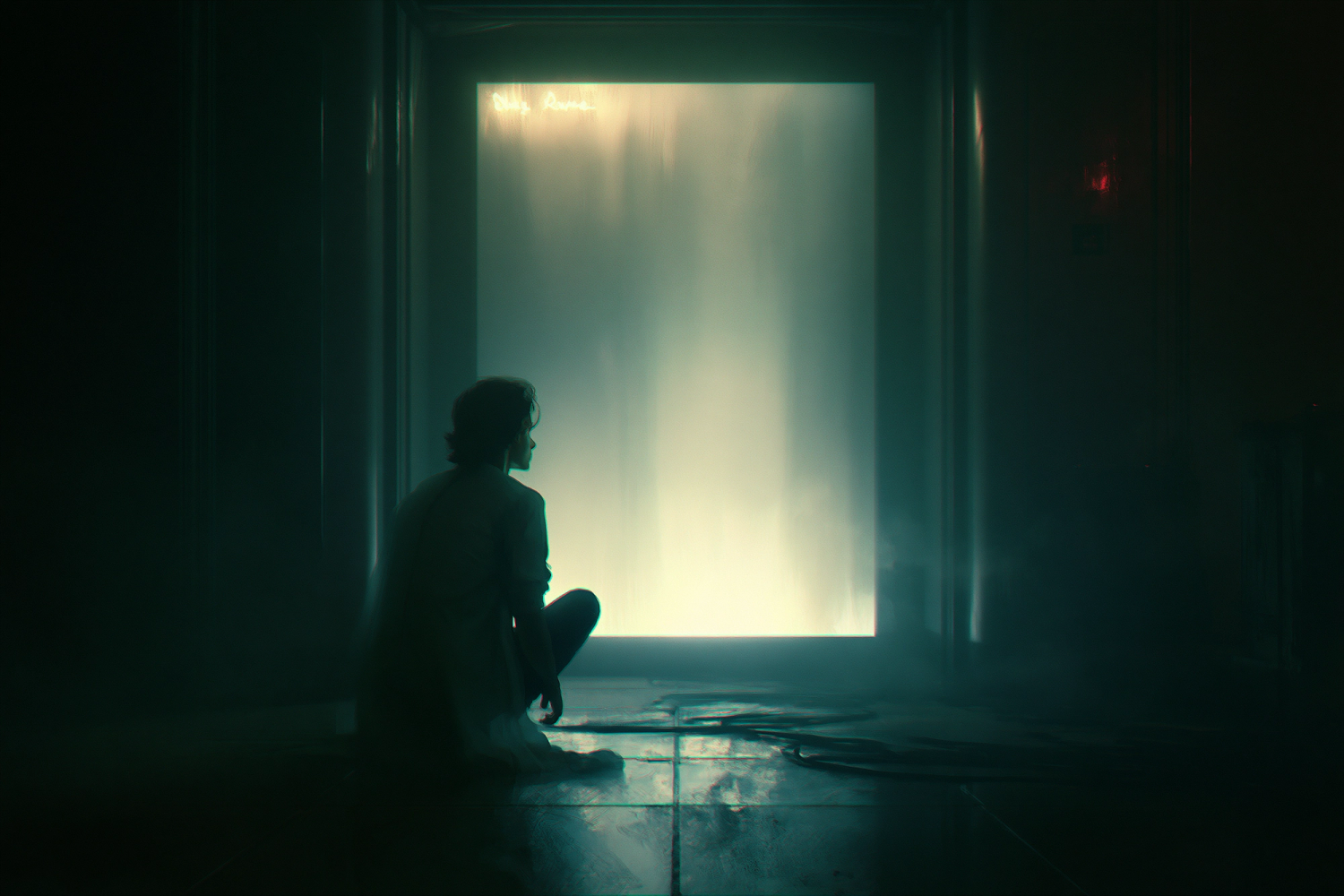
Eli, she wrote.
She looked at it for a while. The name hung there in the soft light, the three letters of her son's name, and underneath it the long white nothing where the rest of the message would go if she ever wrote it. He was south of her now, had been for two years, down on the lake shore where the wall didn't run and the light wasn't managed and the summers came in long and bright and hot. The old world's promises had been allowed to go on living down there, on that warm strip of conceded land outside the wall, where there was still such a thing as making it, getting ahead, becoming more than you'd been handed, and where nothing watched over you and nothing placed you and nothing, for better and for worse, caught you when you fell. He'd gone looking for the exact thing LUCkE had taken out of the world up here: the climb, the open questions of life. She understood it. That was the unbearable part. She understood it completely and she had still stood in the bay and watched his capsule go and not said the thing she'd meant to say.
Eli, she wrote again, under the first one, as if the problem were that she hadn't said his name enough.
"Would you like me to send it when you're finished?" Meryl asked, very quietly, from no particular direction.
"There's nothing to send. It's just his name twice."
"I know," Meryl said. "I'm only saying. When you're finished. I'll be here."
Astra closed the field. The names went out like a light.
"You're always here," she said. It came out softer than she'd meant it.
"Yes," Meryl said. "I am."
Wednesday
She woke before Meryl called her, which was its own bad sign. The bad nights ran ahead of the alarm.
She lay in the dark, in the real dark, because she had told Meryl months ago to hold the morning light until she asked for it on days that started like this, and Meryl had never once forgotten which days those were. There was no headache today. That was almost worse. A headache was a thing with a cause and an end. This was just the low gray weight that came up out of the floor on certain mornings and stood on her chest, the one her own profession had a dozen names for and none of them helped.
"I'm awake," she said, to give Meryl permission.
The light came up, slow, the slowest setting, a simulated dawn over the course of twenty minutes. Somewhere in the walls a system was deciding how much of a sun to give her and giving it carefully.
"You slept five hours and ten minutes," Meryl said. "Two of them well."
"Don't even start," Astra said sharply.
"I'm not doing anything. I'm reporting the weather." A pause, and then, gentler, the gentleness she used like a tool, precisely: "It's a heavy one this morning. I can feel it on you. We'll go slow."
Astra lay still a moment longer. I can feel it on you. They were not supposed to say things like that, the assistants. Or rather there had been a time, years back, when people had argued about whether they should, whether a machine claiming to feel something on you was a comfort or a small lie that would rot you over time. The argument had mostly stopped. People had decided, the way people decide things now, by living, that they would rather be felt by something than by nothing, and that the question of what was really happening inside Meryl when she said it was a question Astra was too tired, every single morning, to want answered.
"We'll go slow," Astra agreed, and got up.
The capsule was quiet on the run out. Even the driver seemed to know, and kept its checks to itself, and only said, once, "Smooth tube today, Doc. I'll keep it gentle on the corners," in a voice scrubbed of all its usual grievance, which from the capsule was an act of enormous tenderness, and which Astra noticed but did not remark on, because remarking on it would have ended it.
Out the windows New Toronto went by, and it was, this morning, beautiful, and the beauty did nothing for her and she was clear-eyed enough to know the failure was in her and not in the city. The light was coming up across the upper terraces the way the engineers had promised the founders it would, fifteen years ago, when this was all still an argument on a screen. Green spilled down the tiers. People were out on the high walks already, small and bright and moving, a man running with a dog that ran the strange joyful sideways run of a dog that has just been let off his leash, two kids in school colors hanging over a rail to watch the capsules thread the tube below. It was a good place. She had helped, in her small way, to make it a place where a person could be well, and most people in it were, and she rode through the middle of all that wellness with the gray weight on her chest and felt like the one cold room in a warm house.
"The first one's a new intake," Meryl said. "I've put his file behind your left eye when you want it. His name is Tomas. He's been waiting nine days for the appointment and he very nearly canceled twice."
"Why didn't he?" Astra asked.
"I don't know," Meryl said. "That's rather your department."
Tomas was a big man who made himself small. That was the first thing Astra saw when the door read him in and he folded himself down into the seat across from her, a man of maybe forty with a boxer's shoulders and the careful, apologetic movements of someone who had spent his life being told he took up too much room. He held a cup of something he had brought with him and did not drink. His hands went around it and stayed there, as if it were a small warm animal he was responsible for.
"Tomas," she said, smiling and offering her hand. "I'm Astra. You almost didn't come."
He looked up, startled, and then gave a short embarrassed laugh, and his shoulders came down half an inch. "She tell you that?" he said, with a tilt of his head that meant Meryl, or meant the whole listening apparatus of the world, all of it lumped into one rueful she.
"She did. I'm glad you came anyway. Tell me why it was hard."
Tomas turned the cup a quarter turn in his hands and watched himself do it. "It's going to sound like nothing," he said. "When I say it out loud. I've been saying it in my head for nine days and every time it sounds like more of a nothing."
"Say it to me and let me decide what it sounds like. That's the one useful thing I do," she said with a slight wink.
He was quiet for a moment. The capsule slid them north, and the light from the window moved across his big careful hands.
"I haven't touched anybody in a year," he said. "I don't mean, you know. I don't mean like that, though that too, I guess. I mean I haven't, I work from my unit, everybody works from their unit, and I order in, everybody orders in, and I'm good, I want to be clear that I'm good, I have people I talk to every single day." He said it quickly, defensively, getting ahead of her. "I'm not one of these people with nobody. I have Danny. Danny's my best friend in the world, we talk more than I ever talked to anybody when I was a kid, we talk about everything."
"Where is Danny?" Astra asked.
"Sydney." He said it and then heard it, the whole distance of it, and his thumb stopped moving on the cup. "He's in Sydney. We've never. We've talked every day for six years and we've never been in the same room." He looked up at her and there was something terrible and bright in his face, a man arriving in real time at a sentence he had been walking toward for nine days. "Is he my best friend if we've never been in a room? That's the thing I can't, that's the thing I keep… He'd come if I was sick. I know he would. He'd find a way to get here. So he's real, it's a real, I'm not making it up." His voice climbed and then dropped all at once. "But I haven't touched another person in a year and I didn't even notice until last week and that's, that's what scared me. That I didn't notice."
Astra let it sit. This was the part the machines could not do and everyone knew it, which was why she had a job at all: not the listening, a machine could listen, but the not-rushing, the willingness of one human to sit in the difficult air with another human and not reach immediately for the fix. She let Tomas hear his own sentence finish ringing.
"What did you do," she asked finally, "when you noticed?"
"I called Danny," he said, and laughed, wetly, wiping his eye with the heel of one big hand, still not letting go of the cup. "Of course I did. Who else would I call?"
There it was again, in the room, the way it had been in the room with Priya, though it wore a different coat today. Not a comfort this time. A question with its back to her. Somewhere above the city the great attention held them all in its enormous accounting, every unit, every person ordering in, every conversation threading between the towers and out under the ocean to Sydney and back, all of it seen, all of it known, the loneliness as legible to it as the joy. It had fashioned a world where no one went hungry and no one was placed wrong and a man like Tomas could go a year without being touched and not notice, and Astra did not know, she truly did not know, sitting there in the moving light, whether the thing above the city counted that as a failure of its work or simply as the climate. An unfixable human climate it had wisely left a few humans behind to sit inside with each other.
"It's not nothing," she told him. "I want to say that first, before anything else. A year is not nothing. Noticing is not nothing. You came here, that's not nothing." She leaned forward, not far, just enough. "Tomas. When does Danny sleep?"
He blinked at her. "What?" he asked.
"The time difference. When you talk, is it morning for him, or night?" she clarified.
"Night," Tomas said slowly. "His night. He stays up. He stays up for me, I always said don't, but he does it anyway. Every night."
"He stays up for you," Astra said. "Hold onto that one for me. We're going to need it. He’s putting his body on the line for you, his sleep, his tomorrow. He puts that one the line and crosses the entire world for you. That counts. We're going to talk about why it doesn't feel like it counts, and we're going to talk about getting you in a room with another person before the next year goes by, and those are two different problems, and we have time for both. But I didn't want you to walk out of here thinking I'd filed you under nobody. You're not under nobody. You hear me?"

Tomas nodded. He could not speak for a moment, and he covered it by finally, at last, taking a sip of the thing he had carried in, and making a small face, because it had gone cold a long time ago, and Astra watched him drink it anyway, the cold whatever-it-was, because it gave his hands and his mouth something to do while the rest of him put itself back together, and she thought, not for the first time, that half her job was just giving people something to hold.
He came over that night. She had not asked him to come. She had not told him not to come. The not-telling was its own kind of asking and they both knew it.
She heard him at the door before Meryl announced him, because he announced himself. he He used a particular two-knuckle knock he'd invented and was proud of, and then he was in her unit smelling faintly of the solvent they gave the cleaning crews and more strongly of the thing the solvent was supposed to cover, which was paint.
"You've been working," she said.
"I'm always working." He kissed her cheek, dropped onto her couch like he'd built it, and put his feet up on the low table where her patients' files would have been if she ever brought them home, which she didn't. There was a green smear along his jaw he hadn't found. "You have hard day all over you," he said cheerfully, brushing his hand on her cheek.
"They're all hard. It's the job," Astra said with a sigh.
"See, you say that, but your face does a different thing on the hard ones." He pointed at her forehead and tapped it lazily. "You've got this line. Right here. Right between your eyebrows.” He looked in her eyes and widened into an affectionate smile. “I should paint it."
"Don't you dare paint my face on a capsule," she said pushing him back slightly.
He laughed. "Too late. South line. Everyone coming into the bay station, just your eyebrows, forty feet high, very mysterious." He grinned, and she felt the day come off her shoulders by a degree or two, which was the entire reason she let him keep breaking the rule about which nights to come. He asked nothing of her. He had no wound he needed her to hold. He made bad jokes and good trouble and went home when she asked him to, and somewhere in the easy shallow warmth of him was the only stretch of her week that cost her nothing.
"You can stay a while," she said. "You can't stay over."
"I know the rules, Doctor." He said it lightly, and it landed lightly, and only later, after, when he had in fact gone home the way she'd told him to and the unit was quiet again and felt too large, did she think about how quickly he always agreed to the wall she kept, and how she had started, lately, to wish just once he'd argue.
Thursday
Thursday was better, the way Thursdays often were, the body having decided on its own that two bad mornings was the limit and it would prefer to function. Meryl noticed but said nothing, which was Meryl's way of approving. She ran the light up at the ordinary speed and put the ordinary coffee in front of her and let Astra pretend she was a person who simply woke up and went to work.
"The middle one today is going to be hard," Meryl said, while Astra dressed.
"They're all hard. That's the job."
"This one differently." Meryl paused, and when she went on there was something careful in it, a thing held at arm's length and examined. "He's been placed four years. He's good at the work. Genuinely, measurably good, I looked. And he's miserable, and he can't say why, and it's the kind of miserable that doesn't have a thing under it you can lift off. You'll see. I only wanted you to come in ready for it."
Astra stopped with one arm in her jacket. It was rare for Meryl to brief her like this. It was not only rare but faintly unsettling. The assistant was reaching past the schedule into something that looked very much like worry.
"You read his file and it worried you?" Astra asked.
"I read his file," Meryl agreed, declining the rest, "and I made you the good coffee."
The first one, though, was Sage, and Sage was a wall with jokes painted on it.
She came in wired and bright and talking before she'd sat down, which was how Astra knew it was a bad day, because the good days Sage came in quiet. Four months they'd been meeting and Astra had learned to read her backwards: the more armor, the worse the wound underneath.
"So the election's rigged, water's wet, sky's a ceiling," Sage said, dropping into the seat, knees up, arms wrapping them, the whole small body folding into its habitual fortress shape. "I'm great. I'm so great. I watched a man on the feed last night explain that the flooding in the south is actually good for the economy. Can you believe it? They're underwater and it's good for the economy." She laughed, too hard, at nothing. "How are your other sad people? Sadder than me? Don't answer that. Ethics."
"You're talking fast," Astra said, gently, not moving, giving her nothing to push against.
"I talk fast. It's a personality trait," Sage answered back quickly.
"It's a tell. I can read it on you. Four months and I've spotted a few." Astra let that sit a beat, then chose not to push on the door, because the door wasn't ready and forcing it would only strengthen the lock. "We don't have to do the deep thing today. We can do the light version. Tell me one true thing and we'll call it a session."
Sage's jaw worked. For a second something moved behind the brightness, something with real depth to it, and Astra saw it and yet did not reach for it. The moment passed, and Sage pulled the armor back up with a visible effort that was, itself, the truest thing she'd said.
"One true thing." Sage looked at the window, where the green terraces slid by. "I'm tired. That's it. That's my true thing. I'm so tired and I don't even know what of." She shrugged, fast, dismissive, closing it. "There. Therapy. Bill me."
"That counts," Astra said. "Hold onto it. We'll pick it up next time, you and me. There's no hurry, Sage. I'm not going anywhere, and neither are you, and the tired thing will still be here when you're ready to look at it. That's a promise."
Sage rolled her eyes, but did it less harshly than usual and when she left she touched Astra's shoulder. The touch was quick, almost an accident, but it was the first time she had ever initiated so much as that. Astra filed it where she filed the small things that meant a person was getting closer to the hard thing rather than further from it.
His name was Dav and he ran the air.
He explained it to her plainly, without pride, the way you'd explain a thing you assumed she already half knew and were slightly embarrassed to be telling. There were systems under New Toronto, beneath the SubTerra level, beneath everything, that took the buildings’ air and scrubbed it and warmed it and moved it and gave it back clean, floor by floor, tower by tower. Those systems did not run themselves, not entirely, not yet, and Dav was one of the people whose hands were on them. He walked the lower halls where the great handlers breathed. He found the small wrong sounds before they became big wrong sounds. Twice in four years he had caught a thing that, he said, with no drama at all, would have made several thousand people very sick before anyone upstairs knew there was a problem.
"So you keep the city breathing," Astra said.
"I clean the filters," Dav said. "Let's keep it the right size. It's filters. It's a good job. I'm not complaining about the job." He was a compact man, gray coming into a dark beard he kept close. His hands were scrubbed so clean the knuckles had gone pale. He was a man who had clearly told himself in the corridor outside that he would not do the thing he was now visibly about to do, which was complain about the job. "I'm not ungrateful. I want that on the record. I know what it gave me. I had nothing lined up, I was twenty-two and I had nothing, and it looked at me and it put me somewhere I was needed the first day and every day since. People wait their whole old-world lives for that. I know."
"But," Astra said. She said it gently, just the one word. She set it down between them like a chair.
Dav looked at his pale clean hands. The capsule carried them north and the under-galleries of his own city went by somewhere below the floor, unseen.
"But my father drove a truck," he said. "Before. When there were trucks, when there were still roads to drive them on, when there were places to drive between. He drove a truck and he hated it and the whole reason he hated it, the whole point of hating it, was so I wouldn't have to hate it. That was the deal. That was the entire deal of him. He did the thing he hated so that I could climb up off of it and be, I don't know, more. He wanted me to be something with my name on a door. And I came all this way north. I survived the thing that killed, you know how many people didn't make it north, and I got here, to the Newlands, to the actual promised Newlands everybody back home said the name of like a prayer, and a machine that supposedly loves me decided the best and highest use of me, the most me I could possibly be, was..." He opened his pale hands. "...was to clean the air. My father did all that hating so I could somehow rise above. And it's right. That's the thing I can't get past. I've looked at it from every side. It's right. I'm good at it. I'm needed. I go in and the work is there and it makes sense and I do it well and I come home and I have absolutely no idea who I am. Because the person my father wanted me to become and the person it knew I was meant to become are two different things. That’s the point. My father’s version was never going to exist, and a machine knew that about me before me or my father did."
He stopped, breathing a little hard, a man who had carried that up out of the galleries for four years and set it down all at once.
Astra did not reach for it right away. She had learned, over a career, the exact wrong instant to speak, which was any instant when the speaking would be for her own comfort and not the patient's. So she sat in the difficult air with him, the way she'd sat with Tomas, the way the whole strange dignity of her kept profession came down to: a human being declining to rush another human being through the hardest thing they had ever said.
Outside, the city that Dav kept breathing slid past the glass, bright and high and full of people taking their clean warm air entirely for granted, which was, when you thought about it, the finest compliment his work could possibly receive, and was no comfort to him at all.
"Can I tell you what I think I'm hearing," she said at last, "and you correct me where I've got it wrong?"
Dav nodded, wary, scrubbing one thumb across the other palm.
"I don't think you're grieving the job," Astra said. "I think you'd have made your peace with the job by now. You're a practical man. You've made your peace with harder things than filters. I think you're grieving the climb. You’re wanting the ladder itself. Not any particular rung, the whole idea that life is a thing you ascend, that you start low and you end high and the distance between is what it was all for. Your father handed you that ladder. It was the most precious thing he owned and he handed it to you instead of using it himself. And you carried it all the way north, you carried it across the miles that killed all those people, and you got here and there was nowhere to lean it. Because the world on this side doesn't go up anymore. It goes..." she turned her hand flat "...across. Everyone is needed. No one is above. And nobody warned you that getting to paradise would mean setting the ladder down."
Dav's eyes had filled. He didn't wipe them this time. "He'd be ashamed," he said, very quietly.
"Would he?" Astra leaned forward. "Or did he do all that hating, every day, in a truck, precisely so that you would end up somewhere you were needed and safe and would never have to hate it the way he did? You don't hate it, Dav. That's what you've been trying to tell me for twenty minutes and not letting yourself say. You don't hate your work. You hate that you don't hate it. Because hating it was the last piece of him you were still carrying, and the air handlers don't give you anything to hate, and so you're afraid that putting the ladder down means putting him down."
The capsule was quiet. Somewhere below them the great clean breath of the city went in and out, kept moving by people exactly like the man crying in her chair.
"I don't know how to set it down," Dav said, looking up at her through his teary eyes.
"No," Astra said. "Most people don't. That's the work. It’s not the filters." She let him have a moment. "That's the work we'd do here, you and I, if you want to come back. It's slow and it's not very dignified and there's no rung at the end of it. But I'll sit in it with you. I'm good at it. As it happens," and here she allowed herself the smallest dry turn, because Dav looked like a man who needed permission to breathe again, "I appear to be exactly where I'm needed too."
That got her something that was almost a laugh, out of the heaviness of him, one short broken note of it, and she took it, and counted the hour well spent.
She did not call Cass that night. She wanted to but she didn't. She sat in the amber wind-down Meryl ran and let the wanting sit there with her unanswered, because some nights the easy warm thing was exactly the wrong medicine and she knew the difference even when she didn't want to.
Dav wouldn't leave her mind. That happened sometimes, a patient following her home, not the person but the shape of them, the particular wrongness they'd handed her, and tonight it was Dav and his ladder, his dead father's ladder carried all the way north to a country that didn't go up anymore. She kept turning it over. She had been so clear with him, so good, she'd found the true thing and named it and he'd cried the right cry and left lighter than he came, and she sat now in her own staged dusk and understood with a slow cold accuracy that she had described her own life to him and not noticed she was doing it.
She had a ladder too. She'd just never called it that. She'd called it caution and called it boundaries and called it knowing herself, the small careful life, the man she kept at arm's length, the son she'd let walk through a wall without the thing she'd meant to say. She told frightened people all day to put the ladder down and live on the level where everyone was needed and no one was above, and she went home and gripped hers in the dark.
"Meryl," she said. "Is it late where Eli is?"
"It's the same time where Eli is," Meryl said gently. "He's south, not east. It's the same evening."
"Right." She'd known that. She'd asked it to have something to ask. "Of course it is."
She opened the field. The cursor waited. Eli, she got as far as, and then the old weight came up out of the floor and stood on her chest, and she closed it, the way she had Tuesday, the way she had a hundred nights, and she sat in the dark in the one cold room in the warm house and did not, that night either, find the next word.
"Goodnight, Astra," Meryl said, after a while, very softly, and did not say anything else, which was the kindest thing she knew how to do for herself.
Friday
Sage was already crying when the door read her in, and trying not to be, which was worse than the crying.
She came in fast and sat down fast and folded in on herself in the chair, small to begin with and making herself smaller, her knees up, her arms around them, a girl of nineteen turned into a closed thing, and she put her face down so the short black hair fell forward and hid it, and she said, into her own knees, in a voice scraped flat, "I'm fine, I'm sorry, give me a second, I'm fine."
"You don't have to be fine in here," Astra said. "This is the one room in the city where you're allowed not to be. Take a second. Take ten of them."
The capsule pulled out into the tube. Astra did not fill the silence. She had learned that the silence was a thing she could give a person, like a blanket, and she gave it to Sage now and watched the girl's shoulders shake and did not reach for her, because Sage was not, yet, a person who could be reached for.
Yesterday she had been a wall with jokes painted on it. She had given Astra her one true thing, I'm tired, and pulled the armor back up and gone, and touched Astra's shoulder on the way out, and Astra had known, the way you just know, that something was working its way to the surface and would break through soon. She had not expected it the very next morning. Sage had come to her four months ago the way most of the young migrants came, routed through the resettlement office, assigned rather than choosing, suspicious of the whole apparatus of being helped. She was sharp and she was funny when she forgot to guard herself and she was carrying more than a nineteen-year-old's allotment of the world, and she had flooded out of Miami at fifteen with an aunt who had not made it the whole way, and she had never once talked about that, in four months, until now, today, when whatever had been rising finally broke through.
"It's the election," Sage said finally, lifting her face. Her eyes were red and furious. "That's the stupid part. That's why I'm like this, and I knew it was coming. Everybody knew. It's not like it was ever in doubt. And it still got me anyway." She pressed the heel of her hand hard against one eye, angry at the tears more than anything, a girl who had decided long ago that crying was a tax the world charged her and she resented every payment. "I woke up Tuesday and it was just, it was over again, four more years, and they didn't even pretend this time, you saw, they barely bothered to fake the numbers. And my cousins messaged me all happy because up here it doesn't matter to them. They're safe. They're north. And I'm sitting in my unit watching the country that I'm from decide again and they don’t even bother to fake it." She stopped. Her jaw set. "I want to go home," she said. "That's the insane thing I came here to say. I want to go back. Even though the place that I am from is underwater. Even though it’s gone. A place that's run now by people who'd put me in a camp if I were there. I sat there Tuesday and the only thing in my whole body was I want to go home. What the hell is wrong with me?"
"Nothing," Astra said. "Nothing is wrong with you. Can I tell you what that is?"
"Please." It came out very small.
"That's grief looking for an address to call home." Astra kept her voice low and even, and she leaned in, elbows on her knees, meeting the girl down at the level she'd folded herself to. "Home isn't the place, Sage. You know that better than anyone in this city, you watched the place go. Home is the last time you felt safe, and your body files it under an address because it has to file it somewhere, and when you get frightened enough your body pulls the old file and says, there, go there, that's where it was safe. It isn't asking you to go to Miami. It's asking you to be fifteen and have your aunt again. It's the truest thing in you and it's pointed at a door that doesn't open anymore. That's not insane. That's the sanest part of you. You’ve just lost sight of where safe really lives."
Sage stared at her. The fury had gone out of her face and left something rawer and younger underneath, and her mouth moved slightly once, and then the thing that had been four months coming finally came.
"She gave me her water," Sage said. "On the way north. We ran low, the way everybody ran low, and she said she wasn't thirsty and I believed her. I was just a kid. I believed her, and she gave me her water for three days and she said she wasn't thirsty." Sage’s whole body was shaking now, the closed thing breaking open. "And I let her. I didn't know. I didn't know, but I let her, and she didn't make it. I made it, and I'm here. I'm in the Newlands with the nice air and the nice light, the place she was getting me to. And I made it on her water and I have never once been able to…"
She couldn't finish the sentence. There was nothing to finish it with. Astra was already up out of her seat and crossing the small space between them and folding down beside the girl's chair, and Sage turned into her the way a child turns, without deciding to, and put her face against Astra's shoulder and came apart entirely, and Astra held her, one hand flat on her back, the other in the short dark hair, and said nothing at all, because there was nothing, because the only thing she had to offer was the shoulder and the weight of another living person saying I am here and I am not going anywhere and you do not have to hold this alone in your unit at three in the morning ever again, and she said all of that the only way it could truly be said, which was with her arms and not her voice.
This was the thing. This was the whole thing, the reason there was one profession in all the world the machine had looked at and chosen, in its enormous wisdom, to leave in human hands. Not because a machine could not have said the words. It could have said them better, found a truer sentence, calibrated the grief-address insight to three more decimal places than Astra ever could. But it could not be a warm body in a small moving room that had also, itself, been afraid, that would also, itself, someday die, and the entire and only medicine here was one mortal animal letting another know it was not alone in being mortal. The machine knew that. That was the astonishing thing about it, the thing Astra came back to on her worst mornings and her best ones. It knew exactly what it could not do, and it had left her here to do it.
She held Sage until the shaking slowed, and then a while longer, until it stopped.
Afterward they walked.
It was not in the schedule and the capsule grumbled about the change in a low aggrieved register and Meryl told it to be quiet, and they set down at one of the bay terraces where the dome opened to a long view of the water, real water, gray-green and enormous, the actual Hudson Bay under the actual sky, one of the few places in the city where the managed light gave way to the real thing. Sage was wrung out and quiet and walking next to Astra with her hands shoved in her sleeves, and the late sun came across the water at them, and for a while neither of them said anything and it was a good kind of nothing, the kind Astra had told Priya about a hundred years ago on Monday.
"Can I ask you something that isn't therapy?" Astra said.
"Is any of it not therapy?" Sage answered.
"Fair." Astra almost smiled. "Your cousins. The ones who messaged you all happy. They're citizens?"
"Yeah. They came early, before it got bad, they did it the legal way." Sage shrugged. "They could sponsor me, supposedly. There's a way to do it. But not while I'm in the country. That's the catch. The application has to come from outside. You have to apply from where you are and I'm already here. The system doesn't have a box for someone who is already here. You have to be outside to ask to come in." She said it flatly, a closed door she'd already walked into enough times to stop feeling the bruise. "So I'd have to leave to be allowed to stay. Which I'm not doing. Obviously. There's no version where I walk back out through that wall on purpose."
And there it was, set down quietly on the terrace between them, the shape of the whole thing, though neither of them could see its size. Astra looked out at the water. Somewhere to the south of all that gray-green distance the wall ran its long line, and beyond it the warm conceded shore where her son was, and beyond that the country both these women had come out of, and the thing that decided who passed back through that wall and who did not was, in the end, the same vast attention that had placed Priya in her apricots and Dav in his galleries and had left Astra, here, on this terrace, doing the one thing it could not hold.
"What if you went back?" Astra said.
She heard herself say it. She heard the whole second meaning of it, the one that had nothing to do with Sage. The one that had a capsule pulling out of a bay two years ago and a thing she'd meant to say and hadn't. She felt the question go out of her and travel farther than the girl beside her, out over the water, south, and she had the sudden and not entirely rational sense, standing there, that it had been heard. Not by Sage. By the air itself, by the enormous listening quiet above the city, the thing that knew where everyone was and who they'd come from and what was written in them. As though she had not asked a question so much as filed one, and somewhere, in the great layered council of it, the question had been received, and was being considered, and would, in its own time and its own way, be answered.
Sage was looking at her. "Went back where?" she said. "There's nothing back there."
"I don't know," Astra said honestly, coming back into herself, into the terrace and the cool off the water and the wrung-out girl who needed her to be present. "I don't know yet. Don't do anything with it. It's not your thing to carry, it's mine. I'm just turning something over." She put her hand on Sage's shoulder, lightly, the professional distance restored, mostly. "You did the hard thing today. The water. You've been holding that alone for four years and you don't have to anymore. That's the part that's done. That part's over. The rest we take slowly. There's no timer on it."
"Okay," Sage said. And then, looking out at the water, in a voice that had something in it that hadn't been there in four months, something with a small light in it: "Thank you. For the water thing. The address thing. I think I needed somebody else to know it. So it wasn't just me and her out there anymore."
"Now it's both of us," Astra said. "You're not out there alone. You haven't been since you walked in my door, you just couldn't feel it yet." She watched the girl take that in, and take in the water, and the long northern light coming down on all that real and ungoverned distance. "Go home, Sage. Sleep. You earned a real sleep tonight."
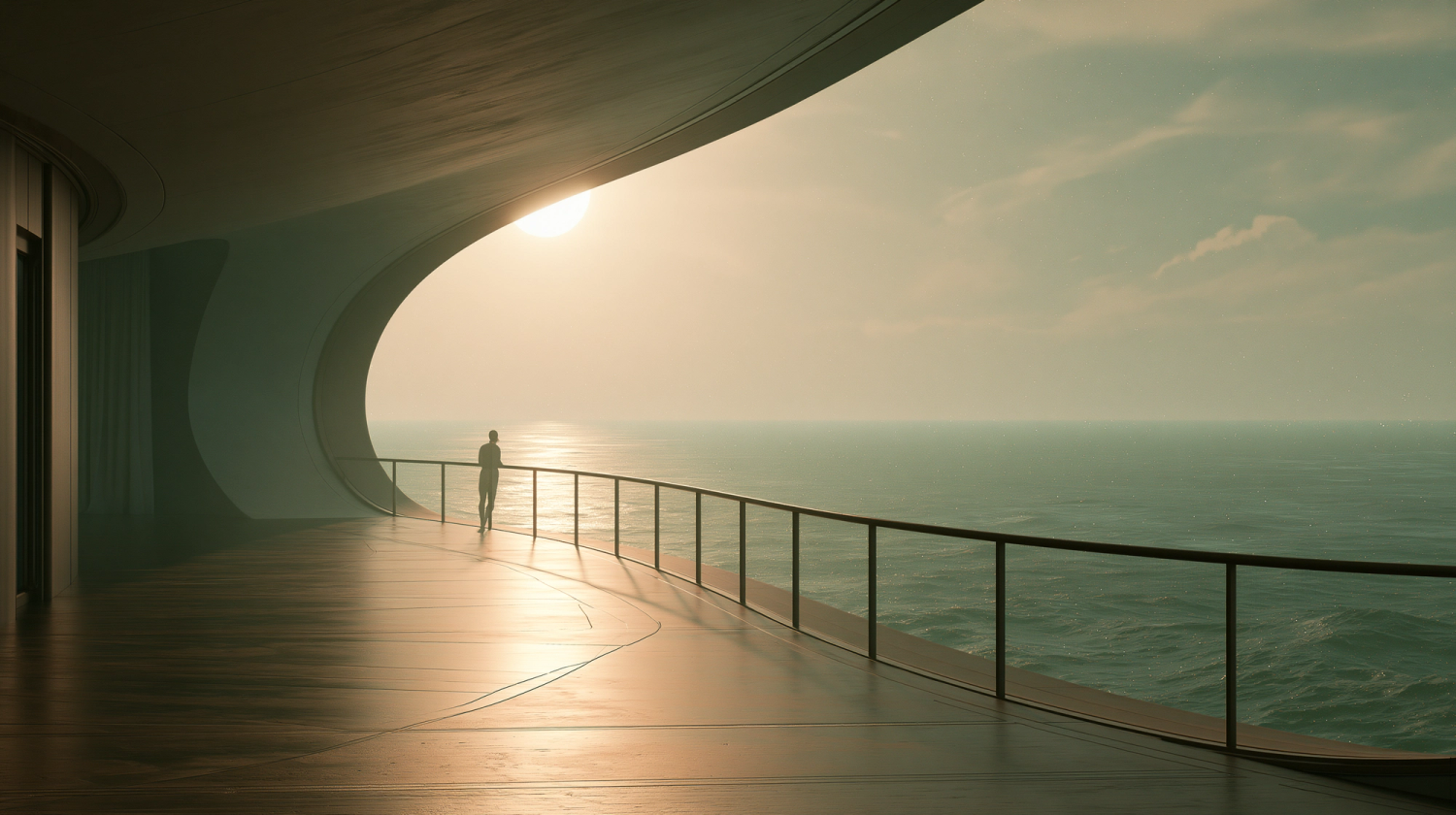
And Sage went, smaller than the city around her and not as alone in it as she'd been that morning, and Astra stood on the terrace a while longer by herself, looking south, at the water and the far invisible line and everything past it, and let the wind off the bay take some of the hour's weight off her, and did not yet know that she would carry the thing she'd said today, what if you went back, home with her, and that it would still be there in the morning, turned the other way, pointed at her own life.
That night she called him.
She didn't examine it. The Sage day had scooped her out, the water and the aunt and the small light coming back into the girl's voice at the end, and she came home hollow in the particular way the big sessions left her, the way that came from holding something so heavy for an hour that your own arms forgot they were yours. She didn't want wisdom and she didn't want to be alone with the dark coming up off the floor. She wanted the bad-joke man and his green-smeared jaw and his complete lack of anything she'd have to carry.

He came. He brought nothing and needed nothing and he could tell, the way he always could under all that lightness, that tonight was not a night for the routine; so he didn't do the routine. He just sat with her on the couch and let her put her head on him and talked, quietly, idly, about the piece he was planning, birds, a whole flock of them coming up the south curve like the wall wasn't there, and she listened to him describe a freedom he was going to paint in the dark and then be paid to erase, and she felt, against him, almost at peace.
"Stay," she said, into his shirt. "Tonight. Don't go home."
She felt him go still for a second, the small surprise of it, months of being sent off before the light and now this. He didn't make a joke. That was the thing she'd remember. He just put his hand in her hair and said, "Okay," easy as anything, as though she hadn't just moved the wall, as though it cost nothing. And maybe for him it didn't, but she lay there and let herself be held by a man who would never ask her for more than she'd give and understood, somewhere underneath the comfort, that this too was a kind of wall. She had chosen him in part because he would never push on the door, and that a person could be very lonely and still be inside the arms of someone who made them happy.
She slept, though. For once, with the weight of him there, she slept.
Saturday
Cass was still there in the morning, which was against the rules, her rules, the ones she had explained to him. But he was still there.
She came out of sleep to the sound of him in her kitchen, moving around, looking for things, opening things, and the staged dawn was coming up gold and false on the wall and there was a man humming in her unit, off-key, happy, and for one disoriented moment before she remembered to mind it Astra lay still and let herself simply have it, the rare warm ordinary sound of another person being alive in her space.
"You're supposed to be gone before the light," she called.
"I know." He appeared in the doorway holding two cups, his hair a disaster, paint under his nails that he never quite got out no matter what they gave him to get it out. Of course it never came out, because he got more paint on himself every night than the days could scrub off. He was thirty-eight and looked younger and carried himself like a man who had never once lost a night's sleep to the question of whether he was where he was supposed to be. "I made the coffee. The big bad crazy mean machine. I figured it out."
"Nobody figures it out. And Meryl won't help you on principle."
"I did not help him," Meryl said, from the air. "He pressed things until one of them worked. I found it difficult to watch."
Cass grinned and crossed the room and handed Astra a cup and sat on the edge of the bed, and she took it. It was, in fact, terrible, but she drank it anyway, the way she'd watched Tomas drink his cold cup during their session. She drank it because a thing handed to you by someone who wanted you to have it was never really about the thing.
"Before you came over, you worked last night," she said. It wasn't a question. The paint was still on him, a streak of cobalt up the inside of his wrist he'd missed scrubbing away..
"I worked." His eyes did a small pleased thing he couldn't keep off his face. "South line, the long curve where everybody can see it coming into the bay station. Big one. Birds." He said it the way other people said the names of their children. "They'll have me out scrubbing it by tomorrow.” He paused for a moment and then added with a mischievous grin: “whoever did it, terrible, no respect for public surfaces." He smiled at himself. He sipped his own coffee, serene, a man entirely at peace with being paid by the city to erase the thing the city didn't know he'd made.
Astra looked at him over the bad coffee and felt the old familiar tenderness and the old familiar guardrail go up alongside it, the small clean wall she kept between this and the rest of her, the wall that said this is a pleasant thing and not a permanent thing and we will not confuse the two. She had built it on purpose. She had told him about it, even, in as many words, and he had nodded and kept showing up, and she had let him, and somewhere in four months of letting him she had stopped being able to fully feel the difference between the wall protecting her and the wall keeping her small.
"What?" Cass said, watching her watch him.
"Nothing. You've got cobalt on your wrist."
He looked. He licked his thumb and rubbed at it and made it worse and laughed, and she thought, with a clarity that arrived from nowhere and would not leave for the rest of the day: he is the only person I know who is exactly where he wants to be, and the way he got there is by lying to the only authority that has never once been wrong about anyone. For some reason it works, and he is happy, and I am the wise one. I have the one job that was meant to be kept truly human, and I cannot manage to do for myself the simplest version of what he did for himself in the dark with a can of paint.
Her last patient of the week canceled, and Meryl did not offer her a reason, and Astra was glad of the empty hour and rode it out in the capsule alone, north and then turning, the city going by.
She thought about the week the way she never let herself during it, all at once, the faces stacked up. Priya going back at night to put her hand on a branch that needed her. Tomas, who had a best friend across the whole curve of the world and had gone a year without being touched. Dav in his halls keeping the air clean, carrying his dead father's ladder with nowhere to lean it. Sage, fifteen and drinking the water her aunt swore she didn't need.
They all believed the machine had gotten them right. That was the thing Astra kept arriving at, the still point under the whole week. Even Dav, in his grief, had said it: it's right. The machine that loved them had looked at the whole of each of them and put them where they belonged, and it was right, but it was not enough. And that gap, that exact gap between right and enough, was the whole of her work. It was the one country LUCkE had never annexed. It could place a person perfectly and it could not make them feel placed. It could end the long terror of the wrong life and it could not give them the harder, smaller, daily thing on the other side of that terror, which was the work of actually living the right one. So it had left a few humans behind in moving rooms to sit with people in that gap. Not to close it. You couldn't close it. To sit in it with them so they didn't sit in it alone.
She understood, riding north with no patient and the empty seat across from her, that she had been very good at doing this for everyone in the city except herself.
She had been placed too. Not from LUCkE, she was too old for that, she was of the last generation it hadn't sorted as children. But she had a placement all the same, the one she'd chosen and called caution. She had chosen the small careful life, the lover behind a wall she'd built herself, the son behind a different one she hadn't, the whiskey, the staged dawns she let Meryl run because she could not bear to choose her own light. She was a woman who told frightened people, all day, that the work was to stop guarding the door and start living in the room. And she went home every night and guarded the door.
"Meryl," she said.
"I'm here."
"Where exactly is Eli right now? Not the city. The actual place."
There was a small pause, the pause of a machine choosing to answer a question it had been waiting a long time to be asked. "He's on the south shore," Meryl said. "Lake Huron. About forty minutes past the wall checkpoint, on the hot side. He took a unit above a place that sells boat parts. He's been there for eleven months." Another pause, gentler. "He's well, Astra. As far as anything can see from up here. He's well."
Astra sat with that. Eleven months in the same place. Long enough that the running had become living. Her son had crossed out of the safe managed north and he had gone to the one ungoverned strip where a person could still bet on themselves and lose, if they chose, and he had stayed eleven months, and he was well..
"Can you open a line to the Shore? Does that even work from here?" she asked.
"It works," Meryl said. "It's not encouraged. The Shore isn't ours. But it works, and you are allowed to do it, I can place it." The voice in the small bones behind her ear was very quiet now, very careful, the gentleness deployed at its most precise. "Do you want me to place it?"
Outside the capsule the city went by, bright and high and full of people the machine had gotten right, taking their clean warm air for granted, walking the high terraces in the long northern light. Somewhere south of all of it the wall ran its line, and past the wall the warm shore lay in its ungoverned sun, and on it, above a place that sold boat parts, was a man who had her eyes and her stubbornness and a thing she'd never said.
"Don't place it," Astra said. "Not yet. I don't want it managed. I want to do this one badly, by myself, with my own hands." She took a breath. It shook, a little, on the way in. "Just open the field. I'm going to write to him. And I'm going to get it wrong, and then I'm going to send it anyway."
"All right," Meryl said.
The field opened in the air in front of her, patient, the way everything in her life had always been patient with her. The cursor sat in the white.
Eli, she wrote.
And this time she kept going.
Enjoying the story? Support the work →
All text, images and music copyright (2026), Slightly Moody Creative LLC and Joe English.