The Sit Boy · Chapter 15
Cocktails at Sunset

When he arrived in Paradise Valley, Dixon was surprised to find a guard shack waiting for him at his next dog sit.
Dixon had taken a few not-too-brutal days to make his way down to Arizona from Seattle in the RAV4 and somewhere south of the high country the clouds finally gave up and he came down into sunshine. It was late October. It was eighty-six degrees and bone dry, and after weeks of rain on glass it felt like a beautiful reward. He rolled the windows down and drove the last hour with his arm out in the sun. Paradise Valley sat on the north side of Camelback Mountain, not far from downtown Phoenix, and the mountain rose up red and rumpled to the south of him. The peak looked very much like a camel with a hump and a long nose pointing to the west. On the north side of the mountain, the houses got bigger and farther apart, until they stopped looking like houses and started looking like small, expensive hotels with very few guests.
The address he was led to was a gate. The gate had a guard shack. The guard shack had a man in it.
The man was in his fifties, with a pressed white shirt, a shaved head, and a clipboard. He did not come out. He slid open a window and looked at Dixon for what felt to Dixon like a very long time, and then at the RAV4, and then at Dixon again. His face suggested that neither of them had passed some test.
"Hi there," said Dixon brightly. "I'm Dixon Davie. I'm here to take care of the dog." He said it with just a hint of questioning at the end.
The man looked down at the clipboard. He ran a blue ball-point pen down a list. He found something and made a single, very firm check mark. His name tag was white with black letters that simply said PAUL.
"Beautiful day, huh, Paul?" Dixon said brightly again.
Paul did not say whether it was a beautiful day. Paul did not acknowledge Dixon at all in fact. Instead, he reached under the counter and came up with a plastic hang-tag for the rearview mirror. It was orange. It said SERVICE in bold print.
"Is that a good clipboard?" Dixon asked. "It looks like a really good clipboard. I'm in the events business and I know my producers really like a good, solid, clipboard."
Paul handed him the tag without saying a word.
"How long have you worked here?" Dixon asked kindly, undeterred.
Paul did not turn away from Dixon. He stuck his arm out and pointed up the hill. Then the window slid shut, and the gate swung open, and that was apparently the entire conversation.
Dixon sat for a moment wondering if Paul was mute. Then he hung the tag on his rearview mirror. On the back of the tag, in block capitals, someone had written REPORT TO THANES, MAIN HOUSE. Even the tag talked more than Paul. He considered the word SERVICE on the front for a second and felt both very slightly offended and somehow very accurately seen at the same time.
The private drive wound up the side of the hill in long slow curves. There were saguaros on both sides, tall and green and holding up their arms, and huge round boulders that looked like they had been placed there by somebody with a crane and a vision. Every turn, the view opened a little wider. By the top he could see the whole of Paradise Valley spread out below him in the late afternoon haze and Dixon reflected on the fact that someone had done a good job in naming it.
At one point, he stopped the car in the middle of the drive just to look out at the view. He was in awe. He said "wow" out loud, to no one, and then said it again.
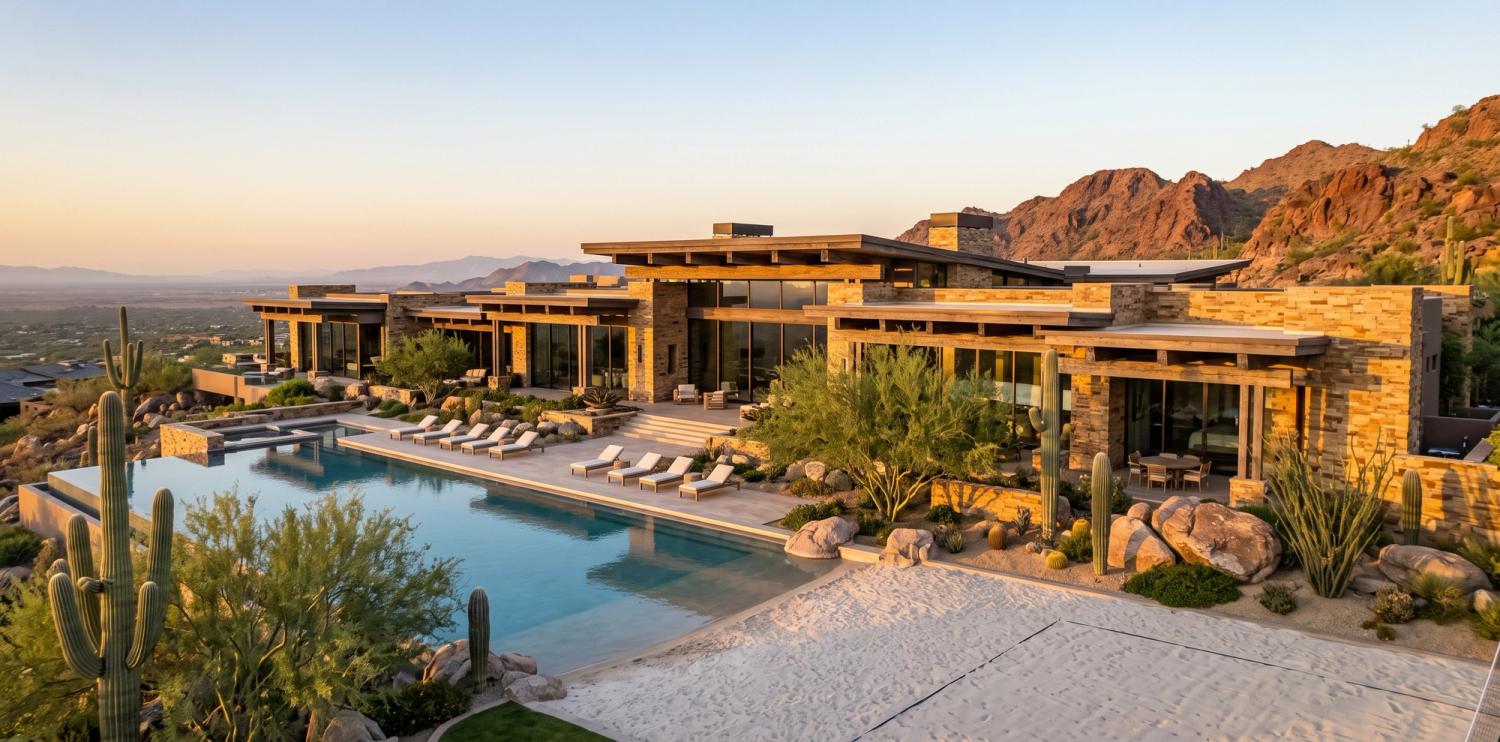
The main house was called Desert Wind. It had a name the way a ship has a name. It was long and low and made of stone and glass and enormous timbers, and it went on for so long that Dixon lost track of where it started. It was the type of house that was very certainly photographed and written about in the New York Times or Architectural Digest. The orange tag had directed him to a small parking lot tucked out of sight to one side of the building. It was full of old Hondas and a couple of minivans, one with a car seat in the back and a sunshade with cartoon fish on it. The RAV4 fit right in. He parked it next to a Civic with a cracked dashboard and a rosary hanging from the mirror.
Dixon found a door that read "House Manager" and entered the lower floor of the building, through an entrance that was clearly meant to be concealed from the occupants and their guests. He found the house manager, Thanes, in his office. He was tall and thin and wore a linen shirt without a single wrinkle in it. He stood up when Dixon knocked and shook his hand once, firmly, like a man closing a deal. His eyes looked directly into Dixon's and didn't move away from them for a good long while.
"Mr. Davie. Welcome to Desert Wind," he said.
"Oh, thank you. Dixon would be just great," said Dixon.
"Dixon," Thanes agreed. He nodded slightly, still keeping Dixon's gaze, and then he lowered his eyes toward a pad and he wrote himself a note in tiny, perfect, penmanship.
He looked back up and returned his eyes to Dixon and then he started talking. He walked Dixon through the details the way a pilot must walk a co-pilot through a checklist. Dixon was told he would be staying in Casa Lenora, which the staff called the Casita. Rufus, the dog, would enjoy getting away to the Casita for the duration of the stay. He loved the pool at the Casita. Dixon noticed that he spoke about Rufus like a person. Twice a day, morning and evening, Dixon would bring Rufus up to the main house kitchen so that Jamilla could give him his meals. He was welcome to use the main entrance when he brought Rufus for his meals.
"Um, may I ask, Jamilla, uh, she cooks for the dog?" Dixon asked.
"Of course, Jamilla cooks for everyone here," said Thanes. "That includes you, if you like. Just tell her whatever you want and she'll make it for you."
Dixon tried to imagine telling anyone whatever he wanted. He couldn't quite picture it. Not since he was a child had anyone but him figured out what he was going to eat.
Thanes continued on with the briefing: there was a full-time staff of five; Thanes managed the house; Jamilla was the chef; Terry was the housekeeper; Ronny took care of the grounds. And Jackson was the dog care manager.
"Excuse me again, sir, but the dog has a manager?" asked Dixon.
"Yes. Rufus has a manager," said Thanes, without any irony at all.
"May I also ask how often the owners are here?"
Thanes considered this. "About twice a year. They came this year for four days to host a Super Bowl party, and we got to have them for almost a whole week last month, when they came for a wedding." Dixon noticed that he had said we got to have them with an air of reverence in his voice. Dixon quickly had the image in his head of the staff in Beauty and the Beast singing the song "Be Our Guest."
Dixon looked out through the office window. He could see a pool with what appeared to be an actual beach at one end, with actual sand, and beyond that a sand volleyball court, and beyond that, a lot more house.
"So. . . the house is empty most of the year," he said slowly. "With five people taking care of it. And a dog."
"Yes. The owners have other homes," said Thanes. "Manhattan, Miami, Tuscany, and Hong Kong. We're just so pleased when they pick Desert Wind for a stay. Of course, it's so hot here in the summer that we don't expect them much in the summer months. We're ready to receive them whenever they choose to arrive."
Dixon nodded as though this answered something. He thought briefly about the idea of a full staff of people keeping a house at the ready to receive their owners on a moment's notice.
"They are very welcoming people," Thanes went on. "There's a party in the dance club downstairs every Friday night, and there's a DJ at the pool on weekend afternoons and evenings. That's for any of their friends who want to stop by. You're welcome, of course."
"The owners host a dance party every Friday," said Dixon. "Even when they are not here?"
"They are, quite frankly, rarely here," said Thanes.
Dixon had worked with rich people his whole career. He had built ballrooms for billionaires and stages for CEOs, and found them thousands of cupcakes on their whims. But he had always been working, and so had they. He had never seen money on its day off. He found it all a little shocking.
There was one more question, and he had been holding onto it since the guard gate.
"Thanes, can I ask you something? If all five of you are here, every day . . . why do you need someone to watch the dog?"
Thanes looked at him patiently, the way you look at a guest who has asked where the bathroom is while standing in front of it.
"Because it is not our job to watch the dog," he said. "It is Jackson's job. And Jackson is on vacation." He paused. "Jackson deserves a vacation from time to time does he not?"
"Of course," said Dixon. "Of course, yes." He shook his head solemnly, thinking about Jackson and the fact that apparently his whole full-time job was to take care of the dog in what was essentially a private hotel.
"Now, you'll probably find Rufus with Jamilla in the kitchen. Just head down the hall, past the staff quarters, and up the back stairs." He smiled as if to say that he was, in fact, finished with the briefing, and that he had more pressing matters that needed his attention.
Dixon went past the staff quarters and up the back stairs. He could smell the kitchen before he found it. He smelled onions, some kind of meat roasting, and something with cumin in it.
The kitchen was easily as big as a restaurant's. It was all steel and white stone, with a row of copper pots hanging over one of two ranges that each had eight burners. A woman in a black chef's coat stood at one of them, stirring. She was maybe forty, with her hair wrapped up in a bright green scarf and a pencil stuck through it.
On the floor at her feet, taking up most of the floor, there was a dog. Rufus. He was not so much a dog as an island in the midst of a stone ocean.
He was black and rust and white, in the big, bold pattern of a Bernese Mountain Dog, with a white blaze down his face and a white chest like a tuxedo shirt. He was enormous. He was lying on his side with his head on his paws, watching the pot the way some people might watch a ballgame. There was a small glistening puddle of drool on the stone under his mouth.
"Oh hello. You must be the dog sitter," said the woman, without turning around. "I'm Jamilla. That's Rufus. He's waiting on his dinner. He starts waiting at about two."
"It smells incredible," said Dixon. "What is it?"
"Bison," said Jamilla. "With sweet potato and green beans, and a little bit of apple for the crunch. He likes a little flair in his meals. Tomorrow he's having salmon, flown in fresh from Alaska." She tapped her spoon on the side of the pot. "I cook everything for him from scratch. A different menu every day. He's a very well-fed dog." Dixon considered the "Be Our Guest" song again. She was just happy to be cooking for someone, he supposed.
Rufus had heard his name and thumped his tail on the floor heavily three times. It sounded like someone knocking on a door.
Dixon knelt down. Rufus lifted his huge head and looked at him, and then, slowly, with great effort, he rolled over onto his back and presented his belly. It was an act of total trust.
"Hello, Rufus," said Dixon. "I'm Dixon." He got a little closer and whispered, "please don't call me Dix."
He rubbed the belly, which was roughly the size of Texas. Rufus closed his eyes and moaned with sheer joy. When Dixon stood up, a respectable amount of Rufus seemed to come with him in a great cloudy puff.
"Sorry, he sheds," said Jamilla, sounding quite concerned.
"I see that," said Dixon, brushing uselessly at his pants. He looked up at her. "Thanes said that I should just tell you whatever I want for dinner. Is that really true?"
"It's true," she said. "We are always fully stocked. Are you hungry? What can I make you?"
Dixon looked at the pot. He took a long sniff in. He looked at Rufus. He thought he looked very healthy. He thought about it honestly.
"Could I just have whatever Rufus is having?"
Jamilla turned around for the first time. She looked at him for a long moment, and then she laughed, a big, surprised laugh that came all the way up from her stomach. She was delighted to her core.
"Nobody has ever asked me that," she said, with a howl. "You want to eat dog food! That's hilarious!" She laughed so hard she had to bend over in the middle and wipe tears from her eyes.
"I've got Lobster from Maine and Wagyu from Japan and you want to eat dog food!" She laughed harder.
"Yep. It smells delicious," Dixon said with a smile.
Rufus led Dixon to the Casita. Or rather, Rufus walked beside him, touching him with his shoulder the whole way, and Dixon understood within about forty yards that he had been chosen. Rufus was the kind of dog who was attached to somebody. That afternoon the somebody had become Dixon.
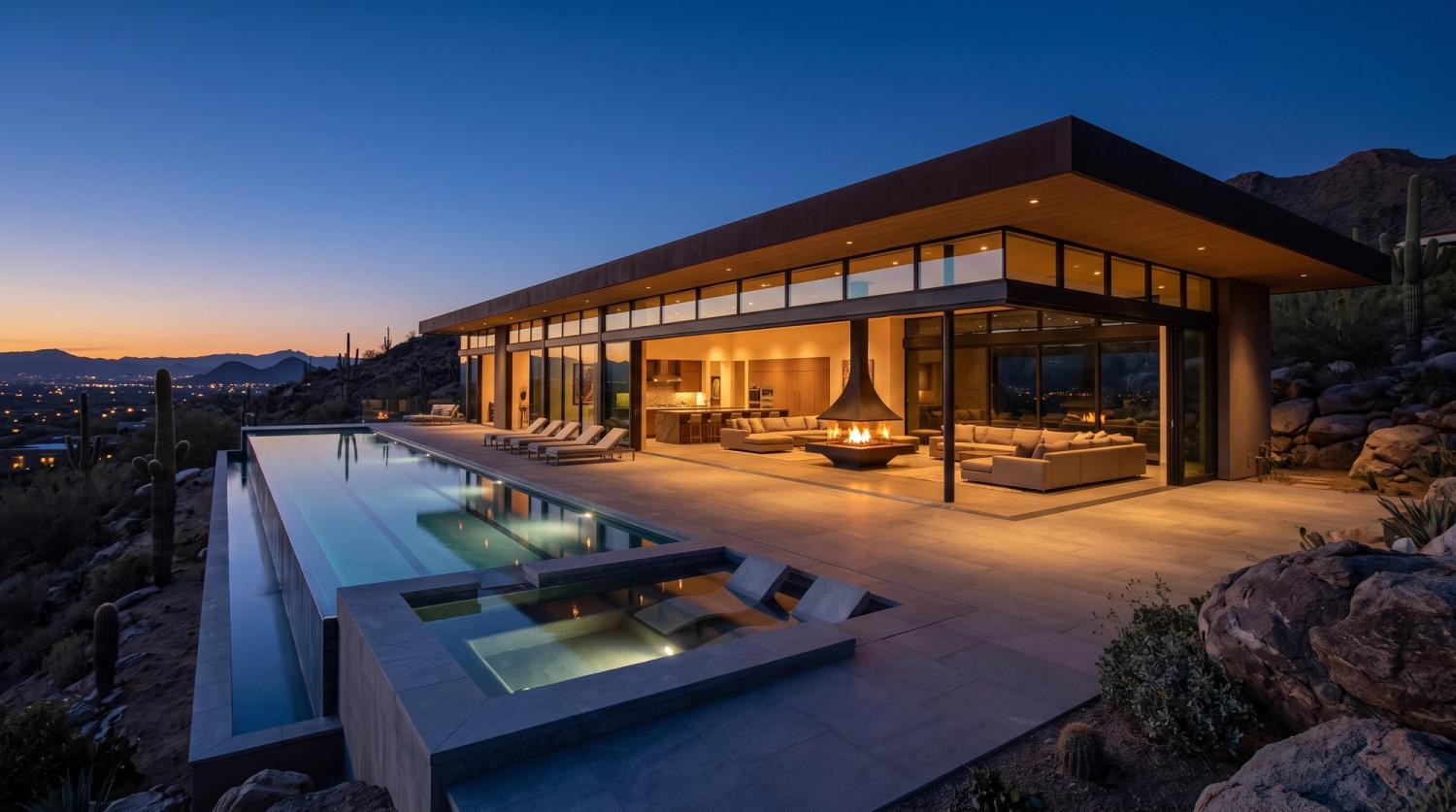
Casa Lenora was supposedly the guest house. It was, Dixon guessed, about four thousand square feet. It was one long story laid out in a line along the hill, and the whole front of it was glass, floor to ceiling, with doors that folded all the way open so that the house and the desert became the same room. The floors were smooth grey stone. In the middle of the main room there was a fireplace with no walls around it, so you could see the fire from both sides. There was an open kitchen, and a long bar, and so many couches and chairs that Dixon counted seats for at least twenty-five people and then stopped counting.
Outside, a pool ran out from the house toward the valley. It was a lap pool, two lanes, twenty-five meters long. At the far end it opened into a bigger swimming area with an infinity edge, where the water seemed to pour right off the side of the hill merging into the sky. Beside it there was a hot tub big enough for a dinner party, with loungers built right into the stone.
Rufus gave him the tour. He did it one room at a time, walking slowly ahead, pausing in each doorway to make sure Dixon was following. He left a little drift of fur on the grey stone in every room, like a man leaving breadcrumbs to find his way home.
"This," Dixon said to him, standing in the main room, "is the guest house?"
Rufus sat down on his foot. He looked up at him expectantly, almost proudly, as if to say, 'yeah, I like it here too.'
The two of them went out and sat at the edge of the pool, Dixon with his feet in the water and Rufus on his back on the warm stone beside him, all four legs in the air. Dixon rubbed his belly and looked at the valley. The light was getting longer.
Then his phone buzzed with a meeting reminder. He had a video call at four. A company update meeting of some kind. Dixon had no idea what it was about. But he knew what he wanted: to sit with Rufus and look out at the view. But he went inside and closed the big glass doors behind him, one panel at a time, and sat at a desk in an office larger than the one he'd had back in Atlanta to take the call.
At about a quarter past five, he heard voices in the house.
Some higher-up executive was talking about utilization metrics and resource loading. Dixon looked quizzically out through the office door into the main space.
Voices were coming from the far end of the house. He heard laughter. He heard a bottle being opened. Then came the sound of one of the glass panels rolling back on its track.
Dixon closed the laptop and cautiously walked to the doorway where he sensed a cocktail party going on.
He walked slowly out into the main room.
There were about ten people in it. He had never seen any of them before. They were opening the glass doors, one panel after another, with the ease of people who had done it many times. A man in a knit short-sleeved sweater was behind the bar, shaking a cocktail shaker so large it could fit an entire fifth of vodka or gin. A woman in a white tennis dress was turning on music that started playing out of speakers about six feet high along the far wall. A man in a designer pastel blue t-shirt was lighting a fire in the fireplace at the center of the room. Rufus was going from person to person, accepting tribute. Everyone said hello to him as if they were old friends.
"Hello?" said Dixon, more quietly than the atmosphere would have called for.
A woman that could have been a fashion model, with arms and legs too long for her body and a size -2 dress, opened the greenest eyes he had ever seen wide and literally yelled: "You must be Dix!"
He winced, very slightly, on the inside. He had been in Paradise Valley for three hours. Somehow, the shortened version of his name had beaten him to the house.
"What's happening here?" he asked.
"COCKTAILS!" said the whole room, in unison.
They were the neighbors, from several of the surrounding houses and it turned out they did this every day. They came over around sunset. They had a drink, or several, by the pool at Casa Lenora and enjoyed the fire pits. And then, eventually, as suddenly as they all had appeared, everybody moved on across the street to Juan's, because, apparently, Juan's cook was unbelievable. It wasn't anybody's party specifically. It was just a cocktail party that happened every day. It was a wandering cocktail party.
"Every day?" asked Dixon, slightly alarmed.
"Every DAY!" said the man with the shaker. "What are you drinking?" he asked cheerfully.
Dixon considered for a moment that someone was asking to make him a drink, in what was ostensibly his house, and he rolled with it. "I bet they don't have a Caffeine-Free Diet Coke back there do they?"
The man earnestly looked under the bar. Dixon could see roughly forty kinds of vodka down there, bitters from countries he had never been to, and at least three kinds of olives. Of course, there was no Caffeine-Free Diet Coke, because there was never any Caffeine-Free Diet Coke.
"Sorry, but I have a mezcal that will literally change your life," the man offered.
"That's probably more true than you know. How about a mocktail," said Dixon. "Throw it in a high-ball, would ya'. It will at least make it look like I'm drinking." The man gladly complied, pouring out a few measures of tonic water, adding in a bit of orange juice for color and then a bit of bitters. He handed the drink to Dixon, who sipped it and exclaimed, "wow! That's fantastic. What do you call this?"
"I don't know. Maybe we should call it the Dix?"
Dixon crinkled his eyebrows for a second and then decided that the drink was too good to let the naming ruin the moment. He would work on the name later, but maybe he'd found a new drink.
Dixon thanked the man, whose name was Tim, and then noticed that the sun had started to go down.
He saw it start over the shoulder of the woman with the green eyes, who was asking him where he was from. The sky over the valley turned orange. Then it turned a deep, burning pink. The pink slid slowly toward violet, and the mountains on the far side of the valley turned dark blue, and the lights of Scottsdale in the distance started coming out in the clear night.
Dixon looked around the room. Every single person in it was facing the bar.
He excused himself. He went and got the Nikon from his bag, and he walked out to the edge of the infinity pool, where the water ran off into nothing, and he shot the swirling colors of the sky while it lasted. It lasted about six minutes. Behind him the party roared and the shaker rattled again, and nobody looked up at the fireworks in the sky. Rufus came out and sat on his foot again, and the two of them watched quietly the very last of it go, and then they went back inside to the party.
Dixon and Rufus got swept along with the wandering crowd.
Juan's house was across the street and down a long drive lined with olive trees. Juan was not there. Juan, it turned out, was in Monaco. Or possibly Singapore. Nobody was quite sure, and nobody seemed to mind. His cook was there, though, a small, fast woman named Esperanza, and she had made enough food for a wedding. She had seemed to know they were coming, because, of course, they came basically every day. She had made short ribs, spicy little tamales, and a salad with pomegranate seeds that Dixon went back for three times.
Everybody ate standing up. Nobody said thank you to Esperanza. Dixon found her in the kitchen on the way out and thanked her in Spanish, which came out with his French accent, as his Spanish always did. She laughed and patted his cheek like he was nine, and offered him a drink, and when he told her about his continued quest for Caffeine-Free Diet Coke she shook her head sadly, like a doctor with bad news. She had none to offer.
From Juan's, the party moved on to a house that looked exactly like a castle. It was made of rough stone and it had a tower. It also had what appeared to be a drawbridge, although on closer inspection it was a very wide wooden walkway over a decorative moat. The castle belonged to a couple named James and Leigh.
The woman in the white tennis skirt told Dixon the story on the walk over, in a loud whisper, with tremendous enjoyment. James was the heir to an immense family fortune, but James was gay. His parents didn't approve. He was told that he would inherit the family fortune only if he did certain things. He was promised an extra billion dollars on the condition that he got married, to a woman. So he had gotten married, just as instructed in the trust. He had, in fact, married his estate-tax lawyer. Her name was Leigh, she was absolutely gorgeous, she was from Texas, and she had received two hundred million dollars for her trouble.
"A billion," Dixon repeated. "For getting married."
"No, an extra billion," she said.
"Oh wow." Dixon said in astonishment.
James was right there at the front door when they arrived, perfectly pleasant, shaking hands, in a navy blazer with no socks. He shook Dixon's hand warmly and said, "Welcome to the neighborhood, friend!" and then went off holding hands with one of the male neighbors.
Leigh was standing by an enormous stone fireplace that you could have parked the RAV4 inside. She was tall, at least five foot ten in bare feet, with long blonde hair that had been given volume and height, in the way that is only truly done in Texas. She had the air of a Dallas Cowboys cheerleader. She wore white jeans and a sheer silk blouse and high gold heels, and she was holding a glass of champagne she wasn't really drinking. She looked bored out of her mind. She looked over and saw Rufus and immediately broke out into a smile.
Then she looked at Dixon, with Rufus leaning against his leg, and the fur all over the both of them, and something in her face turned from the smile of a person that loves a dog, into the look of a person that just got hungry for something more carnal.
"Well, now," she said. "Who are you?"
"Oh hi, I'm Rufus's friend for the week. I'm watching him over at Desert Wind," said Dixon, a little sheepishly and a little pleased.
"So you're the help?" she asked, and one eyebrow went up, but she was smiling when she said it.
"Well, for two and a half weeks, anyway," Dixon said, wondering if she was making fun of him, even just a little.
"How delightful. The neighborhood can use some new attractions from time to time. It's pretty much the same, day after day. Just an endless string of cocktail parties and shopping sprees. What do you do the rest of the time?" She leaned in. She appeared to be eager to hear the answer.
He told her a little. Not all of it. Just a bit of his story since Atlanta. About the house he'd sold, the changes in his life, the dogs he was so lucky to get to love. About life on the road. She had lots of questions. She asked them, freely, without an ounce of introspection that she might be invading Dixon's privacy. Dixon took notice of her interest in the answers, and for some reason, rather than feeling vulnerable, it made him immediately like her.
After the castle, the last stop of the night was a sleek modern white house with a lot of right angles, owned by two hedge fund managers named Stephen and Bradley. Stephen had silver hair and wore fuzzy slippers. Bradley had a sweater tied around his shoulders, even though it was seventy-five degrees at nine o'clock at night. As soon as the group came through the door, Stephen went to a glass-fronted display case of a refrigerator that covered most of a wall and came back with two magnums of Dom Pérignon.
"Breaking out the Dom," he announced, grandly. "Because it has been a long day for us all, and it's only Tuesday!"
Everyone cheered.
Dixon found the bar and made one of his new mocktails, the one he hadn't named quite yet, and then asked Stephen, "What made it long? The day, I mean."
Stephen thought about it. He seemed to really try. He scoured his brain across the length of the day.
"The market was very flat," he said finally.
"And I had Pilates at ten. I couldn't get into the noon class, so I had to go at ten. That makes for such a long day," said Bradley, very dramatically extending the words as he said them.
Everyone nodded with sympathy. Dixon wanted to laugh, but he sipped his mocktail instead.
Dixon walked home under a full moon with Rufus padding along beside him, a little dazed. Everyone he had met that night had asked him about himself. They asked where he was from, what he did for work and how on earth he lived like the way he did. He noticed that no one had said much about what they did with their days.
"So you just drive places?" one man had asked him, with real wonder, as though Dixon had said he secretly had wings and could actually fly.
The days took on a rhythm over that first week.
He got up at first light and ran the roads under Camelback while the sky went pale behind it. The morning air was cool and dry and perfect, and he came back happy and barely even sweaty, which after Seattle felt like a magic trick. Then he walked Rufus up to the main house for their breakfast.
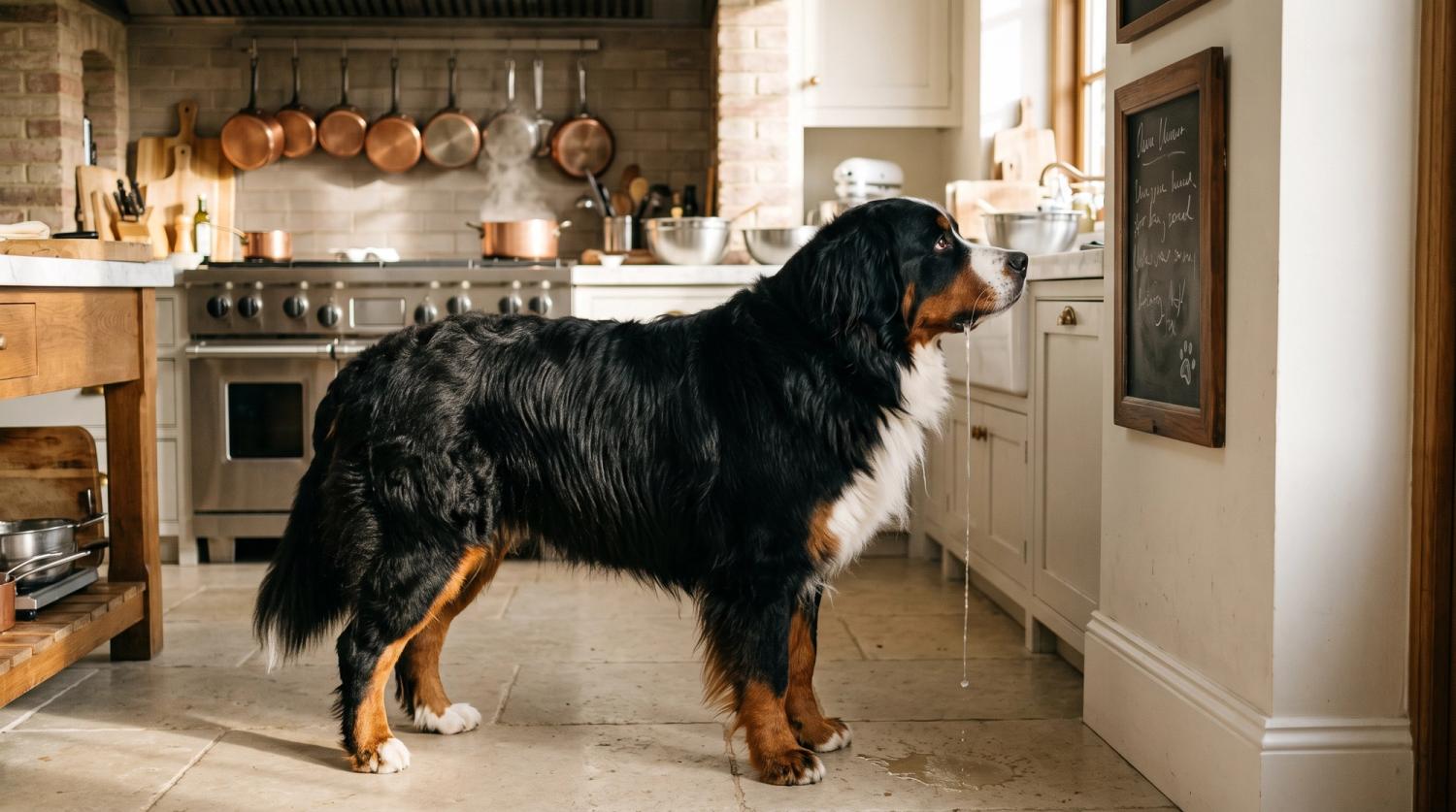
Breakfast at Desert Wind was a ceremony. Jamilla wrote Rufus's menu on a small chalkboard by the back door every morning. Monday was turkey and pumpkin and blueberries. Tuesday was the bison. Wednesday was salmon with rice and peas. Rufus would stand in front of the chalkboard and read it, or at least that's what it looked like, and then he would go and lie down at Jamilla's feet and drool on the stone in anticipation.
Dixon ate whatever Rufus was having, at least a version of it. Jamilla had decided this was the funniest thing that had ever happened in her kitchen, and she was excited to make a second, slightly more seasoned version, just for him, served on a real plate, and she would stand there with her arms folded and watch him eat it.
"Good?" she would ask.
"Rufus is a very lucky dog," he would say, every time.
One morning, he noticed that there was a case of Caffeine-Free Diet Coke in the Casita refrigerator. He had not asked for it. He had not mentioned it to anyone except the guy making the cocktails the first night. When he asked Jamilla about it, she just shrugged.
"Esperanza told me," she said. "We talk. Esperanza tells me everything."
He started to understand the neighborhood by its cars and the people that worked in the houses. In the mornings, on the drive and the street outside the gate, the cars that came and went were old Hondas and Toyotas and minivans with dented bumpers. In the afternoons it was Porsches and Range Rovers and once, gliding by like a yacht, a Maybach. Dixon waved at the Hondas. The Hondas waved back. The Porsches didn't seem to notice him. He always knew who to wave to. He waved at Paul every time he passed the gate, too. Paul did not wave back, ever.
Ronny, who took care of the grounds, drove a pickup truck older than Cash. He knew the name of every plant on the property: the palo verde, the ironwood, the brittlebush, the ocotillo that looked dead until it rained and then leafed out green in a few days. Dixon talked to him in Spanish, mostly about plants. On the second day, Ronny went and got his sister, Terry, the housekeeper, so she could hear it too.
"Habla como un francés," Terry said, laughing, with her hand over her mouth. He speaks like a Frenchman.
"I know," said Dixon. "Everyone tells me."
They liked it anyway. So did he. They must have found it charming.
On Saturday afternoon, walking Rufus up for his dinner, he heard the thump of EDM music before he saw the pool. There was a DJ set up by the sand beach, and there were maybe forty people around the pool at Desert Wind. They were in swimsuits and sunglasses and big hats, drinking, laughing, splashing, sunning themselves on the owners' loungers on the owners' sand. He didn't recognize a single one of them. These were not the neighbors who came to Casa Lenora every night. The owners, of course, were not on property.
He stood there for a minute with Rufus and watched them.
"Who are these people, Rufus?" he asked quietly. "Friends of the family? Friends of friends? People who heard there was a DJ?" They were having a lovely time at a house that belonged to someone who wasn't there.
He knew he was living in that same someone's guest house. "I'm not sure I'm any different from them," he said.
Rufus leaned on his leg, a little sadly. "Don't worry buddy, I'm not going anywhere yet," he said, stroking his large head softly.
Dixon also had to come to grips with the shedding that first week. Rufus shed in a way Dixon had not known was possible for a living creature. There was fur on the grey stone floors, fur on the couches, fur in the pool filter, fur on Dixon's toothbrush, which he could not explain. After a few days, he finally opened the light blue dog supply bag he'd been building since Portland and took out the slicker brush. He hadn't used it yet. He pulled it out of its wrapper and read the instructions. Then he sat on the floor with Rufus for an entire hour and brushed out enough fur to make a second, smaller dog. Rufus lay there with his eyes half closed in total bliss.
So it became a ceremony. Every morning after breakfast, out on the warm stone by the pool, Rufus got ten minutes with the brush, groaning like a man at a spa. And Dixon started stretching their walks, a little farther down the drive each day, until a dog whose main exercise had been the trip from the kitchen to the chalkboard was doing a real loop every morning. By the second week the drifts of fur had stopped appearing on the stone, and there was a little less Rufus to go around in other ways too.
Jamilla noticed first. "He's getting his waist back," she said one morning, looking at him sideways while he drooled at her feet. "What are you doing to my dog?" she asked, petting him gently.
"We walk," said Dixon. "And I have been brushing him, a lot."
Thanes noticed too, and wrote something down in his notes. Dixon was absurdly proud. He couldn't fix the house, or the neighborhood, or the owners being gone. But he had fixed a little bit of the dog.
And Rufus slept in his bed. Of course he did. Rufus weighed, according to Jamilla, a hundred and thirty pounds, and every night he climbed up and took exactly two-thirds of the best mattress Dixon had ever been offered. Dixon slept on the edge with one arm hanging off the side, with a hundred and thirty pounds of warm dog pressed against his back, and was oddly happy about it.
And every evening, at sunset, the cocktail party came. It always seemed to start at Casa Lenora and then meander to a different set of houses. And always, someone new would turn to him with a fresh drink and a bright face and say, "So what's your story, Dix?"
He told it. He was good at telling it. He had spent twenty years telling stories to people with money, and he knew exactly how to tell a story that made rich people lean in. He noticed, around the fourth or fifth night, how easy it was for him. How well he fit. He noticed that it bothered him a little. He was somewhere between SERVICE and a full-fledged member of the cocktail party. It only took one look at his RAV4 to bring this to bear. It was too nice, too new, to actually belong to one of the service crew, but the owners would look at it and know that no one living in their enclave would ever choose to drive such a vehicle, unless, god forbid, it was a service loaner while the Range was in the shop.
"It's only frickin' Thursday!" Stephen announced one night, opening yet more Dom.
Everyone cheered for the Dom.
On the second Wednesday, the party moved on to Juan's without Leigh and Dixon. She had started joining the parties right at their beginnings at the Casita, because she wanted to spend time with Dixon.
She was planted by the fire in the Casita with her shoes off and her feet tucked under her, and when the last of the group had gone laughing down the drive, she looked up at Dixon and said, "I'm not hungry. Are you?"
He wasn't, really. He had eaten something exquisite alongside Rufus. Dixon sat down beside her. Rufus lay down in front of them like a large furry coffee table.
"Can I tell you something?" she said. "I'm so bored I could scream!" She put her fingers in her hair as she was saying this like she was pulling it out.
"Leigh, you do realize you live in an actual castle," Dixon said with a smile.
"I know. It's a very nice castle." She looked into the fire. "I do love the view from the tower." She put her head on Dixon's shoulder. "Can I admit something?" she asked, looking off into the space above the pool.
"Of course. I'm the safety of the stranger. I'll be gone not too long from now and your secrets will travel with me."
She looked up at him with a concerned face. She wanted to say that she didn't really want him to leave. But then said what she had been meaning to: "I've been revenge shopping lately. I want it to feel good, but it really doesn't."
Dixon crinkled his eyebrows and leaned in to her, because he really didn't know what she was talking about. "What's revenge shopping, exactly?"
"Oh it's what we do to punish our husbands when they've done something terrible. See, you go out and spend a ton of money hoping he'll notice and get mad at you."
This didn't make any sense to Dixon. "I'm sort of afraid to ask, but what did he do?"
Leigh sighed. "I just wanted to go to Phuket with Brenna and Tee. There's this great DJ in residence that we all love. And he wouldn't let me have the jet."
Dixon tried very hard to keep his face neutral. He was not completely successful. He moved on to more questions.
"So, revenge shopping," he said. "What does that look like? You run out and buy some clothes. What, do you drop like . . . ten thousand bucks in an afternoon?"
Leigh laughed so hard she had to put her glass down.
"Oh, honey," she said, wiping her eyes. "James carries that much in cash. That's his tipping money. He has an accountant. He never sees the credit card bills. No, you need to do something really audacious like redecorating one of the houses or bidding on something crazy at Sotheby's. Something really big."
Dixon had money. He had sold a very big house in Atlanta, and he was careful with it, and he would be fine. But sitting there by that fire, he understood that his money and her money did not live in the same zip code.
"Is it strange?" he asked. "Being married to someone who . . ."
"Who isn't interested in me at all?" She smiled. It wasn't a sad smile, exactly. "We're married on paper. That's all. James has no need for my womanly qualities. He has no interest in me, and he never did, and that's fine. I can do whatever I want. I can see whoever I want. James doesn't care. In fact, he'd probably be into you as much as I am." She looked at him and wanted to kiss him. She shrugged one shoulder. "He's a good guy. I knew what I was getting into. I drafted the damn agreement myself. I was a very good lawyer, once."
"Once?"
"Yeah, I made partner in Dallas at thirty-four." She turned her glass around in her fingers, and her face changed as she remembered. "I was an estate-tax lawyer. That's how I met James. I was the best in my field. But I also got to do good things for the community. One time, I fought the government to get the water turned back on for a whole trailer park outside Waco. That was a good moment and I wish I could still do that for people." She was quiet for a second. "Then James offered me two hundred million dollars to marry him, and I thought, well, I'm not stupid. But GOD Dixon, I haven't done anything in six years." She banged her head on his shoulder.
"You called me Dixon," he said.
"That's your name, isn't it?" She looked at him over the rim of her glass. "I have heard everyone else calling you Dix, but I can see that you hate it. Your whole face does a thing every time it happens."
He laughed. It made him happier than he expected, that somebody had at least noticed.
They talked for a long time there by the fire. She was curled up on him, sinking into his body heat. She asked for the whole story, not just the good parts. When he mentioned the songs he'd been writing, she asked to hear one, and he played her "Gone by Morning" on his phone, Juno and all. She sat with her eyes closed and her head on his chest and said, "Oh, I like that. I like that a lot." Then she wanted to know what he did with all the pictures he took of the sunset. He said he didn't know yet.
"I'm a photographer, I guess," he said. He had never said it out loud like that before. It felt strange, and good.
Leigh sat up.
"You're a photographer," she said. "Well then, shoot me!" She jumped up and did a spin as if she was wearing a long dress that twirled out around her. Her hair flowed out in the night air.
"What, now?" Dixon asked.
"No, not now. I look like a woman who's had three of Stephen's martinis." She stood up and pulled her silk blouse off over her head in one smooth motion, and dropped it on the couch. "Because right now," she said, "I'm going skinny dipping."
She walked out through the open glass into the dark, toward the pool lights, dropping things as she went.
Dixon looked at Rufus. Rufus looked at him.
"Well," Dixon said to the dog. "It would be rude not to join her, don't you think?"
Dixon walked out with Rufus at his side. He stripped off his clothes and waded into the water. Rufus came along too, swimming around about as gracefully as a manatee and then swimming back to the edge, climbing out of the pool and shaking himself, spraying water across the patio. Dixon shook his head slowly and thought he would save the brushing to come for later. He swam out to Leigh at the edge of the pool.
The water was warm. The valley was all lights below them. They held onto one another at the infinity edge, where the water ran off into the dark, and hung there on the lip of it, side by side, looking out at the whole glittering world. They laughed nervously. Dixon held her hand. Back on the stone, Rufus lay down sopping wet on top of their clothes.
Leigh pulled herself in close and wrapped her legs around Dixon's waist. They kissed like two people that had been in love a long time, not necessarily with one another.
When he woke up in the morning, she was back out at the pool watching the sunrise.
She was sitting on the lip of the pool wrapped in a white towel, her long hair wet and dark and slicked back over her shoulders. The sun was coming up over the mountains to the east. The light came across the water and lit up the side of her face, and the valley behind her was soft and gold and endless.
He didn't say anything. He went and got the Nikon.
He shot her the way he would have shot a sky. He waited for the light. He moved, slowly, around the edge of the pool until the mountain was where he wanted it and the sun was where he wanted it, and then he just waited for her to stop knowing he was there. When she turned to look out at the valley, he snapped just a single frame.
He looked at the back of the camera. Then he walked over and handed it to her.
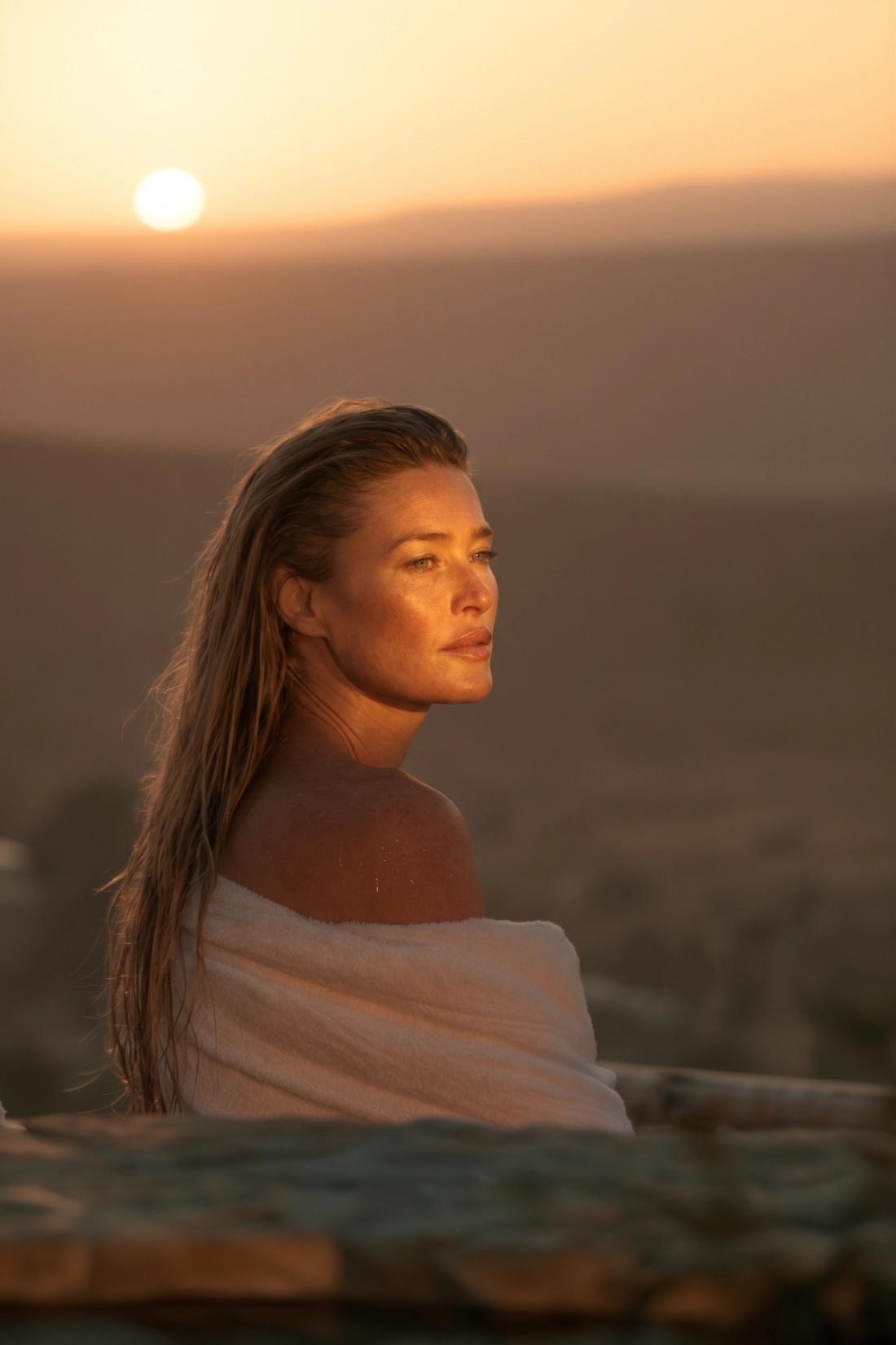
Leigh looked at it for a long time. In the photograph she looked like the cover of a magazine. She also looked like someone who was thinking about something very far away. That was the part he had been waiting for.
"Is that really what I look like?" she asked quietly.
"Yeah, that's you."
"Hmmm. I don't think I have had that look on my face in years." She looked at it again. "I want this. I want to print it HUGE. I want it over the fireplace in the great room. I want James to have to walk past it every single day. No, I want to build a whole new pool house and make this the centerpiece. That, he might notice."
Dixon laughed. "Well, it's yours," said Dixon. "You can have it. I will send you the file."
She looked up at him. She was surprised, and then she was moved.
"Really. Can I pay you for it?" she asked.
"How about we work it out in trade?" he said with a very mischievous grin and she laughed until she nearly fell into the pool.
For the next few days, they played house.
In the mornings, after he'd run and had breakfast with Rufus and Jamilla, he would sit at the long bar with his laptop and do his work, and Leigh would disappear back up the hill to the castle. She would have a hair appointment, or a call with her business manager, or some other thing that filled up a few hours. Then, as the sun started to go down, she would come walking back down the drive in sandals with a bag over her shoulder, and Rufus would get up and go to meet her.
The cocktail crowd still came every evening. Leigh was there every evening now, already there when they arrived, with her feet up on the couch. Nobody said a word about it. Nobody, as far as Dixon could tell, noticed. But at sunset, he noticed that Leigh had started turning her chair around to face the valley.
Some nights they wandered with the group. Some nights they stayed behind. One night, very late, she decided she would make them eggs. She had not cooked anything, she said, since law school. Dixon did not let on that he was a very good cook. She burned the toast. She broke a yolk and swore at it in a very Texas way. She got eggshell in his eggs and fished it out with her fingers. They ate standing at the counter at midnight, and she was happier than he had seen her since he met her.
"This is what I want," she said, with her mouth full. "This. Right here."
"Burned toast?" Dixon asked, holding up a black corner of it.
"A normal Wednesday," she said, pointing her fork at him. "Like normal people have."
Dixon set the toast down. He wanted to get this right, so he said it gently.
"Leigh, none of this is normal. Normal people don't live in places like this. They don't have somebody to cook for them, or a cocktail party as the only thing on the calendar all day. Normal people worry about money. They lie awake doing the math on making ends meet. That's normal for most people."
Leigh considered this with her fork still in the air.
"Well, let's not be crazy," she said. "I'm certainly not suggesting that." And she laughed, a big Texas laugh that filled the kitchen, and this one was partly at herself, which he had not heard before. He liked her even more for it.
She started dreaming out loud. She did it a lot, those few days. Sometimes by the fire, sometimes floating on her back naked in the pool. She could open a little practice somewhere. Do wills. Help people who couldn't afford a lawyer. Maybe move somewhere with actual seasons, and get a dog, a real dog, one as sweet as Rufus, but maybe without the mess. Maybe she'd just take her money and go.
On the last night of it, she rolled over in the big bed and looked at him in the dark. Rufus was taking up his usual two-thirds of the bed, so she was mostly lying on Dixon.
"What if I came with you?" she said. "On your. . . adventures."
He didn't answer right away. He wanted to give her the honest answer, and the honest answer took a minute.
"I think this is a solo adventure," he said gently. "I like you a lot. A lot a lot, actually. But my heart was only very recently broken into a million pieces and I don't know where I'm going yet. I'm still finding out what's out there for me. And I think I have to find out by myself. At least for now."
She was quiet for a while.
"I think I've been waiting for somebody to take me somewhere," she said finally. "For a long time."
"I think you might have to take yourself," Dixon said quietly.
She laughed, very softly, in the dark. "That sounds like something on a mug."
"It might actually be on a mug," he admitted.
She put her head on his chest and didn't say anything else. He lay awake for a long time, with Leigh asleep on one side of him and a hundred and thirty pounds of dog on the other, and he felt very sad for her, and very fond of her, and yet sure about his decision.
He thought about it for the rest of his days there, mostly out loud, mostly to Rufus.
About a year ago, in Atlanta, he had wondered whether he might lie by someone else's pool in Buckhead. Now here it was. The pool, and the woman, and the money, all of it offered to him with both hands.
"I could do it, Rufus," he said one afternoon, sitting on the edge of the lap pool with his feet in the water. "I'd be good at it. I'd tell my story every night at sunset for the rest of my life, and everybody would lean in." He swirled his feet. "Then I'd be the one that was bored."
Rufus was lying on his back on the warm stone again, all four legs in the air.
"They have everything," Dixon told him. "And yet they don't understand any of it."
He thought about where he felt most at home in Paradise Valley. It wasn't at the castle, or at Juan's, or at Stephen and Bradley's with the Dom. It was on the back stairs at seven in the morning, with Jamilla reading out the menu and Rufus drooling on the floor. It was out in the cactus garden with Ronny and Terry, speaking Spanish like a Frenchman.
And he was just experiencing the road, the music and the photography really for the first time. Yes, he was an older man by most people's standards, but he felt like he was experiencing life for the first time.
"It's too soon to stop," he said to the dog. "I'm only just getting started."
On his last morning, Jamilla made Rufus's breakfast and Dixon's breakfast, and then she handed him a heavy paper bag.
"For the road," she said. Inside there were tamales, a dozen of them, wrapped in foil, and two of Rufus's homemade biscuits, which she said were for emergencies.
"Jamilla, I don't know what to say," he said, suddenly overcome with sadness.
"Say you'll come back," she said. "Nobody else eats what the dog eats." She laughed and smiled at him and then wiped a tear from his cheek.
"Thank you," was all he could say.
Thanes shook his hand once, firmly, and said, "Dixon. It has been a pleasure. You're better than the others." Ronny and Terry waved from the little parking lot as they arrived for work, and Dixon waved back, and called out goodbye in his French-accented Spanish, and they laughed.
Leigh came down the drive in her sandals while he was loading the car. Her eyes were red from crying, but she didn't cry in front of him. She hugged him for a long time, and then she stepped back and held him by both arms.
"I'm going to Phuket," she announced.
"Did James give you the jet?"
"No." She lifted her chin. "I'm flying commercial."
Dixon laughed out loud. He was so proud of her he almost hugged her again.
"First class," she added. "I'm no animal." She turned and walked up to the pool at Desert Wind and sat in the shade under a cabana, where she would cry for much of the morning.
Then there was Rufus. Rufus, who had followed him everywhere for two and a half weeks. Rufus, who would have to go back to following Jamilla until later that day when Jackson came home. Dixon knelt on the drive and put his arms as far around him as they would go, which wasn't all the way, and pressed his face into the big furry neck.
"You are a very good dog," he told him. "And a very well-fed dog. And I am going to miss you."
He was sadder than he had expected to be. Rufus licked his entire face, ear to ear, and left a little fur on him anyway, for old times' sake. There was not nearly as much of it as there used to be. Dixon was proud of that too.
The RAV4 felt light. He drove down the long winding drive past the saguaros and the boulders, and the valley in front of him, and then there was the gate, and the guard shack, and Paul.
Paul slid the window open. Dixon took the orange SERVICE tag off his mirror and handed it back to him.
Paul took it. He looked at it. He made one firm check mark on his clipboard. Then he looked up at Dixon, and for the first time in two and a half weeks, something in his face moved.
"Dixon," said Paul.
Both syllables.
The gate swung open. Dixon laughed most of the way to the freeway.
Then he pointed the car north, toward Portland, and Cash.
Published October 10th, 2026 on the author’s birthday from Park City, Utah
Enjoying the story? Support the work →
All text, images and music copyright (2026), Slightly Moody Creative LLC and Joe English.