The Sit Boy
Back and Forth Across America (Part I)
The first night back, Dixon slept on the floor of his own bedroom in a sleeping bag, with Magnolia sleeping on the floor next to him. At some point in the night she gave up on the floor and climbed onto his chest and stayed there.
The bed was gone, along with all the other furniture, so the room felt especially large. The bed had sold for five hundred dollars to a young couple who came to the estate in their Sienna mini-van and carried the frame out in pieces and the mattress out flat over their heads like a life raft. Brenda had texted him about this while he was in Vegas and the bed had seemed like a fine thing to let go of. It was just a bed.
It seemed less fine now, lying on the floor of the room where the bed had been. He hadn’t been in a sleeping bag in a long time and he considered for a moment that he might be spending a lot more time in them. The carpet still had the four little dents where the bed legs used to be. He looked at the dents in the dark and thought that this was probably what people meant when they said a place felt empty. It wasn’t just lack of furniture. It was the little marks the furniture left to remind you of what had been there before the room was empty.
He had picked up Magnolia from Brooklyn on the way home from the airport. Brooklyn had met him at the door and she had lost her mind in the way that she was known to do, the whole back half of her body going one direction and the front half going the other, and Dixon had held her and let her lick his jaw and felt, for the first time in about a week, like a person who belonged to something.
“She’s been sleeping on my head,” Brooklyn said.
Dixon smiled and said, “She does that.”
“I know she does that. I’m telling you so you know I suffered on your behalf.” Brooklyn handed him a tote bag. “Here’s some stuff that I kept from the sale. Your dad’s watch is in the safe here if you want it now with the books and the baseball cards. I’m not giving those to you tonight because you look like you’d leave them at a gas station.”
“I would not leave them at a gas station,” he said, scrunching his face in annoyance.
“Yes, you’d probably leave them at a gas station, Dixon.” She kissed Magnolia on the head and then, after a beat, kissed Dixon on the cheek too, which was not a thing she usually did. “Go get some sleep. You look like a before picture.”
So now it was the middle of the night and he was already starting to feel like an after picture. Even lying there in his sleeping bag with Magnolia rising and falling on his chest, in a house that had nothing in it but the dents where things used to be, he felt restored and calm. He could hear the refrigerator running down in the kitchen, its noise carrying through the empty rooms and echoing softly on the polished wood floors. The refrigerator hadn’t sold. It was one of the last things in the house.
He was, he realized, technically homeless.
This was a funny and strange thought to have while lying in your own house. He tried it a few ways in the dark to see if it would get less weird. He had a house at his disposal. The house was his. But he couldn’t really live in it, because there was nothing in it to live with. And even if there had been stuff in it to facilitate the actual living, he could not stay here in Atlanta now. There was nothing keeping him here except the stuff. The stuff now being gone, he was free to go somewhere else. He didn’t feel free. He still didn’t know where he was headed.
Magnolia sighed in her sleep. A big sigh, the sigh of a creature carrying the weight of the world or possibly just dreaming about chasing squirrels in the big back yard.
“Yeah,” Dixon told her quietly. “I agree.” He rubbed her on her back and then drifted back to sleep.
He called Cash the next morning from the kitchen floor, sitting with his back against the cabinets, drinking a Caffeine-Free Diet Coke that he had driven nine miles to find. Magnolia was working on a piece of kibble she had carried out of her bowl and set on the tile next to him for reasons that only she understood.
“Hey, son,” he said softly.
“Hey, dad.” There were sounds from a video game being played in the background. He heard the game music pause, which he had learned to recognize as a sign of mega respect from a teenager. “You back in Atlanta?”
“I am, in fact, back,” he said. Then he added, “I’m sitting on the floor of the kitchen.”
“Why are you on the floor?”
“Because I sold all the furniture,” Dixon said undramatically.
“Oh yeah, I guess that’s true,” Cash replied. And then there was a short pause before he added: “That’s pretty weird, Dad.”
“It is pretty weird,” Dixon agreed.
“Are you ok?” Cash asked, sounding concerned, at least in as much as a teenager can communicate concern.
“Yeah, I’m ok. It’s just weird. I will figure it out I guess. That’s what we adults get to do,” he told him.
They talked a little about nothing in particular, which was Dixon’s favorite kind of talking with his son. He liked it when the conversation didn’t really have to be about anything. Cash’s voice was getting that low rumble that still surprised Dixon every time, the way you’d be surprised to hear your own father’s voice come out of a kid you’d watched be born.
“So you’re still coming out here for the summer?” Cash asked. “Mom said you would be here for like six weeks, right?”
“Yes, I’m still coming. I’m gonna drive out, actually. It’s time for a little bit of adventure for your old man,” he said whimsically.
“Cool, send me some postcards, ok, from the road,” he said and then asked, “and you’re bringing Maggie?”
And here Dixon stopped, because he did not have an answer, and the not-having-an-answer had a whole bunch of soft sad things folded up inside it that he had been not-looking-at for about the last two weeks. He had been thinking, and he had not said this to anyone, not Bobby, not Brooklyn, not the dog, that he might have to find Magnolia a new home. He didn’t have a home himself. He could not drag a dog, who hated the car, across the country, indefinitely. It wouldn’t be fair to her. And it would immeasurably complicate things for him. Traveling with a dog is difficult. He had been building the case in his head, the responsible case, the case that ended with him handing Magnolia to some nice family with a yard, and every time he got to the end of the case he felt like he was going to puke.
“I don’t really know, buddy,” he said. “I’m still figuring that part out.”
“Hold on.” There was a bit of a commotion on the other end of the phone. Cash came back and said, “Mom wants to talk to you.”
This was its own small event. Dixon and Cash’s mom had a relationship that was, at this point, mostly functional and occasionally not, the way it goes with two people who made a kid together a long time ago and have been negotiating the terms ever since. They were better than they used to be. Dixon didn’t like surprises in the area of Cash’s mom. She liked to surprise him quite a bit.
“Hiiiii,” she said in a sing-song kind of “I’m so happy to be surprising you this morning” kind of voice.
“Hey,” he said dryly.
“So.” She had a way of starting with so when she’d already decided something. “Cash and I have been talking about the whole Maggie situation.” This caught Dixon’s attention. He did not know that there were conversations happening across the country in Portland about his dog. “We’d like her to come live here. Cash would like her until he graduates. You’ll see her every time you come out and then he gets to enjoy her for the next couple of years. What do you think?”
Dixon looked at Magnolia. Magnolia sat up expectantly and looked back at him as if she knew what was going on. Dixon was really shocked at the generosity of the offer. This would at least allow him to kick the can down the road on a decision.
“You don’t have to do that,” he said.
“I know I don’t have to do it, but we want to do it,” she said.
“That’s really. . .” He found that his throat had gotten tight. He cleared it. “That’s really generous of you. I hadn’t even . . .I wasn’t going to ask.”
“I know you weren’t going to ask. That’s why I’m offering.” There was something gentle in her tone, which was not the usual tone between them. Dixon registered it and decided not to make it weird by remarking on it. “He lost Puddles, Dixon,” she said very quietly. “I think he should be with her.”
Puddles. Dixon had tried to forget that he had been taken along with that favorite pair of shoes. Cash had apparently cried about Puddles, once, very briefly, and then never mentioned it again in the way that teenagers seal their pain up tight.
“Okay,” Dixon said. He felt very relieved. “Yeah. Okay. Let’s do it. I will pay for her food and vet bills and all that.”
“Okay, great,” she said.
“Thank you. Really.” Dixon was deeply touched.
“You don’t have to make it more than it is. It’s just the right thing to do,” she said, but not unkindly, and then she put Cash back on. Cash took the phone and said “sweeeet” in a voice that was trying very hard to be casual and was not casual at all, and Dixon sat on the floor of his empty kitchen and understood that he had just agreed to drive his dog across the entire country in order to give her away, and that this was, somehow, the best possible outcome, and that it was going to hurt the whole way there.
“I’ll leave next week,” he said. “I’ll show Magnolia America.”
“She’s a dog, Dad. I don’t think she’s going to get America.”
“Well, I don’t get America either. But she’s gonna LOVE it,” he said enthusiastically.
The vet, on the other hand, did not think Magnolia was going to love America.
“She’s going to hate it,” the vet said. The vet was named Dr. Okafor and she had been Magnolia’s vet since she was a puppy. She had the flat affect of a woman who had heard every dog-related plan a human could devise and found most of them optimistic. “How long is the drive?”
“Like 39 hours of driving. It will take about a week. Maybe more. I’m not rushing,” he said, not listening to his own assessment.
“And is she still how she usually is in the car?” she asked.
Magnolia, who was at this moment trembling on the steel examination table at the mere memory of the four-minute drive to the office, made the case better than Dixon could. She was a dog who experienced a moving vehicle the way most creatures experience earthquakes. She drooled, she shook, she paced. She had, on more than one occasion, expressed her feelings by either peeing or throwing up on the back seat.
“Yeah,” Dixon said. “It’s, you know, about the same as always. She’s never been much of a fan of the car.”
Dr. Okafor nodded slowly and went to a cabinet. “I can give her something. Trazodone. Takes the edge off, makes her sleepy. You give it about an hour before you drive.” She wrote on a pad. “It’s not a sedative-sedative. She’ll still be herself. Just a calmer version. The version that doesn’t think the highway is trying to kill her.”
“Could I have some?” Dixon said.
Dr. Okafor looked up.
“I’m asking seriously,” Dixon said, and he was, mostly. “Is that a thing? Can I take her dog medicine? Because I also feel like the highway might try to kill me, and I have six suitcases and a dog who hates the car and I’m driving to Oregon to give the dog away, and I think the calmer version of me that doesn’t think about that is the version we want behind the wheel.”
There was a long pause in which Dr. Okafor decided how to take this.
“I’m not going to tell you you can take your dog’s anxiety medication,” she said.
“That’s fair.”
“You can talk to your own doctor.”
“Yeah, ok, I have a guy.”
“Then talk to your guy.” She tore off the script and handed it across the table. As she did, something softened in her expression, just slightly, the professional flatness lifting for a second. “You’re giving her to your son?”
“Yeah.” There was a long pause while this hung in the air.
“That’s a good home for a dog.” She said it plainly, the way you’d state a fact, and it landed harder than sympathy would have. “She’ll be fine. Dogs are fine. They’re not sitting around thinking about it.” She scratched Magnolia behind the ear, and Magnolia, the little traitor, leaned into it. “It’s the people who think about it.”
Packing the car was its own kind of education. The lesson was that Dixon did not know how to pack a car.
He stood in the now empty garage and he laid out what he was bringing on the concrete floor. He looked at it and realized it was too much stuff.
It was so much. He had, for reasons that made sense at every individual step and no sense at all in aggregate, decided to bring approximately all of his clothes. There were six suitcases. He had counted them twice hoping for five the second time. He had dozens of T-shirts. He had a garment bag of suits and blazers that he could not imagine an occasion for, but also could not imagine throwing away, because they were beautiful and he was a man that does not throw away beautiful expensive things just because his home has become a small Japanese hybrid SUV. He had several pairs of dress shoes and at least four pairs of running shoes. He had, he discovered while packing, far more T-shirts than underwear, a ratio whose flaw had not yet revealed itself to him.
And then there was Magnolia’s stuff, which was its own situation. The crate. The bed for inside the crate. The other bed for outside the crate. The food, in a bin, enough for a month because he could not be sure Oregon had her dog food. Her bowls. Her brushes. The little first-aid things. A bag of the treats she liked and a backup bag of the treats she would accept under protest. A box of poop bags. A second larger box of poop bags, because Dixon had a deep fear of having Magnolia poop on someone’s lawn, or in front of a crowded restaurant patio, and not having a bag.
He had also bought, on the recommendation of a forum, a thing called a dog platform: a hard mesh-and-board contraption that stretched across the back seat and turned the footwells and the seat into one flat solid surface, so a dog could lie down across the whole back of the car without falling into the gap. He installed it in the RAV4 and stood back and looked at it and felt unreasonably proud of it, this flat little kingdom he had built for a creature who did not want to go anywhere. He thought it was a good platform. It was a good platform.
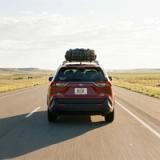
He got everything in. Barely. The car sat low on its springs and the rear window was a wall of suitcases blocking his view out the back. The passenger seat had the dog supplies riding shotgun and the back seat had the platform and on the platform, when the morning came, would be one very unhappy, but medicated, dog.
He stood in the empty garage and looked at the full car and said, out loud, to no one, “this is insane.”
Then he went inside and slept his last night in the house on the floor.
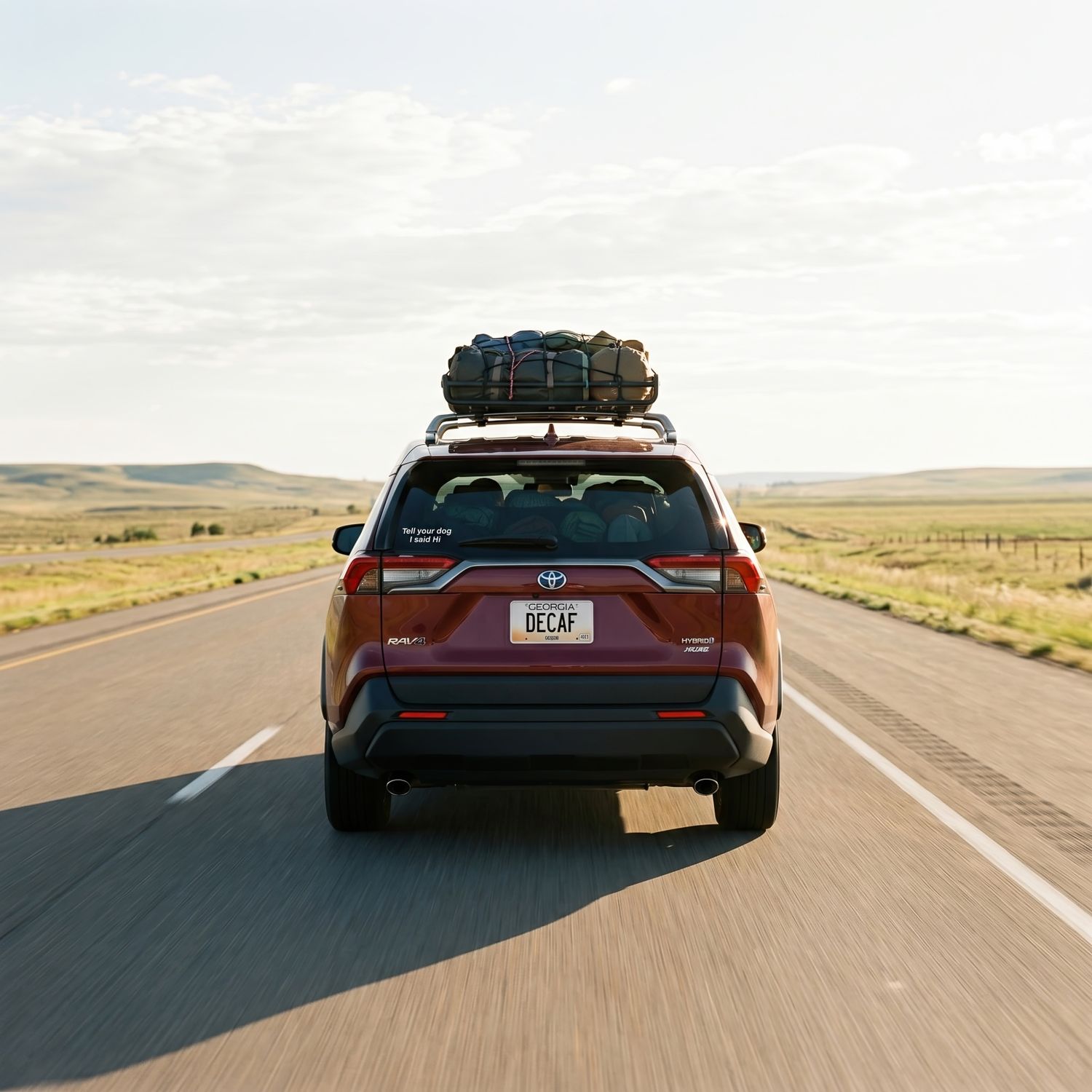
They left early. It was June 2nd, 2024. The June morning was already thick with the particular wet heat of an Atlanta summer, the cicadas tuning up in the trees along the creek. Dixon had given Magnolia her pill an hour before, with a spoonful of peanut butter, and loaded her onto the platform in her purple harness. She looked at him through the mesh with an expression of such profound betrayal that he had to take a picture of it.
He took it with his phone. He didn’t know why. He had been doing this lately, stopping things, freezing them, the way he used to frame events in his head as if photographing them, except now he was actually photographing them. The dog’s face. His own reflection in the dark car window behind her, a guy in a backwards cap looking tired. He looked at the picture and the picture was sad. The dog was sad and the guy behind the dog was sad and the whole thing said, very clearly, two creatures who do not want to be doing this are about to do this anyway.
He posted it to his Instagram account. Then he immediately regretted posting it, because what was he going to do, post the entire drive? Six suitcases and a sad dog and a sad guy, day after day, clogging up everyone’s feed with his slow-motion leaving? People had their own lives. People did not need Dixon’s roadside melancholy delivered to their phones every afternoon. He made a note to himself to be normal about it. He would mostly keep them to himself, the pictures. He didn’t know what they were for anyway. Later that day though, he would read the comments and they were nearly all positive. People wished him well, told him to have a great adventure, let him know that it was their dream to get rid of everything and hit the road. He felt the exact opposite at that moment. He felt scared and overwhelmed.
But he was ready to go, so he pulled out of the driveway. The house slid backward in the mirror, big and brick and empty, the jasmine along the back fence that he would not be there to keep alive.
“Okay, Moo Moo,” he said, adjusting the mirror so he could see her. “Here we go. Just you and me pup.”
Magnolia, drugged and harnessed and resigned, looked back at him and did not drool, which Dr. Okafor had promised and Dixon had not entirely believed, and which now felt like a small miracle granted specifically to him. She put her chin on the platform. Within twenty minutes she was snoring loudly and would snore all through the morning drive across Georgia and Alabama.
The thing nobody tells you about driving across America with a dog is that you become, immediately, a different kind of person to everyone you meet.
Dixon discovered this at the first gas stop, at a station outside Birmingham where he let Magnolia out to do her business on a sad little patch of grass over by the air machine. A woman filling a minivan saw the dog and her whole face lit up. She came over. She did not ask Dixon anything about Dixon. She asked about Magnolia, her name, her breed, her age, whether she could say ‘hi’, and then she crouched down and Magnolia, who had decided that the patch of grass was the worst place on earth, climbed gratefully onto the woman’s lap, and the woman looked up at Dixon with the open uncomplicated warmth that people reserve for men with small dogs.
“She’s precious,” the woman said with a hearty Alabama drawl. “You two on a trip Sugar?”
“Yeah, we’re driving to the Oregon Territories,” Dixon said, seeing if that might catch her out. It did not.
“Oregon! Wow! So far!” There was a pause. “Just the two of you?”
“Just the two of us,” he said.
The woman looked at him longer than the conversation required, with a sort of longing in her eyes. He had the kind of face people felt they’d seen before, and standing there in the Alabama sun with his small scruffy dog and his story about driving to Oregon, he could see the woman doing some mental math. He was learning, in real time, that Magnolia was a key that opened people. Alone he was a man at a gas station. With her he was a man with a story.
“Well,” the woman said, standing, brushing off her knees. “She’s lucky to have you,” now looking deeply at him.
Dixon noticed she had not said that last bit to the dog.
He filed this away. The dog was, apart from being his companion, a kind of credential, a softening, a reason for a stranger to decide he was safe and interesting before he’d said three words. It made him feel slightly fraudulent and he enjoyed it anyway. He was a man in transition with no idea where he’d be in a month, and he made sure to say so, always, to anyone the conversation got real with, I’m kind of between things right now, I don’t really know where I’ll land, because he had decided somewhere back in the parade that he would not be a person who let people believe a thing that wasn’t true. But a dog at a gas station wasn’t a relationship. A dog at a gas station was just America being briefly kind to him. He could take that.
He got back in the car. “You’re doing a great job,” he told Magnolia, who had no idea what she’d done.
By the second day they had a rhythm.
The rhythm was: drive, narrate to the dog, stop, let the dog pee, drive. Dixon had a lot to say to the dog. He had, it turned out, been needing someone to say things to, and Magnolia was an ideal audience in that she could not respond, leave, or get bored in a way he could detect.
“Look at that, Moo Moo.” A billboard, somewhere in the flat green run-up to St. Louis. “World’s Largest Catsup Bottle. Collinsville, Illinois. You want to go see the world’s largest catsup bottle?”
Magnolia did not.
“Yeah, me neither. But somebody made it. Somebody woke up one day and said, you know what this town needs? And then they built a hundred-and-seventy-foot bottle of catsup, and now there’s a billboard, and now you and I know about it. That’s something.”
Magnolia put her chin on the platform.
“You’re not wrong,” Dixon said.
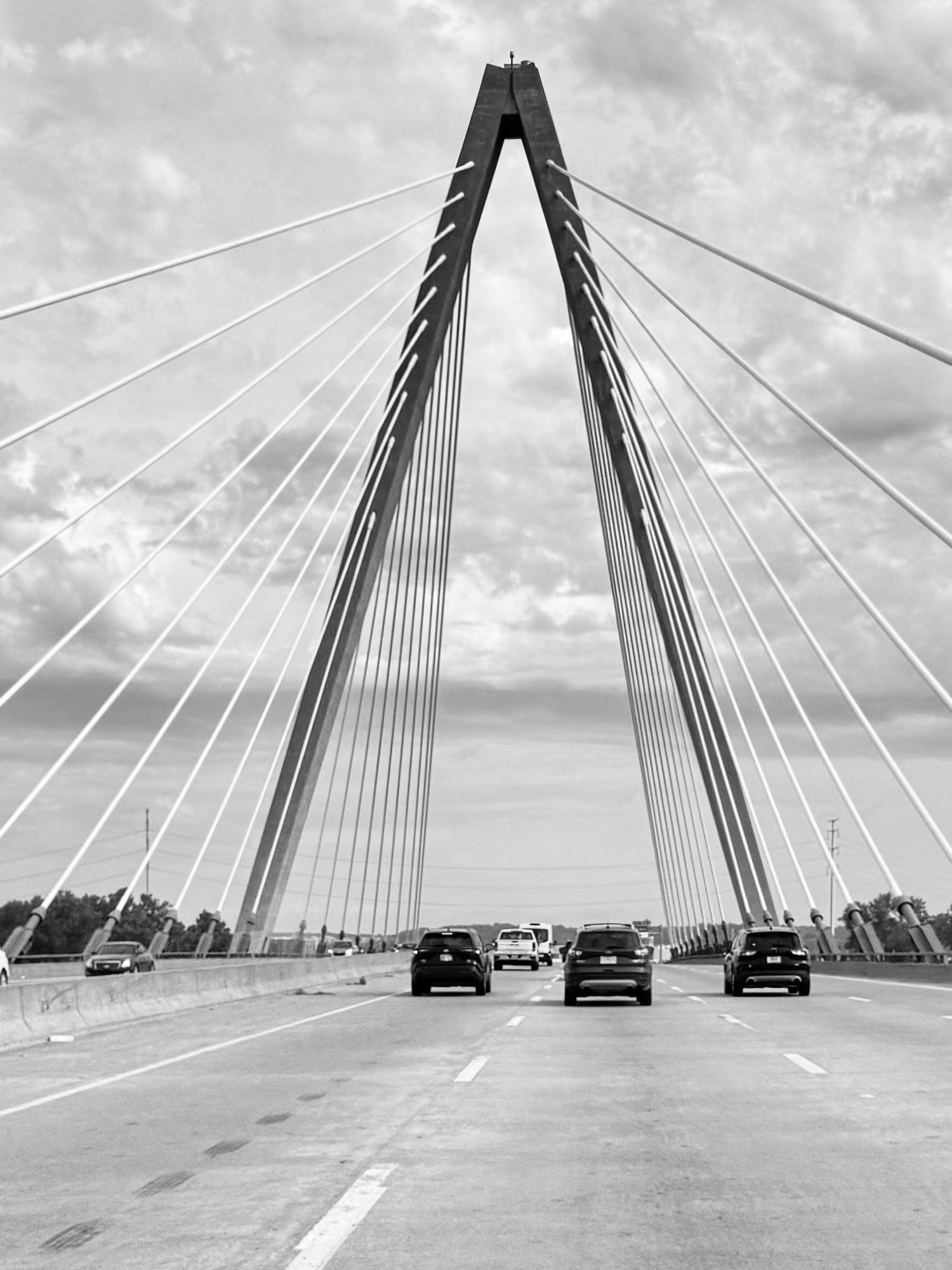
He crossed the Mississippi at East St. Louis in the late afternoon, up over one of those big cable-stayed bridges where the towers fan their wires out against the sky, and the light was doing something, flat and silver, a storm thinking about itself somewhere to the north, and he pulled over onto the shoulder, which he was not supposed to do, and got out and took a picture of the bridge.
He processed it into black and white. He didn’t decide to, exactly. He just felt that the bridge wanted to be black and white, all those hard cables and the pale concrete and the one car crossing in the middle distance. When he looked at the picture on the screen it was, he thought, actually pretty good. Not pretty. A good shot. The color version looked like a postcard and the black-and-white version looked like something a person had seen. He kept the black-and-white one and deleted the color.
He did not post it. He looked at it a few times that night.
He thought, very faintly, the way you notice a sound you can’t place: I like doing that. And then Magnolia needed to go out, and he didn’t finish the thought, and it went back to wherever such thoughts waited.
The hotel that first night was a Hampton Inn off the interstate in Columbia, Missouri, that took dogs, and Magnolia, released from the car at last, was absolutely transformed.
This was the great discovery of the trip and Dixon would never stop being charmed by it. In the car, Magnolia was a martyr. The moment her feet hit the hotel carpet she became a queen on a world tour. She inspected the room. She claimed the bed, the actual bed, a real bed, the first one Dixon had slept in in a week. She arranged herself in the exact center of it and looked at Dixon as if to say this will do just fine sir. He took a picture of her like that, splayed and triumphant on the white duvet, ears up, tongue out, the happiest dog in Missouri. That one he did post, because it was funny and uncomplicated and would not make anyone sad. It got a lot of little hearts. People loved the dog. Of course they loved the dog.
He went out to find dinner and made, in retrospect, a mistake.
There was a sushi place in a strip mall near the hotel, and Dixon, who had eaten extraordinary sushi all over the world, who had been backstage at things and front-row at others and had a passport full of stamps, decided, in the suburbs of St. Louis, Missouri, to get sushi.
The restaurant was empty. Not quiet-empty. Silent empty. There was one server, who seemed surprised and faintly alarmed to have a customer, and a sushi case under fluorescent light, and a television in the corner playing Fox news to no one. Dixon sat at a table for four by himself because he was the only person in the place. He ordered, and ate what was, with no real competition, the saddest sushi of his life. It was rivaled only by a sushi place in Poland, which had made him and his friends sick. The rice was tired. The fish was not quite the right color for raw fish. The miso soup was cold and the cucumber salad was warm. Dixon ate all of it, because he had been raised to eat what was in front of him and because the server was watching him with the anxious hope of a person who needed this to go well, and he left an enormous tip, and he took a picture before he left: the empty room, the one table set for four, his own reflection ghosted in the dark window.
That one he posted to Google Maps.
This was a thing Dixon did, for reasons he had stopped trying to explain to people. He photographed restaurants. Good ones, bad ones, sad ones especially, and he uploaded them to Google Maps the way other people leave reviews, except he didn’t leave reviews, he just left pictures, and the pictures had quietly amassed an audience of strangers that made no sense to him at all. Hundreds of millions of views. A photo of a bakery near his old house had been seen four and a half million times. He had no idea who these people were or what they were looking for. He called himself, when it came up, an ‘anonymous influencer’, which was not a thing, which was exactly why he liked it. The sad sushi place would get its views. Somebody in a year would be deciding whether to eat here. And they’d see Dixon’s photo of the empty room and the table set for four, and they’d make their choice, and they would never know the man who took it. And that was ok with Dixon.
He walked back to the hotel under a sky going purple at the edges and let himself into the room and Magnolia was asleep in the exact center of the bed, and he had to lift her gently to one side to make room, and she sighed her enormous sigh and resettled against him, and he lay there in the dark in a Hampton Inn in Missouri and thought that he had not, in fact, the faintest idea what he was doing.
But the dog was warm. And tomorrow there was more road.
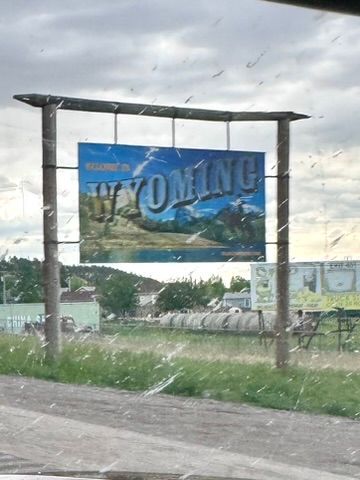
Wyoming announced itself, as Wyoming does, with a sign and a lot of nothing.
He had driven up out of Missouri and across the plains of Kansas and into the southeast corner of Wyoming with a windshield that had become, somewhere around the Nebraska line, a graveyard for what looked like the entire summer insect population of the Great Plains. He’d cleaned it twice and given up. He took a picture of the WELCOME TO WYOMING sign through the gore of it, the bucking-horse logo half-obscured by the smeared bodies of a thousand bugs, and it was disgusting and he loved it. It was, he thought, a more honest picture of crossing the country than any clean one would be.
Wyoming was also where the car nearly ran out of gas.
This was Dixon’s fault and he knew it the moment it started happening. He had gotten lulled by the RAV4’s absurd gas mileage. The thing sipped fuel, it was the whole reason he’d bought it, traded a Land Rover that drank like a sailor for a car that sipped its gas through a tiny straw. He’d let the tank get low because surely there’d be a station, and then there wasn’t a station, and then there really wasn’t a station, and the high plain of southern Wyoming unrolled in every direction with the magnificent indifference of a place that did not care whether Dixon made it to the next exit, and the little screen on the dash clicked over to DISTANCE TO EMPTY and a number.
The number was 10 mi.
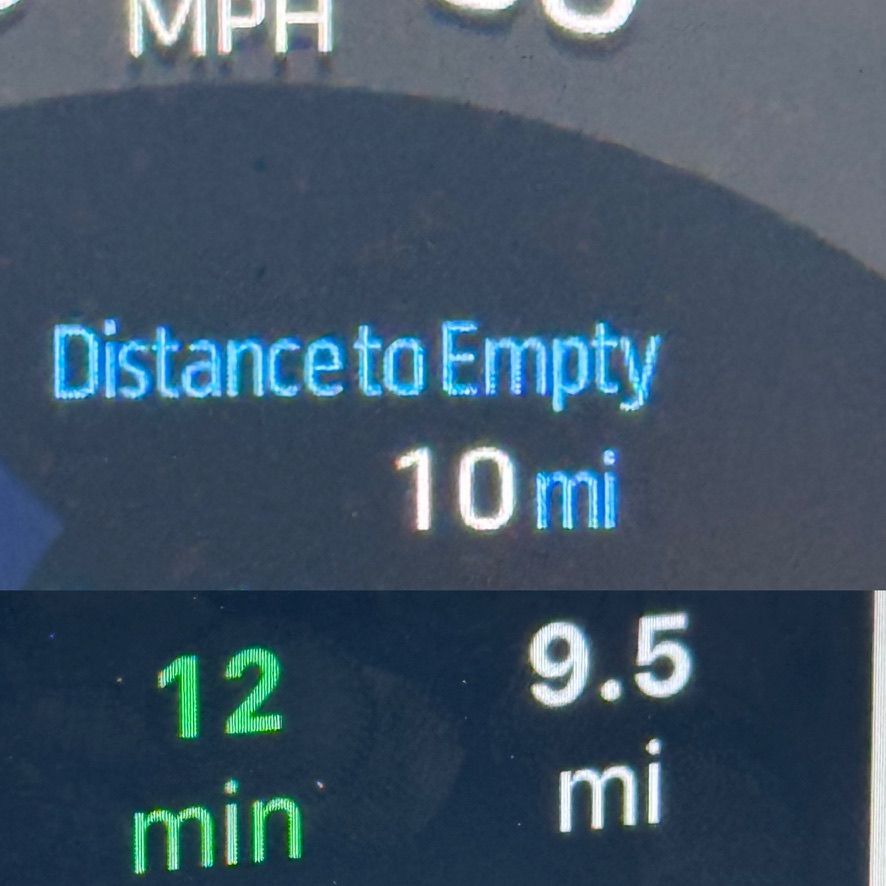
“Okay,” Dixon said. The “okay” of a man talking himself down. “Okay okay okay.” He turned off the air conditioning, which he’d read somewhere helped, or maybe didn’t help, but it felt like doing something. Magnolia, sensing the shift in the cabin, raised her head. “Don’t look at me like that. This is fine. This is a learning experience for both of us.” The number ticked to 9.5. The minutes-to-empty read 12. He did the math, which was the wrong thing to do, because the math was close. He drove at exactly the speed he’d read was most efficient, hands stiffly at ten and two, a man who normally had a very big job and who was now very focused on a very small, very important one.
He made it into Cheyenne with the gauge flashing and his heart going and rolled into a Sinclair station and filled the tank and sat there for a second with his hands on the wheel, and then he laughed, alone, in the car, the slightly unhinged laugh of relief, and Magnolia stared at him.
“We’re fine,” he told her. “We were always fine.”
They were not always fine. But they were fine now. He bought her a little dish of water and himself a Caffeine-Free Diet Coke that the gas station miraculously, gloriously stocked. They almost never did. It was the unicorn of the American beverage cooler, and he took it as a sign, though a sign of what he couldn’t say.
Lyrics
[Verse 1]
Bought a postcard, wrote it on the wheel
Everything true was too big, too much to make you feel
So I wrote about the weather, wrote a joke about the miles
Folded up the heavy stuff and mailed you a smile

[Chorus]
So I send you the bright stuff
Sun's out, I'm doing fine
I'll keep the heavy things beside me
You don't have to carry mine

[Verse 2]
When they ask me how I'm holding up, I give 'em the good news
Tell 'em about the mountains, leave out the empty rooms
What they want is to hear I'm fine, so fine is what I send
The rest of it rides shotgun, and I just hold it all in

[Chorus]
So I send you the bright stuff
Sun's out, I'm doing fine
I'll keep the heavy things beside me
You don't have to carry mine

[Bridge]
Maybe it's a lie, but love allows a few
The kind that only costs me
Somebody's got to carry the heavy things
Let it be me
You keep the bright
It'll keep you feelin' free

[Final Chorus]
So I send you the bright stuff
Sun's out, I'm doing fine
I'll keep the heavy things beside me
You don't have to carry mine

[Outro]
Wish you were here
Is the part that's true
Don't go looking further
You don't need to
Little America was where they had lunch, and Little America was, in Dixon’s growing assessment of the West, exactly the kind of thing he was going to like about it.
It sat by itself off I-80 in the great brown openness of southwest Wyoming, a sprawling outpost of gas pumps and a hotel and a restaurant and a famous fifty-cent ice cream cone, an entire small civilization erected in the middle of nowhere for the sole purpose of giving travelers a reason to stop in the middle of nowhere. Dixon found it deeply moving and could not have explained why. He got a sandwich and ate half of it and gave Magnolia bites of the turkey out of the other half, the two of them sharing lunch at a picnic table while the wind came across the flats and the trucks idled and the whole indifferent enormous country sat there being enormous and indifferent around them.
He took a picture of her mid-bite, reaching up for the turkey, her eyes huge with the singular focus of a dog being handed food. He looked at it and thought: I’m going to give her away in four days.
He didn’t take any more pictures at Little America, but he did buy two postcards. He wrote one to Cash and one to Brooklyn. In both, he talked about how great the trip was going. He talked about the miles and the weather and made small talk. He left out the bad Sushi, the otherwise empty feeling he got in his hotel rooms at night alone and the lack of company other than Magnolia. He decided to just focus on the easy stuff and not have people worry about him. He mailed the cards from a mailbox at Little America, hoping they had a cool custom post-mark.
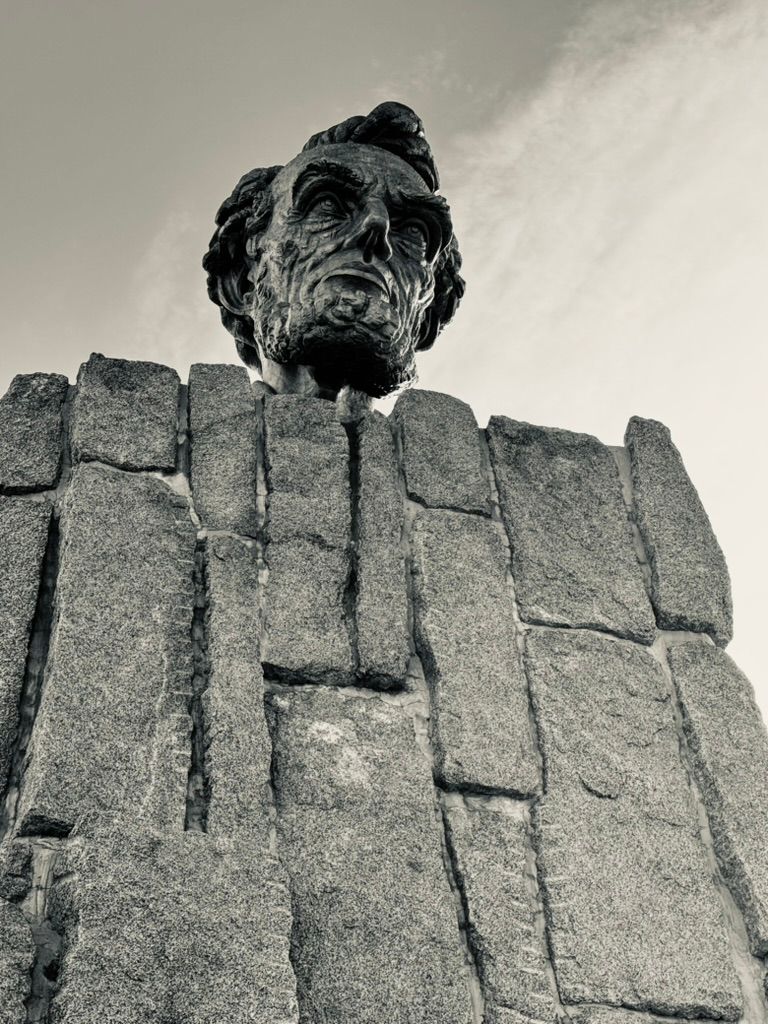
They got back in the car. They climbed up onto the high spine of the continent, up where the interstate crests at the Lincoln Highway monument and the bronze head of Abraham Lincoln sits on its pink granite plinth staring out over the pass, and Dixon pulled off and stood in the wind and photographed Lincoln in black and white, the heavy brooding face, the streaked stone, the enormous sky behind, and then drove on past the sign that said SUMMIT REST AREA, HIGHEST POINT ON INTERSTATE 80, ELEV 8640, and he thought about the fact that he was, at this moment, higher than he had ever lived, in thinner air than Atlanta had ever offered, with a dog and six suitcases and no idea where he’d sleep in three weeks, and that some part of him, and this was the part he kept checking on, kept pressing to see if it was real, some part of him was, against all available evidence, beginning to enjoy this.
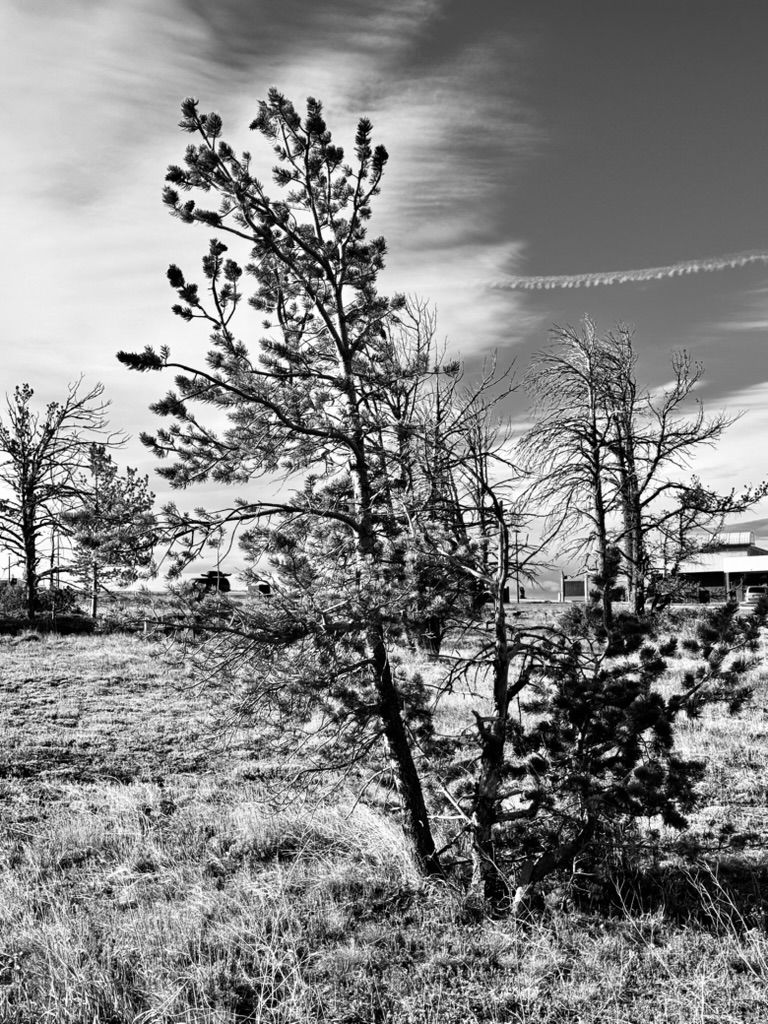
Outside Laramie he stopped again, for a single dead tree standing alone on a rise against the sky, and shot it in black and white, and that one he kept for a long time without knowing why.
Idaho went by. Oregon began.
And then, on the long western descent with the light going gold over his right shoulder, the clouds opened up ahead and there it was: Mount Hood, white and impossible, floating over the dark hills the way the big Cascade volcanoes do, looking less like a mountain than like an idea of a mountain that had gotten loose and made itself real.
Dixon had grown up in this part of the world. He had not seen Hood in years. He had seen, in the intervening time, a great many impressive things: the insides of arenas, the views from suites, the curated spectacle of the work he was so good at. None of it had done to him what the mountain did to him now, coming around a bend on a highway with a sleeping dog in the back and the radio off. He felt his eyes get wet. He was embarrassed about it even though no one was there to see, and then he decided not to be embarrassed about it, because that was an old reflex from an old life, the reflex that said a man kept it together, and he was trying to be done with reflexes that didn’t serve him.
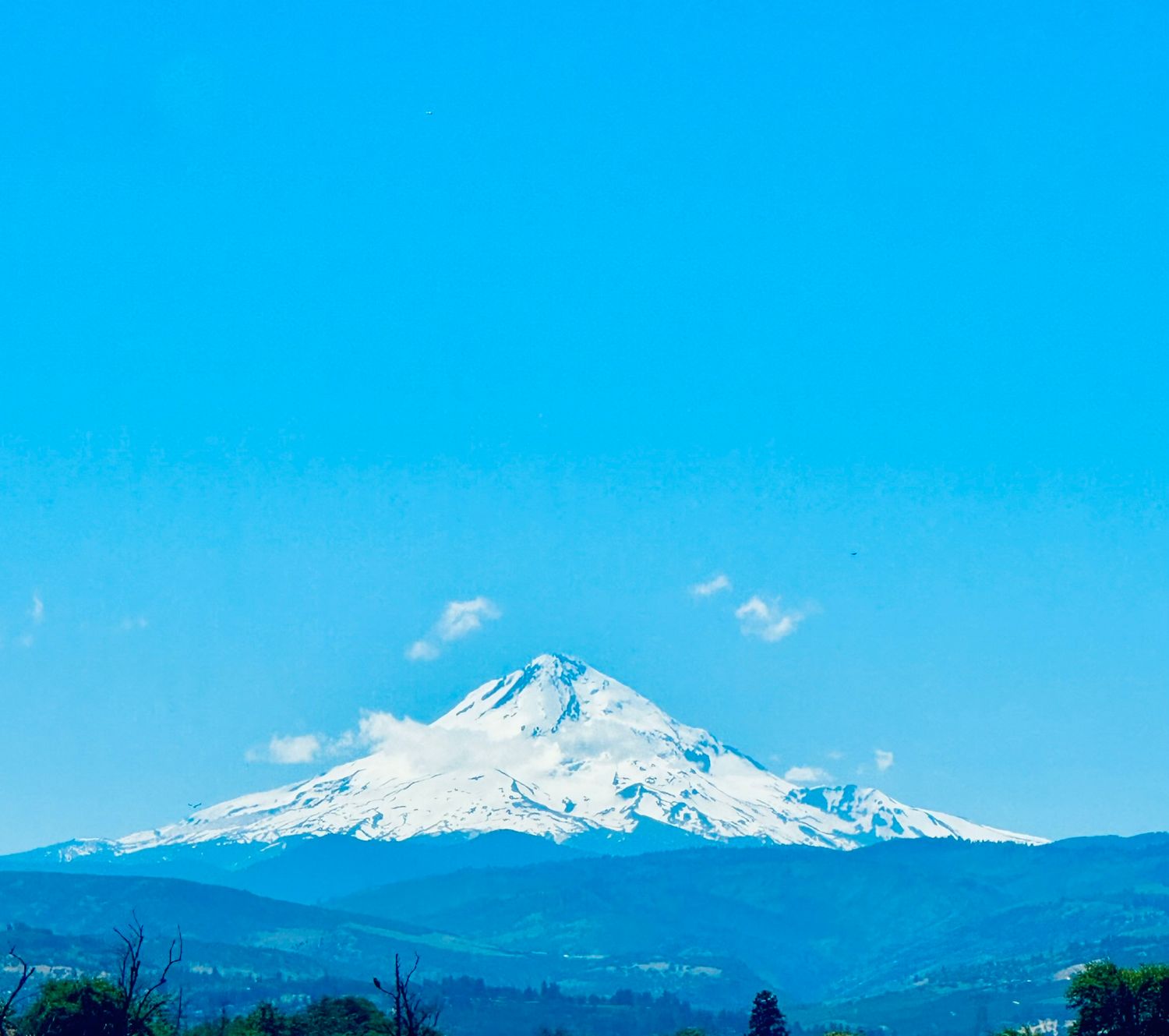
“Moo Moo,” he said. His voice had a quiver in it. Magnolia lifted her head. “Look. That’s where I’m from.”
She looked at the seat in front of her, because she was a dog, and then she looked at him, because she loved him, and then she put her head back down.
“You’re gonna like it here,” Dixon said. “Cash is gonna take such good care of you.”
He drove the last hour into Portland in the long Pacific Northwest evening, the light hanging on the way it does up north in June, refusing to quit until ten o’clock, and he thought about the fact that he had crossed the entire country and that the hardest part was the part that hadn’t happened yet.
They stayed in a hotel in Portland for the better part of a week, because Dixon was not ready to do the thing he had come to do, and a hotel was a way to not-do it for a while longer.
Magnolia approved of the hotel. Magnolia approved of all hotels. She established herself on the bed and conducted her affairs from there while Dixon did the strange parallel business of his Portland life, which included, because he was Dixon and because Bobby’s parade had taught him that the only way through was through a few dates.
He had matched with some people online before the trip, the way you did, the apps set to Portland and thus the apps serving up Portland accordingly. He went out three times in that week and he told all three of them the same thing he told everyone now, early and clearly, so no one could say he hadn’t: that he was in the middle of a big change, that he didn’t know where he’d be living, that he wasn’t a man with a next chapter you could pencil yourself into yet. He said it kindly. He said it because it was true and because the alternative, letting someone build a little hope on a foundation he knew was sand, was a cruelty he wasn’t willing to do, not anymore, not after the year he’d had.
One of them was an artist with a dark wavy bob and a wide easy smile who brought her own small scruffy black-and-white dog to meet him in the Pearl District, and the two dogs got along better than most of Dixon’s actual relationships had. She laughed at the right things and touched his arm at the right times, and when he gave her the speech, I really don’t know where I’m going to be, she nodded and said, “honestly? That sounds kind of great,” and she meant it. They had a genuinely lovely evening that both of them understood to be a single lovely evening and that was its own clean and decent thing.
One was a woman in a wide straw hat with tattoos up both arms and pink streaks in her dark hair who took him to a spot by the river and talked about the trips she’d taken alone, real ones, weeks in the backcountry, and looked at his loaded-down RAV4 in the parking lot with frank assessment and said, “you’ve got too much stuff, you know that, right?” And Dixon, who did know that, who was learning it more every day, felt entirely seen.
And one was a woman with long auburn hair and fair freckled skin in a soft cream sweater, almost exactly the kind of woman Dixon’s eye went to without his permission. She was an astrologer who took one look at his chart, then looked at his palm. Her assessment was quick and brutal: “I see multiple marriages. You’re probably not done breaking hearts.” That was enough for her.
He went back to the hotel each night and the dog was on the bed and he lay down next to her and then he ran out of days.
On the last morning, he drove Magnolia to Cash’s house.
The condo was west of the city, where Cash lived with his mom, and Dixon had a complicated relationship with the place because of the complicated way it sat in his history, but that’s a different part of the story. He parked. He got Magnolia out of the platform one last time. He carried her up the walk because he wanted to carry her, and she rode in the crook of his arm the way she had a thousand times, and he was aware of the weight of her, twenty-five pounds of warm dog gone briefly still, and he made himself stop narrating it because if he kept narrating it he wasn’t going to be able to do it.
Cash opened the door before knocking. He had been watching.
He was trying to be cool about it and not being cool about it at all, and when he saw Magnolia his face did the thing that teenage faces are not supposed to do anymore, the unguarded thing, the little-kid thing, and Magnolia saw him and lost her entire mind, and Dixon set her down and she launched herself across the threshold and up into Cash’s arms, and Cash sat right down on the floor of the entryway with her, and she licked his whole face, frantic, and joyful. Cash laughed and said “okay, okay, hi, hi” and looked up at his dad with his eyes bright and wet and said “It looks like she remembers me.”
“Of course she remembers you. She loves you, buddy,” Dixon said from the doorway. He did not come in. He had the sense that this was Cash’s now, this moment, this dog, this floor, and that the kindest thing he could do was stand at the edge of it. “She’s all yours.” Inside he was crushed, but he was not going to let his son see him fall to pieces.
Cash buried his face in Magnolia’s fur. Dixon understood that some of what was happening on that floor was about Puddles, about the dog who had gone out the door in the worst year, the loss a kid that age doesn’t have the words for and seals over instead, and that Magnolia was, among the other things she was, a kind of patch. He understood he had driven three thousand miles to deliver that patch. It seemed, suddenly, like the most useful thing he had done in a long time.
They had a coffee, Dixon and Cash’s mom, in the close quarters of her kitchen. She was easier than she was on the phone, the sharp edges sanded down by the sight of the dog and the kid on the floor. Magnolia worked the room. She was already home. Dixon could see it. She had transferred her allegiance with the breathtaking pragmatism of dogs, and it probably should have hurt more than it did. The fact that she was so plainly, immediately fine, was the thing that finally got him, standing in the kitchen with his decaf, his throat doing the thing again.
He stayed as long as he could and then he couldn’t stay anymore.
At the door, Cash hugged him, a real one, the kind Dixon got less often now that the hugs were rationed the way a teenager rations them, and over the kid’s shoulder Dixon could see Magnolia already trotting back toward the living room, toward her new floor, her new couch, her new life.
“Hey,” Cash said, pulling back. “You’re gonna be on the road a lot now. Right? Like, for a while?”
“Looks like it.”
Cash did the thing where he looked at the doorframe instead of at Dixon, which Dixon had learned meant the kid was about to say something that mattered to him.
“I liked the postcards you sent from the way out. Write some more,” Cash said. “From the road. Like, postcards. . . or whatever. I want to see the places you go.” A shrug, aggressively casual. “I want to know where you are.”
And Dixon, who had spent the entire drive bracing for this goodbye, who had built whole responsible arguments and steeled himself in three states’ worth of hotel rooms, found that this was the thing that undid him. Not the dog, in the end, but the kid asking to be written to, the kid wanting a thread, some line back to a father who no longer had an address.
“Yeah,” Dixon said. His voice came out rough. “Yeah, buddy. I’ll write to you. From everywhere.”
“Cool.” Cash was already half-turned toward the dog. “Don’t make ‘em weird and long,” he said under his breath.
“I’ll make ‘em short,” Dixon said back.
He hugged his son again. He gave Magnolia one last kiss on the head. Then he walked back down the path to the absurdly overloaded car that was, he was beginning to understand, the only home he had now, and he got in.
Now the back seat was empty. The platform was empty. The harness was gone. The whole back of the car, which for nine days had held a snoring creature he talked to about the world’s largest catsup bottle, held nothing but the dent in the blanket where she’d been.
Dixon sat in the driveway for a minute. Then he wiped his face with the heel of his hand, and started the car with the actual key, and turned on the headlights manually, and pulled out, alone, for the first time in his entire life with nowhere at all he had to be.
He had a whole country to cross to get back to the house he was about to leave for good.
He had been told to write from the road. He figured he’d better go find some more postcards.
Published June 5th, 2026 from Portland, Oregon.
Enjoying the story? Support the work →
All text, images and music copyright (2026), Slightly Moody Creative LLC and Joe English.