The Sit Boy
Back and Forth Across America (Part II)

He bought more postcards in a gas station along the Columbia River, around a little town called Mosier where the Columbia Gorge starts to open up and the wind comes through hard enough to rock the car.
He had been mailing them to Cash on the trip way out west. From places like Little America and a truck stop in Idaho, they had been easy to write. Maggie had been doing something ridiculous and all Dixon had to do was report about it. Maggie ate half my sandwich. Maggie has claimed an entire queen bed. Maggie does not ‘get’ America. The dog, he understood now, standing at the wire rack, spinning it slowly, had been the easy content for the postcards. She was the comic-relief and a mask that he was wearing at the same time.
He picked a card with a windsurfer on it. This particular one featured a board and sail combo of wild-eyed cats. He sat in the car in the parking lot with the card on the steering wheel. He tapped his pen against the wheel a few times and discovered that he did not know what to say.
This was a strange thing to discover. The guy that normally does all of the talking, quiet for a change. He had spent a lifetime finding the words. But the postcard, small and white and waiting, was filled with a new pressure. His son would be on the other end of it, and everything true that Dixon could think to write was too big for a four-by-six card and would worry the kid, and everything that would not worry the kid felt like a lie. He sat there for a while. The wind rocked the car. The back seat, in the mirror, sat empty and quiet.
He wrote:
Cash, Followed the river out of Portland just now. Whole gorge FULL of windsurfers, hundreds of them. It looked COLD. At least it was windy as all heck too. Taking the northern route back to the ATL, gonna see some country. More soon, Love Dad
He read it over. It was true, every word of it, and it told Cash exactly nothing, and that, he understood, was the assignment. You send the kid the bright version. You send him windsurfers and a joke about the weather. You do not send him the man in the parking lot who'd had to read his own note three times to make sure it sounded like a person who was fine.
He found a mailbox in The Dalles and dropped it in and felt, at least for a moment, like he had done something good for the day.
Then he got back in the car and there was no one to tell about it.
This was the thing he had not accounted for.
For nine days there had been a dog. The dog had been a poor conversationalist, but a reliable presence, a warm weight in the mirror. She was a reason to say things out loud. He had narrated the entire western half of the country to a creature who did not understand, and the not-understanding had not mattered, because the point of talking to a dog is not to be understood. The point is to not be alone in the car.
Now he was alone in the car.
He noticed it first in the small ways. He'd see something out the window worth remarking on, a hawk on a fence post, a town with a funny name like ‘Irigon, Oregon’ and he'd open his mouth and there'd be no one there. So he'd close it again. He turned music on and then off. He tried talking to himself and felt insane and stopped. He drove through eastern Washington in a heavy silence. No song or audio book could penetrate the silence of a man who has just given away his traveling companion and almost everything else he owned in the world.
He texted the twins from a gas station near Spokane.
Dixon: Handed off Maggie to Cash. She was thrilled. She didn't even look back. Ungrateful little gremlin.
Brooklyn: Oh Dixon, the dog will be fine. Are YOU fine?
Dixon: I’m great.
Dixon: I’m in Spokane. My grand-father grew up here.
Brooklyn: That's not an answer, but that is an interesting new fact to know about you.
Bobby: Wait, FUCK YEAH you're a free man now dude!??! No dog, no house, no woman!??! Bro do you understand what you have?
Bobby: You have to do something insane with this! Right now.
Dixon: I did do something insane. I drove to Spokane.
Dixon: And there’s nothing else insane to do in Spokane BTW.
Bobby: That's not insane. That's just sad. All the married dudes in the whole world are weeping right now.
Brooklyn: ^^ for once he's right. I still can’t believe we came out of the same womb though.
Brooklyn: Call me tonight ok? For real.
He didn’t call her that night, because he got in late and it was even later in Atlanta. Plus he didn't want to be the kind of person who called someone just to be sad at them. But he saved the message, and the difference between what he'd sent the twins and what he'd sent Cash was not lost on him. To Cash he sent windsurfers. To Brooklyn he sent I’m great, which Brooklyn could see straight through. Which was the whole reason you had a Brooklyn. The truth lived somewhere in the gap between the two messages, in the part he didn't send to either of them. The part that was just a guy in a small town motel realizing he had no idea who he was when there was no one in the car him.
Montana arrived the next day and Montana did not care how he felt, which Dixon found, to his surprise, enormously comforting.
He crossed in through the narrow part of the Idaho panhandle, through Coeur d'Alene where the lake shone blue and enormous, and over a mountain pass thick with pines, and there was a sign at the line: WELCOME TO MONTANA. It was half in shadow under the trees, and he pulled over and photographed it because that was a thing he did now apparently. He apparently photographed the welcome signs. It was a small record of crossing from one place to the next as if the crossing were the point. Maybe it was.
And then the country opened.
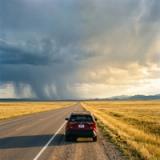
He came down out of the mountains and Montana laid itself out flat and gold to the horizon under a sky that was doing something he had never seen a sky do, a whole weather system visible at once, a wall of slate-blue storm hanging over the plains to the north with rain falling in gray columns out of it, and sun on the wheat to the south, and the two of them sitting side by side in the same enormous sky like the sky couldn't make up its mind, and Dixon pulled the car onto the shoulder and got out and just stood there.
Lyrics
[Verse 1]
Two thousand miles of quiet, just the open road and me
Used to have someone to say it to, now I just let it be
Somewhere out past the last town, the whole sky tore in half
Rain coming down on the left, and the right side bright as glass

[Chorus]
Storm to the north, sun to the east
One sky big enough to hold them both
Turns out you can be lonesome and fine all at once
Both of 'em true, under a Montana sky

[Verse 2]
Watched the rain come down and never reach the ground
Fell a mile out of a hard sky and gave up halfway down
Reminded me of people, won't say their names out loud
Everybody spills, but not everybody wets the ground

[Chorus]
Storm to the north, sun to the east
One sky big enough to hold them both
Turns out you can be lonesome and fine all at once
Both of 'em true, under a Montana sky

[Bridge]
Been mailing home the bright version, sun's out, I'm alright
The kind of fine you write, so nobody worries at night
But this is the other kind, the kind that takes you by the hand and doesn't have to hide
The kind that lives inside.

[Final Chorus]
Storm to the north, sun to the east
One sky big enough to hold them both
Turns out you can be lonesome and fine all at once
Both of 'em true, under a Montana sky

[Outro]
Just me and the road and a sky that don't care
Turns out that's the kindest thing out there
The wind came across the grass. There was no one for miles. He could hear, very faintly, the distant sounds of the storm.
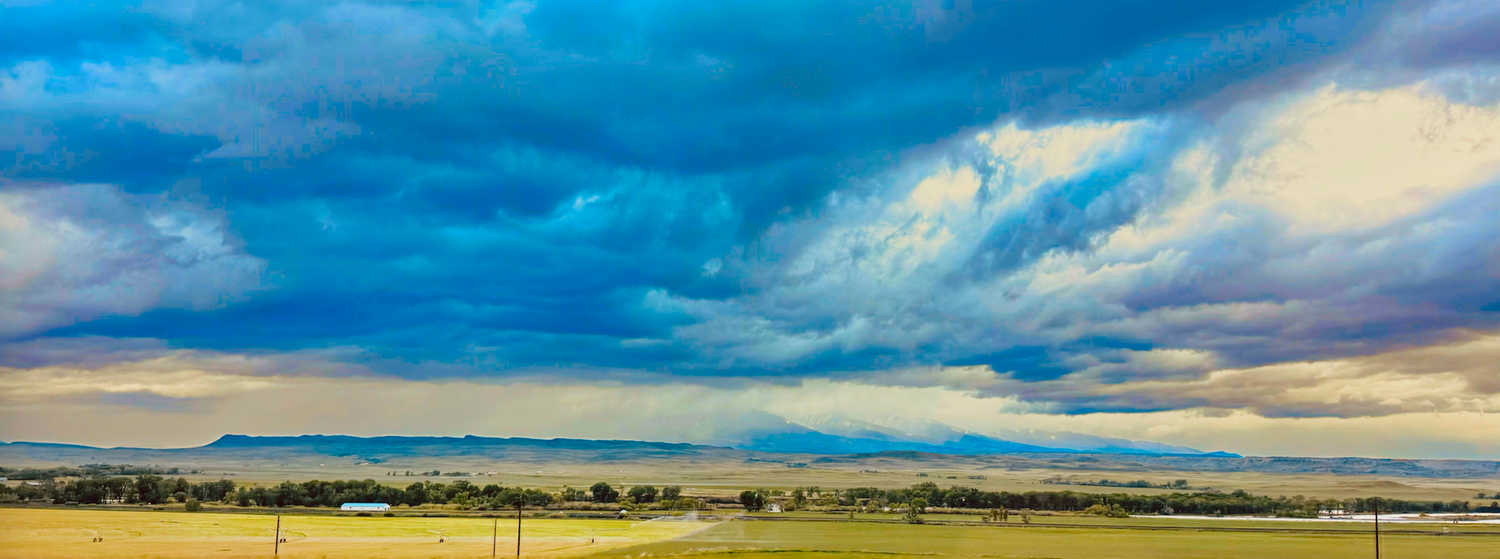
He took a picture of it. This time the picture was not black and white, but rather vibrant and colorful. He felt he needed to capture the enormity of the sky and the dramatic weather in it. He stood on the shoulder of the highway in the middle of Montana and felt, for a moment, completely and totally fine, fine in a way that had nothing to do with the version of fine he'd been sending Cash. It was the first moment that he felt both alone and fine at the same time. He breathed in the air. He could feel the vibrations of the world around him. He closed his eyes and soaked it in. And then a truck went by and rocked him with its wind, startling him out of his trance, and the moment passed. So he got back in the car and kept driving across the vastness and through the rugged beauty of one of the most beautiful places he had ever seen.
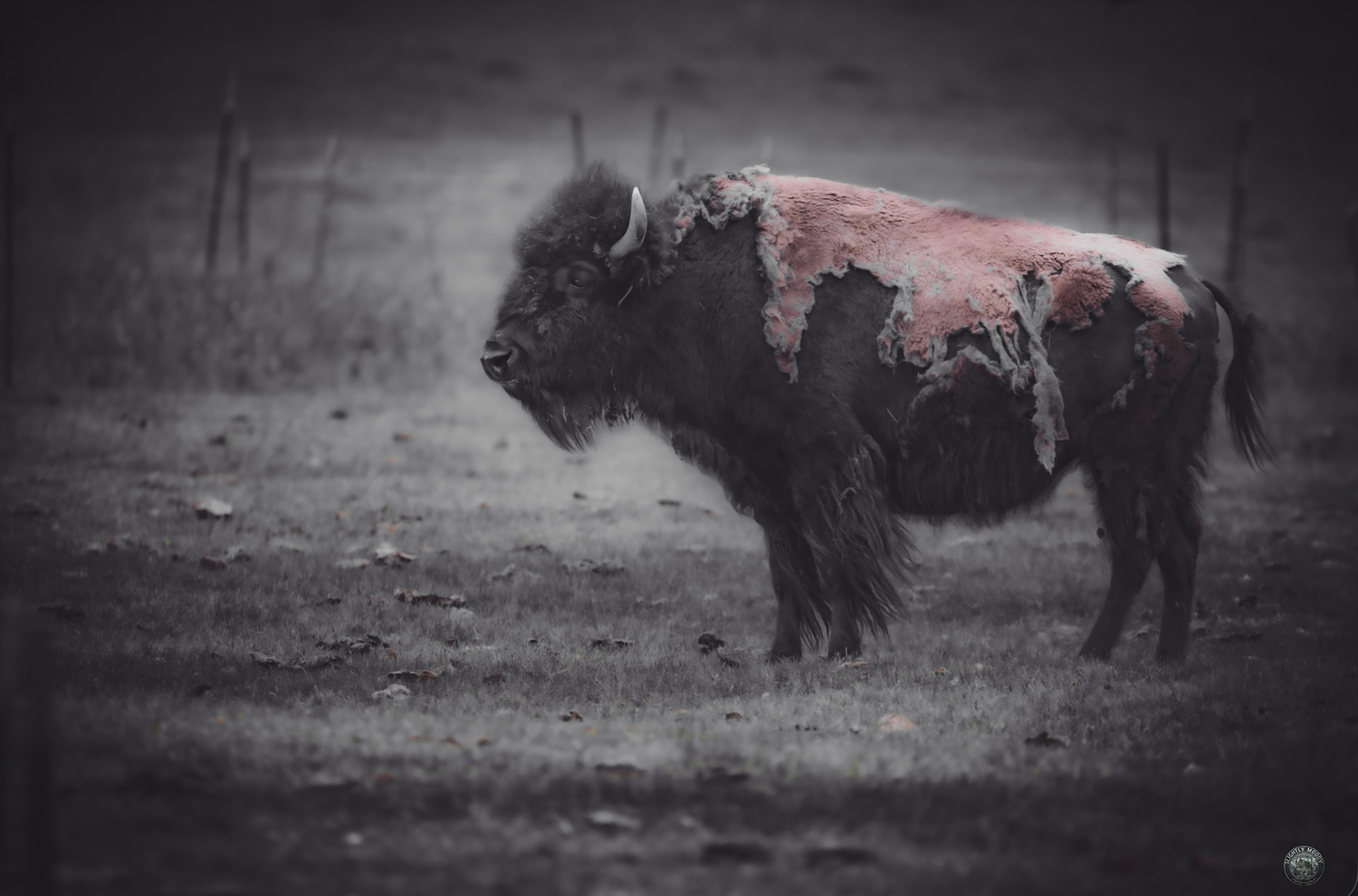
That night, in a motel in Bozeman, Montana, he wrote Cash a postcard with an bison on it.
Cash — Drove across Montana today. The sky out here is bigger than any sky has a right to be. Saw a storm and sun at the same time, in the same sky, fifty miles apart. Looked it up. They call it "virga," when the rain falls, but dries up before it ever hits the ground. Reminded me of some people we know. Ha. Love Dad
He looked at the last line for a while. Reminded me of some people we know. He'd meant it as a joke and it had come out as something else, rain that dried up before it landed, and he thought about crossing it out and getting a new card, and then he didn't, because Cash wouldn't read it that deep. Cash would read virga, cool word, Dad's fine. That was the mercy of writing to a teenager. They took the top layer and left the rest.
He did not hear back of course. He didn't expect to. Cash was not a kid who texted back about postcards. Cash was a kid living his life in Portland with a new dog and a summer in front of him and the postcards were arriving in a mailbox the kid or his mom checked maybe every two weeks. And somewhere in there was a thing that could have hurt Dixon if he let it, the sending and sending into a quiet that mostly stayed quiet. But he didn't let it. He understood his kid. The kid was fine. The kid being fine was the entire point. That was the thing Dixon had driven three thousand miles to secure, and a father did not get to drive three thousand miles to make sure his son was okay and then resent the son for being okay. That was not a thing Dixon was going to do.
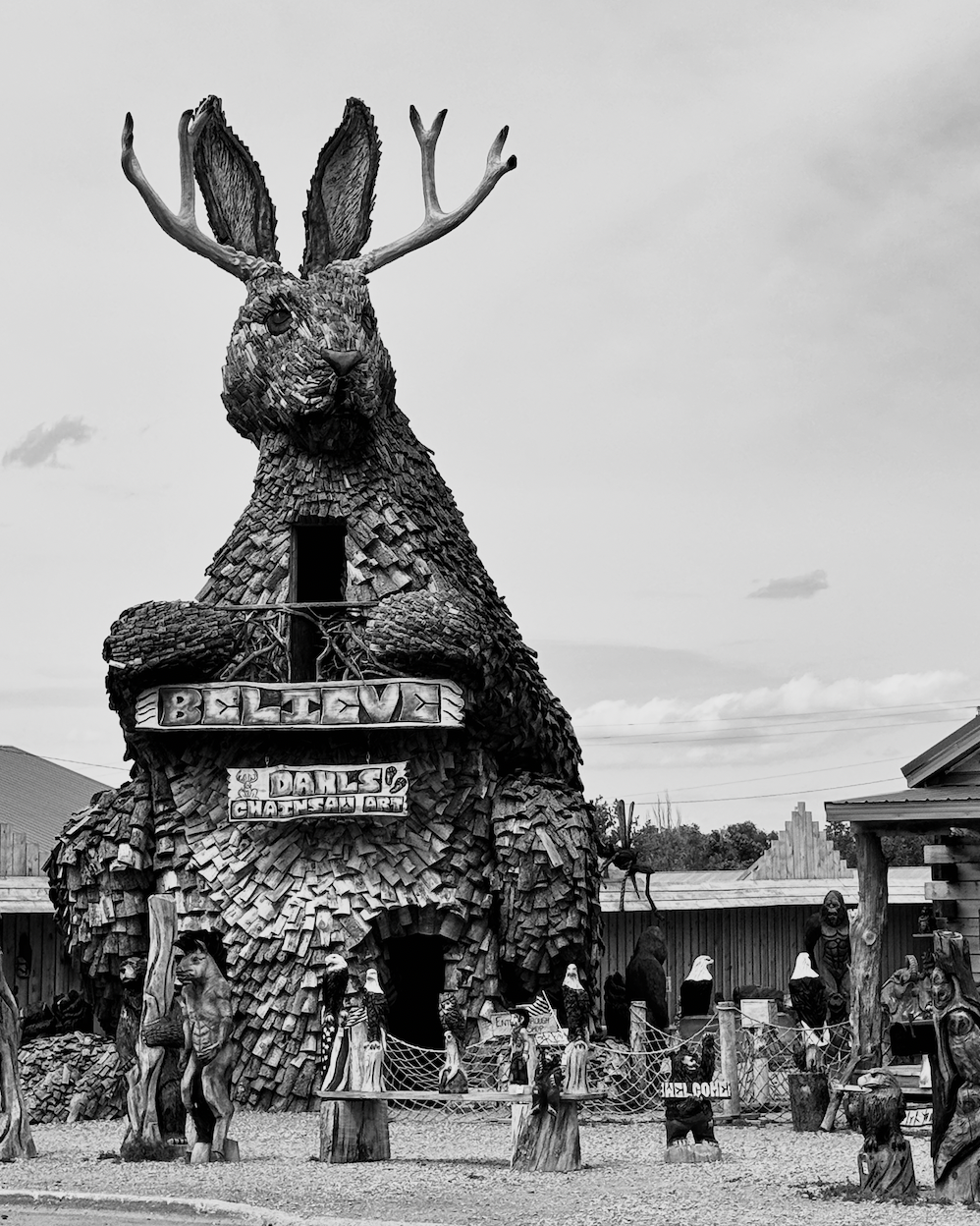
The next one he sent had a Jack-a-Lope made of wood on it.
Sloane texted him in Montana, which caught his attention and interest. He was beginning to have a bit of a thing for Sloane if he was being truthful with himself. Of course, in his present situation it didn’t really matter who he did or didn’t have a thing for, because he was in the middle of Montana and they were not.
Sloane had come back into the picture when Dixon was in Vegas, through the video of Riley he had sent her. The door he'd thought closed had turned out merely to be shut. They had a thing, Dixon and Sloane, that wasn't a romance and wasn't not one, a current that ran under everything they said to each other. She knew music. She knew the business of it in a way Dixon didn't, the rooms and the people and how a song actually got from a person's brain out to the world. And she had a way of needling him that he'd come to rely on.
Sloane: You still driving across the country, alone? That’s very tortured-artist of you. I think it's hot.
Dixon: I’m not an artist. I’m a guy in a Toyota.
Sloane: First of all, you are an artist. I have seen your photography. And don't sell yourself short, you're a guy with a Toyota AND a smokin’ hot ass.
Sloane: What exactly are you even doing out there in the heartland of America? Seen any Buffalo today?
Dixon: Actually yes. I saw some scruffy buffalo about 150 miles ago.
Dixon: You know, I’m taking pictures. Driving. Gave the dog to my kid.
Sloane: Excuse me, what?
Sloane: You drove the DOG across the country to GIVE HER AWAY? I think there would have been people in Atlanta that would have taken Magnolia. She’s the cutest dog I have ever seen.
Dixon: He needed her. She’s going to love it there.
Sloane: Dix that's the saddest and most beautiful thing I've ever heard. Who DOES that?
Sloane: Like genuinely who looks at a dog and goes "I love you so much I'm going to drive you 3,000 miles and then leave?"
Dixon: People who don't have houses.
Sloane: OK, so that landed weird. You okay?
Dixon: I'm great. I’m in montana. It’s the most beautiful place I have ever seen. The sky is THIS BIG (opens arms wide).
Sloane: You and Montana. Fine. Keep your secrets Dix.
She didn't get the dog thing, not really, not the way Brooklyn got it. To Sloane the dog was a beautiful sad gesture, a story, the kind of thing that would sound good in a song. To Dixon the dog was a dog he missed. It was a small difference and Dixon noticed it and filed it away without making anything of it, the way you notice that a friend who loves the ocean has never actually learned to swim. Sloane lived in the part of the world where things became material. Dixon was, increasingly, living in the part of the world where the thing was just the thing. He didn't think either of them was wrong. He just noticed the difference.
Dixon: Hey again. Random question. How does a person learn to write a song?
Sloane: ...
Sloane: OK, NOW you have my attention.
The conversation ended there. He wasn't ready to actually have the conversation. But he'd asked the question, and he'd asked Sloane specifically, and some part of him knew exactly why.
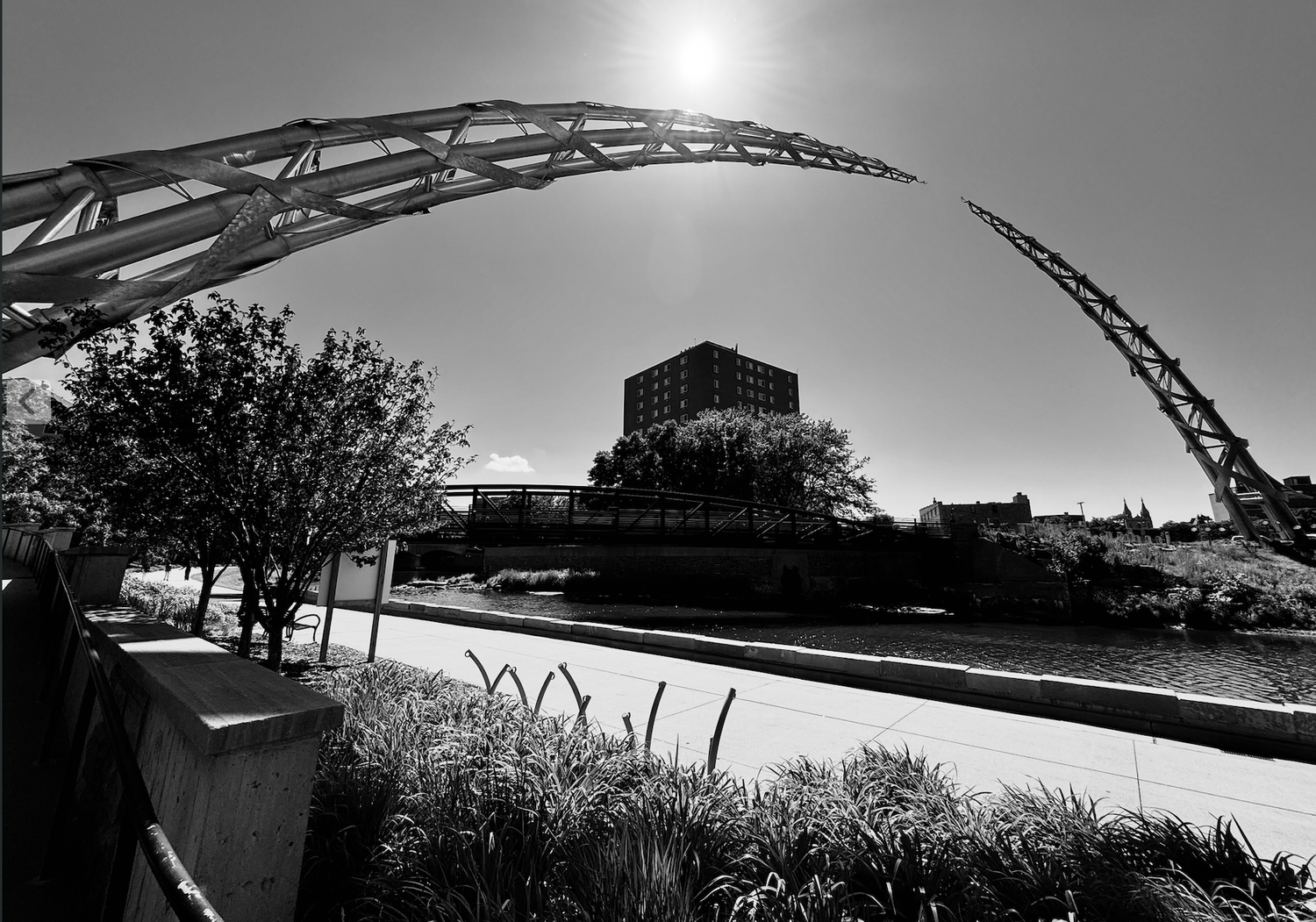
Dixon had been on the road for about two weeks when he decided that staying in hotels had a problem. The problem was laundry. Actually the problem was not laundry, but the lack of access to laundry machines and the growing amount of dirty clothes he was dragging around. Sioux Falls, South Dakota, he decided, was going to be the place where he learned to do laundry on the road. It had been decades since he had not had easy access to a laundry machine. This meant exploring yet another new segment of society: the laundromat.
The truth was Dixon had never once in his life used a laundromat. Not even in college. There had just always been a machine, or a mom if he went back far enough. Now there was a car full of clothes that had been worn across half a continent, far too many T-shirts and somehow, impossibly, not nearly enough underwear, and most people can only re-wear underwear so many times. The number of times for Dixon was zero. He decided to stay in Sioux Falls for a few days and while he was there, he was going to tackle the laundry.
So Dixon, a man in his fifties, found a laundromat in Sioux Falls. It was a long fluorescent room with a wall of machines and a change dispenser and a television bolted up in the corner playing Judge Judy to no one in particular, and he carried his shameful pile of dirty clothes in a trash bag, because he did not have a laundry basket.
He stood in front of the machines, paralyzed, working desperately to decipher the process. How much money did they take? How much could they hold? How long would this take? Do they serve snacks here? He was wondering all of these questions when a woman that looked like she might be cast as a librarian in the town play approached him. She was in her sixties, with reading glasses pushed up into her gray hair, and she folded towels with the brisk economy of someone who had folded a hundred thousand towels and would fold a hundred thousand more. She had been watching him for a while. She had been enjoying it.
"You've never done this," she said. It wasn't a question. Her accent was mid-western, but more warm folksy than the far-northern Fargo kind that he imagined might come out of her mouth.
"Is it that obvious?" Dixon asked.
"Honey, you're holding the soap like it might go off." She set down her towel and came over, taking the jug out of his hands the way you'd take scissors from a toddler. "And you've been staring at that machine longer than my husband looked at me on our wedding day."
She showed him: quarters in there, soap to this line. "No, this line," she said, tapping the cap with one finger, "that line is for people with septic problems." Don't overload it, it doesn't clean better, it cleans worse. Cold for everything, she told him, unless he had something against his clothes personally.
“Am I supposed to separate the whites and the colors?" Dixon asked, genuinely wanting to know. "I've heard that's a thing."
She looked at him over the top of her glasses. "How old are you?"
"Fifty-two."
"And you've heard it's a thing." She shook her head slowly, but she was smiling, and she stayed and supervised the loading. When she saw the volume of T-shirts coming out of the trash bag she stopped folding entirely. "That's a lot of T-shirts for one man," she said with a note of mild disdain.
"I'm coming to understand that," Dixon said flatly.
"You moving?" she asked.
"Sort of. Everywhere, kind of." He fed the quarters in. "It's a long story."
"It's a laundromat, sugar," she said, going back to her towels. "It's all long stories in here."
Dixon thanked her with the deep sincerity of a man who has been rescued, and he sat down in a plastic chair to watch his entire wardrobe spin behind glass and felt, weirdly, like he'd accomplished something. He was a person who could do laundry on the road now. The list of new skills he was learning was thus far short, but getting longer.
He stayed in Sioux Falls a few days, longer than the town strictly required, because he was in no hurry to get back to Atlanta. And because Sioux Falls turned out to be the kind of place where the people found him. He seemed to have developed a new magnetism. He'd be sitting somewhere being quiet and someone would decide he was the person they needed to talk to. The laundromat alone gave him two of them.
The girl was maybe sixteen. She had dark hair with purple streaks in it and blonde tips. She wore dark, black makeup rolled up to a cat-eye above her eyes and shiny lip gloss. She had a backpack with an assemblage of patches from various bands. Her nails were painted in blue polish that was chipped. She had the careful, watchful look of a kid who had learned to read rooms, and she sat down two chairs over while he was waiting on the wash and asked, with breezy casualness, where he was headed.
"Atlanta," he said. "Eventually. Taking my time."
"Atlanta." She turned the word over like she was checking it for value. "You going through anywhere good?"
"Depends what's good," he answered with a light shrug.
"Anywhere that's not here." She was picking at the blue polish, flake by flake, not looking at him. "I could help drive. I'm a really good driver, I've been driving since I was thirteen, my uncle taught me on his truck. I just need to get somewhere else, doesn't even matter where, I'd be no trouble, I don't even take up much . . ."
"Hey." Dixon said it gently, and he turned in his chair to face her, because the thing she was asking deserved to be answered like a real thing and not waved off. "I can't take you anywhere. You know I can't."
"You don't even know me. I could be cool to travel with," she argued.
"I bet you'd be great to travel with." He meant it, and he wanted her to hear that he meant it. "But you're a kid, and I'm a stranger, and the answer's no. And listen to me on this part, because this is the part that matters: any grown-up who says yes to what you just asked is exactly the grown-up you should run from. The yes is the danger. You understand what I'm telling you?"
She looked at him then, actually looked. Something in her face closed and something else, underneath, maybe loosened a little.
"Is there somebody I can call for you?" Dixon asked, and he wanted, with everything in him, for there to be a somebody. "Somewhere you're supposed to be?"
"I'm fine," she said, which Dixon recognized, because it was his own word, the word he'd been mailing to Portland. She stood up and shouldered the backpack. "Forget it. Have a good trip or whatever."
She left before his clothes were dry. Dixon sat there with it for a long time. He hadn't done anything wrong and yet it didn't feel like nothing. He thought about her the rest of the day, the kid who wanted to get somewhere else so badly she'd ask a stranger in a laundromat, and he hoped she got there, wherever there was, and he knew he'd never know.
He did not put her in a postcard to Cash.
The other one came while his clothes were still in the dryer.
A thin man in a good coat that had years of weather and many miles on it, who set up at a machine and then drifted, the way people in laundromats drift, and ended up next to Dixon, and within four minutes Dixon understood that this was not going to be a conversation about laundry.
"You're not from here," the man said, looking back and forth as if scanning for something in the otherwise empty room. He was folding a pair of pants as he said this. The folds were very precise, the creases sharp, made like a man who thought he was being graded.
"Just passing through," Dixon said cautiously.
"Good. That's good. You want to keep passing through." The man leaned in. His eyes were doing a lot of work, the door, the windows, the parking lot. "You notice the gray Ford outside? Across the street, next to the propane place?"
Dixon had not noticed a gray Ford or any other car for that matter.
"They followed me from New York," the man said quietly, evenly, the way you'd report weather. "Bureau, mostly. Some of it's the Agency, you can tell by the antennas, the Bureau uses the short ones. I've been on the move for nine months. Sioux Falls is good because the sightlines are long, you can see them coming. But they've got people in the post office now, so I don't mail anything anymore."
"Which one's the gray Ford?" Dixon asked, because if he was going to be in this conversation he was going to be in it.
"Don't look directly at them!" the man hissed, alarmed.
So Dixon didn't look directly. He looked at the reflection in the glass of the dryer across the aisle, casually, the way you'd check a score, and the man watched him do it and nodded slowly, with something close to respect.
"That's good," the man said. "That's very good. You've done this before."
"Beginner's luck," Dixon said and shrugged.
And here was the thing about Dixon, the thing that the dogs knew and the kids knew and the lonely knew: he did not get up and move away. He had every reason to. But the man was clearly unwell and clearly frightened and clearly, above all, alone in it. He was more alone than Dixon had ever been. Alone inside his own head where the gray Fords were and Dixon could not make himself be unkind to that. So he listened. He didn't agree, because you don't feed it, but he didn't argue either, because arguing was its own kind of cruelty to a person like this. He bought two cans of Coke from the machine in the corner and offered one over, and the man took it and inspected the seal before opening it. "Sealed is good," the man said, approvingly. "You can't trust a fountain." They drank their Cokes in the plastic chairs like two colleagues on a break, and the man said his piece, and Dixon asked one or two gentle questions, and by the end the man seemed calmer, marginally, the way people get when they've been heard even by a stranger who can't help them.
"You should keep moving," the man told him in parting, kindly, like advice between professionals. He gathered his folded pants under one arm. "Don't let them get a pattern on you."
"I won't," Dixon said, and the funny thing, the thing he turned over in his head, was that it was good advice. Don't let them get a pattern on you. Keep moving. Dixon was, after all, a man with no address, no pattern, no fixed point for anyone to find. He just hadn't expected to hear his own life described back to him by a frightened man in a laundromat as a strategy for evading the federal government.
He thought there might be a song in that. He didn't know where the thought came from. It just arrived, fully formed: there might be a song in that. He'd never had that thought before in his life. He had it now twice in three days.
Madison was a reward he hadn't known he was driving toward.
After the long flat haul down through Minnesota he came into Wisconsin and into Madison in the evening, the city sitting on its little isthmus between two lakes with the light going long and gold the way it does in June. He was tired and lonesome and he decided, on a whim, to eat somewhere good. Not a strip-mall somewhere. Somewhere actually good. He'd been eating sad sushi and gas-station everything for a week and despite the new life, despite the RAV4 and the trash-bag laundry, he had the palate and the wallet of his old life. So he looked on Google Maps for the highest rated, hardest to get a reservation in town. He found a place known for its tasting menu and a six-month wait for a table. It happened to be about three doors down from his hotel, so he wandered over and learned yet another lesson of life on the road. As a single diner, the most difficult restaurant might just sit you at the bar and let you have the meal of your life on no notice.
It was one of those meals that just reminds you that being alive is, overall, a pretty good thing. Course after small perfect course, he wandered through a dizzying array of dishes that kept reminding him of this lesson. There was a broth that tasted like someone's grandmother had wept into it lovingly. A fish that had clearly led a charmed life in a tropical sea somewhere. Cheese made from milk that had been coaxed out of a very healthy and happy cow. Dixon ate slowly and paid attention and was, for the length of the meal, completely happy. It was the simple happiness of a person eating wonderful food, and he photographed every course and posted them all to Google Maps where they would join the silent river of his other photographs and be seen by people he would never meet.
His waiter was named Sebastian. He was somewhere in his thirties, dark-eyed and quick, sleeves rolled to the forearm, and he ran his section of the restaurant the way a good captain runs a ship, everywhere at once, missing nothing. Dixon liked him immediately, and so Dixon did what Dixon always did with people who were working: he treated him like the most important person in the room. He asked what the kitchen was proud of tonight. He asked about the broth, what was in it, and whose grandmother had cried into it. This made Sebastien laugh and put his hand warmly on Dixon’s shoulder. He made eye contact. He said thank you like he meant it, because he did actually mean it.
Dixon had been told, more than once in his life, that the way he treated waiters could be mistaken for flirting. He had never really believed this. He was about to receive a comprehensive education on the subject.
Somewhere around the third course, things began to escalate, and Dixon, a man who could read a room full of poker-faced executives, read absolutely none of it.
A small plate arrived that was not on the menu. "From the kitchen," Sebastian said, setting it down with a little flourish, his hand brushing the bar top next to Dixon's. This place is incredible, Dixon thought. They just send you extra food.
A course later, Sebastian crouched beside him to describe the fish at eye level, voice low, close, unhurried, while two tables flagged him in vain. Now that, Dixon thought, is service. That is a man who takes pride in his work.
Then came a tall glass of something cold and golden that Dixon had not ordered. "You don't drink," Sebastian said, "so I built you a pairing. Yuzu, smoked honey, a little salt. I made it for you." He stayed to watch Dixon taste it.
It was extraordinary. Dixon said so, at length, with the full warmth of his attention, and Sebastian glowed, and Dixon thought, the hospitality in the Midwest is unbelievable. They should write articles about this.
Down the bar, the bartender, a woman with a shaved head and the eyes of someone who had seen everything twice, had stopped pretending not to watch. Her expression, which Dixon also did not read, was that of a person enjoying live theater enormously.
By the dessert course, the whole staff seemed somehow warmer toward him, the way a crew warms to a director's project. Something with figs arrived. Sebastian set it down and did not leave.
"So I'm off at eleven," Sebastian said.
"Oh, you've done plenty," Dixon said, waving him off generously, "honestly, the kitchen has done so much already, you don't need to . . ."
And the sentence died in the air, because Sebastian was looking at him with an expression that was extremely patient and not at all about figs, and Dixon's fork stopped halfway, and the whole evening reassembled itself in his head at once, the touch on the shoulder, the extra plates, the crouch, the pairing built just for him, the I made it for you, the warmth, oh, oh no, the entire eight courses replaying at high speed like a film someone had recut to reveal the twist.
"Oh," Dixon said.
"There it is," Sebastian said.
"You were . . . the whole time?" he said slowly.
"Since about the second course." Sebastian was openly enjoying this now. "I brought you a plate that wasn't on the menu. I built you a drink. I touched your shoulder, twice."
Dixon put his hand on his shoulder as if to make sure it was still there. "I thought you were just exceptionally good at your job," Dixon said. Down the bar the bartender made a small sound into her rag that might have been a snort.
"I am exceptionally good at my job," Sebastian said with dignity. "I was also hitting on you."
Dixon set the fork down and laughed, at himself mostly, the warm flush of a man discovering he had been the last person in the room to know something, and there was real pleasure in it too, because being wanted, after the year he'd had, was not nothing. It was in fact a great deal.
"I'm very flattered," he said, and meant it, "and apparently very oblivious. That's the best offer I've had in about a thousand miles, and I want you to know that. And I'm going to say no, and the no isn't about you. You're great. You're genuinely great." He gestured, vaguely, at himself, at the situation, at the whole improbable fact of him. "I don’t, you know, roll that way,” he said, motioning to himself. Then added, “I'm just passing through anyway. I'm passing through everywhere right now actually. It wouldn't be fair to start something I'm just going to drive away from at six in the morning."
Sebastian took it the way secure people take a kind no, with a small bow of the head. "Their loss," he said. "Whoever you're driving toward."
"I'm not driving toward anybody," Dixon said. "That's sort of the whole thing."
"Even sadder." But Sebastian was smiling. "The figs are on me."
"The figs were always going to be on you," the bartender said, not looking up. "You comped them at nine fifteen." She chortled loudly.
Dixon left a tip that embarrassed everyone, and walked out into the Madison night enormously, unaccountably happy. He had eaten like a king. A handsome man had spent eight courses courting him and he had missed every single bit of it, which was so profoundly on brand that he laughed again, alone, on the sidewalk. He'd said no for the right reasons and no one had been hurt. The lakes were out there in the dark reflecting the lights of the city. He was, he realized, getting a little better at this. Not the loneliness, exactly. But the moving through it. He was learning that you could be lonely and still have a perfect meal, that a stranger could want you and you could walk away glad about it. The two things could sit in the same evening, like the storm and the sun in the same Montana sky, and neither one canceled the other out.
That was worth a postcard.
Cash, Best meal of my entire life tonight in Wisconsin of all places. I posted the pics to Google Maps as per usual. I bet they’ll get a million views. Also the waiter totally hit on me and I didn't even notice until dessert. Don't tell anyone. Actually, tell everyone, it's a good story. Eat something that isn't a quesadilla or chicken tenders this week. I'll know if you don’t. Dad
Chicago was where the two worlds touched, and the touching was strange.
He'd swung down from Madison meaning to spend a day in the city, partly because he had actual work reasons to. His company had an office there high up in the Willis Tower, and Dixon still had a job, a good one, which he had been doing this whole trip from motel desks and gas-station parking lots, taking calls with the windows up so people couldn't hear the wind blowing. He was off for these two weeks, more or less, the way you're never really off when the work is the kind that follows you, but the team in Chicago was the team in Chicago and a guy passing through ought to say hello. It was the dropping-by that felt strange, not the work. The work he could do from anywhere. The dropping-by meant putting his actual body back into a world he was now experiencing entirely through a laptop.
He parked the dusty, bug-shellacked, trash-bag-laundry RAV4 in a downtown garage that cost more for the day than he'd spent on three motel stays. He rode an elevator up into the sky, and he walked out onto the 35th floor, which was glossy and sleek, with a view of Lake Michigan, glowing in the morning sun. Here he found the people he worked with, in person, doing the things he'd been doing all week from the front seat of his Toyota.
Everyone was happy to see him. They were also, he could tell, not quite sure what they were seeing. He looked fine. Diixon always looked fine, but there was road on him now, something the workers in the room didn't have. He somehow had the look of a guy who'd photographed a storm in Montana last week standing in a conference room with a view of downtown Chicago. They asked how he was doing and he could see them bracing, the way people brace around the recently-divorced-and-everything, and he told them he was fine, which was the word, the all-purpose word, and so they relaxed.
"So where are you living now?" someone asked. "Did you land somewhere?"
And Dixon opened his mouth to answer and found that he didn't have one. Not a real one. He was technically homeless. He was living in a Toyota. He was living in the next motel. He thought briefly of a few ways to express this all, but didn’t come up with anything so he went to humor as he often did: “I guess I’m homeless at the moment,” he laughed but the room went silent. Furrowed brows and squinted eyes were pointed at him. He sensed the awkwardness.
"I'm kind of between things," he said after a beat. "Figuring it out I guess." The tension seemed to clear.
"God, I'd kill for some time off," someone offered, not really hearing what he had said, already half-turned back toward a screen. Dixon understood with a sudden cold clarity, 35 floors up over Lake Michigan, that the part of his life these people could see was the part that still made sense to them. He still had the job. He'd be back on the calls Monday, same as them, the work humming along in the background of all this like the engine of the car. That part they got. It was the rest of it they couldn't grasp. They heard between things and filled in the blank with their own lives: a break, a breather, a guy who'd land somewhere, buy a new house, resume. The idea that a person could keep the job and lose the address, could do this exact work from a motel in Sioux Falls with no plan to ever have a kitchen again, did not exist in the world up here, the world of stylish offices and reserved parking and refrigerators that kept things cold for someone. It had not existed in Dixon's world either, until about a month ago. He was not going to try to explain it. He didn't have the words yet, and even if he had, this was not the floor to do it on.
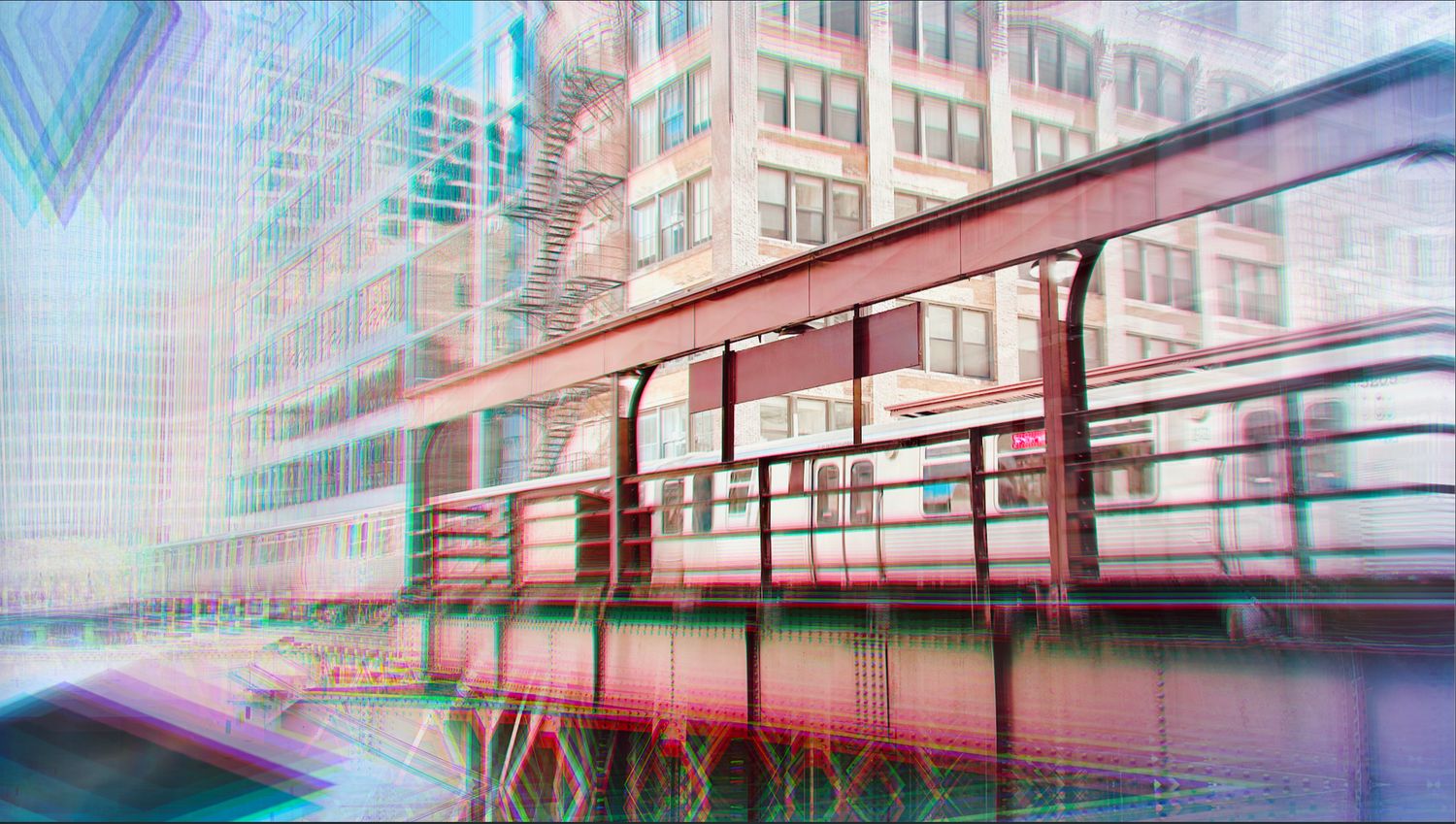
He looked out the window at the city, the grid of it, the L trains crawling along their tracks far below, the whole vast machine of people going home to places that were theirs. On his way back to his tiny-home shaped like an SUV, he took a picture of one of the trains streaking past, the train smeared into a streak of light. He looked at it on the phone and loved it. He could feel that it was closer to art than he normally shot. And he made a point of thinking about that. He didn't quite know what that picture meant to him, but he kept it and he seemed to be keeping a lot of pictures lately that he didn't really understand.

He walked through the city for an hour to clear the conference room off him. He passed a restaurant window with a T-shirt in it that said EASILY PERSUADED BY TACOS and he stood there and laughed out loud, alone, on a Chicago sidewalk, and he took a picture of the shirt and texted it to the twins with no caption.
Bobby: BUY IT
Bobby: That's literally your tombstone
Brooklyn: Are you okay though?
Dixon: I’m in Chicago.
Brooklyn: I’m going to start screaming
He bought a Diet Caffeine-Free Coke from a bodega that miraculously had one, and he drank it walking, and he pointed the car south the next morning, out of the world of the tower, toward Nashville, and he felt the road take him back the way water covers over a stone.
Dixon loved Nashville so it made sense to squeeze in a night there. He didn’t really need to stop. He could have made it all the way to Atlanta, but he wasn’t in a hurry to get back there. So why not have a fun evening out on the way, he thought. It’s a city of loud country music, people in cowboy boots, and great BBQ.
He got in late in the afternoon and found a room at a hotel with a rooftop pool and bar. He walked downtown into the noise and commotion, the bars stacked three stories tall with a different band in every one, music pouring out of every open door and window and colliding in the street. Dixon, who could not hear music without his body responding to it, floated through the scene and lit up, the sound getting into him. He ducked into a honky-tonk because a steel guitar was doing something in there that reached out and took him by the collar.
He stood at the back, watching as the band played. The place was full of people in hats, both real ones and tourist ones, and cowgirls, actual cowgirls and women dressed as the idea of cowgirls, and Dixon loved all of it. He loved the whole gorgeous display of the American costume happening around him. A woman next to him asked why a man at a honky-tonk wasn't drinking and he said he got his highs from the music instead and she just laughed. They talked for a while. She was up from a horse training ranch outside of town and she owned a huge laugh. Diixon liked her immediately. Around 5:45 PM, she looked at her watch and exclaimed suddenly that she was late to meet her husband for dinner. She gave Dixon a hug and ran out the front door. Dixon thought this was all hilarious.
Dixon turned his attention back to the stage. A performer was just coming on. She was young, younger than him by a wide margin, with long honey-blonde hair that went amber under the stage lights, and she tuned her guitar without looking at the tuner, which told Dixon something before she'd sung a note. When she sang, the whole room turned toward her the way plants turn toward the sun. She was good. Not bar good. Good good. She sang other people's songs and a couple that were clearly her own, and the ones that were hers were better. Dixon stood at the back and felt something warm in a way that he hadn’t felt for some number of months. A warmth that filled him up and made him feel happy.
He wasn't going to talk to her, he thought. What would he say?
But she came off the stage during the break and got a water and looked around the room the way performers do, reading it, and her eyes landed on Dixon at the back. The guy in the straw hat, and something about him registered with her, the way it often did with Dixon, that quality people couldn't place. She crossed the room toward him with the unhurried directness of a woman who had never once had to chase anything, and before he could say a word she reached up and lifted the straw hat off his head and put it on her own.
"You don't dance," she said from under his hat, “although I can see your body moving to the music like it’s getting in you.”
"I'm just listening, and watching you move," Dixon said. "You wrote those last two. I can tell."
She adjusted the hat with one finger, deciding it was hers now. "How'd you know?"
"’Cause they were the ones that cost you something," he said looking into her eyes under the brim of his hat.
She looked at him then, really looked, the way the witch had once and the way a few people in his life had, like she was revising her assessment of him. Then she handed him her water bottle, motioning to him to hold it for her, and she bent down to fix her sock inside of one her boots. Dixon looked down at her as she bent. Her jeans were tight and her white tank-top was sweaty, sticking to her back. Dixon stood there holding the bottle, and he felt that she probably had decided something about him already and was now just checking her work.
"Who are you?" she asked, straightening back up, turning toward him and moving in close.
"Nobody. I'm just passing through. Driving back to my empty house in Atlanta to put it up for sale." He said it lightly. He was getting better at saying the true things lightly. There was a long pause. She looked at him from just a few inches away, peeking out from under the brim of the hat. "I make things for a living. For other people. I have been doing it for a long time. I'm starting to think that maybe I want to make something that's actually mine for once." He said this unprompted and it felt good to say it.
As if a switch clicked in her, she started to speak directly to him, looking straight into his eyes. "Marlowe," she said, taking the water back, her hand resting on Dixon’s for a moment in the process. "Marlowe, like the detective. . . my mama liked mysteries." She tipped the brim of his hat at him. "And you're a guy who watches a whole set without dancing and then says something deep like the ones that cost you something. So don't give me that 'nobody.'" She poked him lightly, playfully, in the chest as she said the last part. Then she turned around and leaned back against him. Dixon felt the sweat of her shirt against his. “Tell me something,” she said wistfully.
So Dixon started talking. He told her about his trip. He told her about Cash. He told her about the Montana sky. She kept herself pushed against him through all of this, listening with her eyes closed and he head back, almost as if she were in a trance. Then he told her about Magnolia. At this point, she turned and looked at him deeply again. She looked sad. “It’s OK!” he said seeing her concern. “It’s not like I shot her or something, like that Governor did. She’s just living with her boy for a while.”
"You talk like a guy with a record in him," she said with a bit of punch. Dixon noticed her accent now. She spoke slowly and drawled heavily. He thought maybe she was from Arkansas or Oklahoma.
"I can't sing," Dixon said with a light smile and a little shrug.
"Everybody ‘can't sing’. That's not what a record is." She turned back around and sunk against him once more. "A record is just true things that rhyme. I bet you've got a whole glove box full of true things. I can tell from here." She put her right hand on Dixon’s hip as she said this.
"Maybe I'll write a song about you, then," Dixon said.
"Yeah?" She looked over her shoulder, amused now, calling what she was sure was a bluff. "What's it gonna be about?"
"The way you smell."
She pulled back a few inches and laughed. "The way I smell? I smell like sweat, darlin’."
"Yeah you do," Dixon said. "You smell like sweat and stage light and the rush of being the object of the desires of every cowboy in this room. You smell like denim and the soft cotton of your shirt. You smell like you walked out of a dream, coated in magic dust."
The laugh stopped. The bar went on being loud around them, but now it was very quiet between the two of them. Marlowe looked at him from under the brim of Dixon’s hat for a long moment, and Dixon watched her face change. She looked more serious, but also had more wanting in her eyes. A desperate wanting.
"Okay, see," she said slowly, "you can't just say things like that in a bar, especially a cowboy bar."
"I just did," he said and gave her a mischievous grin.
"Yeah." She picked up her water and set it back down without drinking it, flustered a little. "I noticed."
She stood, took his hand off the bar like it was a thing she'd left there earlier, and said, "I leave for a radio thing in Knoxville at nine in the morning, and you're driving off to wherever it is sad men with nice hats drive off to, so let's be really clear about what this is."
"I was going to give you the same speech," Dixon said.
"I know you were. You've got 'leaving' written all over you. It's kind of your whole thing. Plus it feels like. . . I don’t know. Like you’ve suffered gracefully or something." She put his hat back on his head, adjusted it half an inch, studied the result. "Annoyingly, it's frickin’ workin’. I can’t believe how much I want you. Come with me," she said and took him by the hand.
She lived just a few minutes walk away, up an outdoor staircase behind a house that belonged to her aunt. It was a small but cozy one room apartment with a window air conditioning unit, four guitars, a lot of boots, and a very comfortable looking bed. They laughed on the way up the stairs, shushing each other, and stopped laughing at the top of them. She fumbled with her keys, dropping them onto the landing. She and Dixon both knelt to pick them up. They were face to face, just a few inches apart. They kissed deeply for a moment. Then she stood up, unlocked the door and pulled him by the hand into the apartment.
Dixon sat on the end of the bed while she fished two beers out of the small fridge. She handed one to him and he set it on a night table. She stood there, looking at him, drinking her beer for a minute. Then, still standing, she put one foot up on Dixon’s legs and said, “Help me out with these boots, ok?” He pulled off the boot and pressed his thumbs into the arch of her foot. She curled her back and threw her head backward. “Aw, shit that feels good. Where’d you learn to do that?”
“I once gave a stripper a foot massage during a private dance. She asked me to marry her, but I declined.”
“Oh fuck. . . her loss,” she said melting.
He put the foot down and helped her get the other boot off. He rubbed that foot for a bit, producing much the same result and a lot of pleasured moaning. Eventually, he put the foot gently on the floor and turned her around. He reached around her waist and unbuttoned her jeans. He pulled them down, but they ended up, as jeans do, getting stuck around her ankles. She bobbled unstably around. He sat back down and put her over his knee, helping her get out of the jeans. Then he put his hand between her legs and rubbed very slowly. Her underwear was soaked.
“My god, where did you come from again. . . they certainly taught you how to treat a lady.”
Dixon helped her roll over, sitting on his lap; he stood up, lifting her in his arms. He noticed that she was very light in doing this. Her small frame in his arms felt almost weightless. He tossed her up onto the bed. She yelped and laughed. He climbed onto the bed on top of her and they were connected to one another nearly until sunrise.
Just before the sun came up, lying there in his arms, in the hum of the window unit, she sang something to herself. It was just half a melody. Three or four gentle notes going up and not coming down. She hummed it lightly and naturally in the way that a singer just lets the music out, without knowing they're doing it. Dixon lay there and memorized it without meaning to, and would have it in his head for the rest of his life.
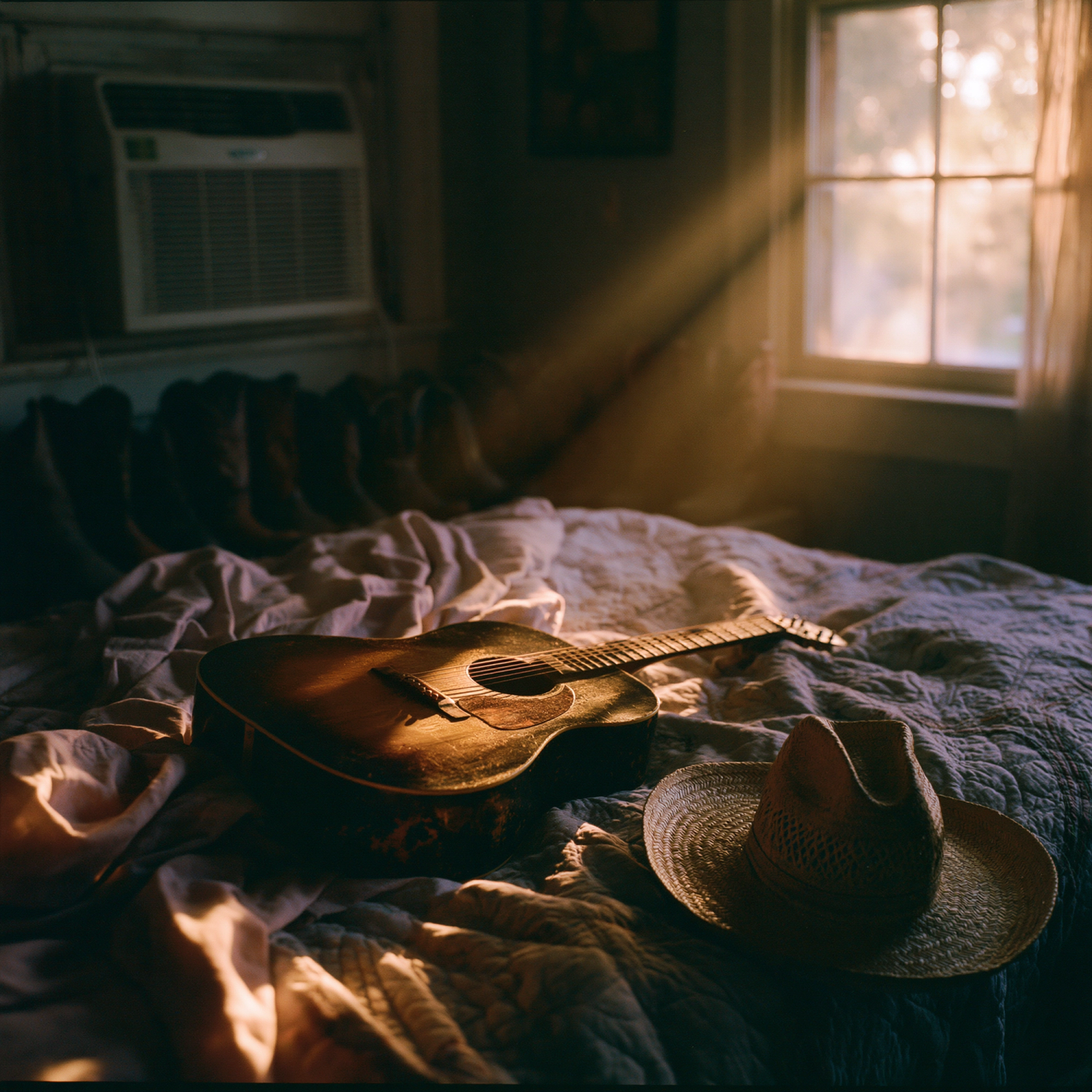
In the gray early light she got up, and Dixon thought she was getting ready to send him off, but she came back from the corner of the room with a guitar. An old acoustic, scuffed, the finish worn through where a thousand hours of forearm had rubbed it.
"I've got four," she said, holding it out. "This one's the one I learned on. It's not worth anything. That's why you should have it." She pressed it into his hands. "A guy driving across the country with a record in him should have a guitar in the car. It's just embarrassing otherwise."
"I can't take your guitar," her said pushing it back toward her.
"You can't not take it. I already decided. Now it's a thing that happened to you." She smiled, and pulled a sheet around herself like a queen putting on her robes. "Learn three chords. Everything's three chords. Then steal the fourth from somebody."
"What do I owe you for it?"
"A verse," she said. "Someday. About the way somebody smells." She opened the door for him into the early light. "Make it a good one."
Lyrics
[verse]
The crowd wants somethin' easy,
Somethin' borrowed, somethin' fine,
But I sing the songs that cost me somethin'...
Will you know which ones are mine?
He did. Back wall, straw hat,
Stone sober, keepin' time,
Not dancin', just listenin'.
And a girl notices that kind.

[verse] I lifted off that hat of his
And wore it like I should.
He had leavin' wrote all over him, Lord, it never looked so good.
Then he told me I smelled like stage light,
And I almost lost my mind...
A lady wants to feel the heat From a man that sounds so fine.

[chorus] Three chords'll get you started,
Three chords'll see you through,
Three chords and the truth, amen,
That's the gospel, and it's true.
But a song ain't really singin'
Till you break a rule or two...
'Cause you steal the fourth chord, darlin' (uh huh)
From somebody passin' through.

[verse]
Now what happened up those stairs of mine
Is between the moon and me.
A lady don't go kiss-and-tellin'...
She just writes it in the key of G.

[chorus]
Three chords'll get you started,
Three chords'll see you through,
Three chords and the truth, amen,
That's the gospel, and it's true.
But a song ain't really singin'
Till you break a rule or two...
'Cause you steal the fourth chord,
darlin' (uh huh) From somebody passin' through.

[bridge]
Come sunrise I went and gave him
The guitar I learned to play. It ain't worth nothin',
that's exactly Why I gave it away.
I said learn yourself three chords,
then take the fourth for free,
And someday, play it back,
play it back to me.

[chorus] Three chords'll get you started,
Three chords'll see you through,
Three chords and the truth,
amen, That's the gospel, and it's true.
But a song ain't really singin'
Till you break a rule or two...
'Cause you steal the fourth chord, darlin' (uh huh)
From somebody passin' through.

[outro]
He drove off with my old guitar,
I gave him back his hat.
Kept the night, and kept the song...
A girl could do worse than that.
And if you're wonderin' where my fourth chord went
You're listenin' to it now.

[hummed softly] Mm, mm-mm...
The song Marlowe wrote after her evening with Dixon
Dixon walked down the staircase into the Nashville morning holding the guitar. He felt another little change inside of him. He hadn’t been on this journey for that long yet. But he had driven out of Atlanta a few weeks ago a man who took pictures and he was driving back toward Atlanta a man who had a record in him somewhere. He always felt like he had a story in him. And he could not have told you exactly whether it was the storm or the laundromat or Marlowe or the cumulative weight of all those empty miles, but the story had arrived. The want to tell it had arrived. The want to make something out of all this instead of just driving through it had arrived.
He put the guitar in the back seat, on the little platform where Maggie had been.
He looked at it in the mirror for a second before he started the car.
"Okay," he said, out loud, to the guitar, the first thing he'd said out loud in the car since Portland. "Hi."
He drove the last leg to Atlanta with the guitar riding behind him and the window cracked and somewhere in Tennessee he opened the glovebox looking for a pack of gum and found, instead, a little yellow disposable camera and the envelope of pictures of Margaret.
He'd forgotten the camera was in there. He'd thrown it in there before the trip and driven the whole country with it without remembering. And don't even think of calling me Maggie, a voice said, dry and amused, from the part of his memory he kept that particular person in. He'd gone and called the dog Maggie, instead of Magnolia, all the way out to Portland. He wondered if that meant something. He decided not to decide. He put the disposable camera back in the glovebox and shut it. He kept driving and did not examine it any further.
He came into Atlanta in the heat of the afternoon, the city rising up out of its trees the way it does, and he drove to the house. The house was sitting there exactly as he'd left it, big and brick and empty. The dents in the carpet were still there, the refrigerator was humming away in the dark keeping its secrets, the whole enormous thing was just waiting for him to come back and deal with it.
He had crossed the entire country twice in the last couple of weeks. He had given away his dog and learned to do laundry and said no to a kind man and yes to a guitar. He had photographed a storm and a Lincoln and an empty sushi restaurant and a train smeared into light. He had mailed bright postcards into a quiet that stayed quiet. He was now a man with a guitar he couldn't play and a phone full of pictures he couldn't explain and a house from a former life he couldn't keep.
It was, he thought, going to be a lot. Cleaning up the house. Wrapping up the memories. Putting to rest the last of that life. And the actual physical labor of ending things here.
But he had the strangest feeling, standing in the driveway looking up at the house, and he turned it over carefully because he didn't trust it yet, the way he kept checking on the ‘not-bad’ feeling the whole trip. The feeling was this: that the house behind those windows was the past, all of it, every room of it, and that the past was a thing you cleaned up and closed the door on. And that everything else, the storm and the guitar and the road and whatever the want was that had arrived somewhere out there in all those empty miles, everything else was somewhere out ahead of him, down a highway he hadn't driven yet.
He didn't have the words for it. Not yet. Maybe the guitar would give him some. Maybe a few more thousand miles would.
He picked up the guitar from the back seat, because he wasn't going to leave it in the car, and he carried it up the walk to the empty house, and used his key to let himself in one more time.
Published from eastern Oregon via Starlink connection, June 12th 2026
Enjoying the story? Support the work →
All text, images and music copyright (2026), Slightly Moody Creative LLC and Joe English.