The Method
My Work Needed a Home, I Built One.
June 25, 2026

For a while now, my work has lived in a lot of different houses, none of which I owned.
The fiction was on Substack. The music was on Bandcamp, when the streaming platforms allowed it, which is a story I’ll get to. The photography was scattered across a print site, Facebook and Instagram. The thought leadership was here on Substack and LinkdIn. Each platform had its own rules, its own look, its own idea of what my work was supposed to be. And none of them could hold the actual thing I’m making, which is not a pile of songs or a novel or a photography portfolio, but a single body of work that crosses all of those at once.
This week I moved it into a house I built myself. It’s called slightlymoody.com, and I’d like to tell you why I needed it, how I made it, and what I think it means, because I don’t think this story is really about me or my website at all.
The Why
The forcing function, if I’m honest, was the music.
If you’ve followed the development of AI music, you know that several streaming platforms have moved to ban AI-generated tracks outright. Not to label them. Not to ask what they’re for. To remove them. The intent behind the creation doesn’t enter into it. The systems that control music distribution are enormously powerful, and they are threatened by this technology, and the current reaction to something threatening is the oldest reaction there is: ban it and don’t ask questions.
I understand the fear. I just think we’ve been here before.
We had this exact debate when DJs and producers like David Guetta and Avicii made “synthetic” music — electronic, sequenced, built rather than strummed. There was real hand-wringing about whether that was real music, whether a person who didn’t play a traditional instrument was really a musician. We are, I think, entirely past that now. Nobody seriously argues Avicii wasn’t an artist. We will get past this moment too, the same way. It just takes a little while for the fear to catch up to the work.
But here’s the thing: my music was never meant to stand alone on a streaming platform in the first place. It’s part of a multimedia project that builds worlds. The songs belong next to the chapters they score and the images they share a mood with. But I still needed a place to put them so you could hear them. So when the place I’d been keeping the tracks became uncertain, it forced a bigger realization: I didn’t own my house and it could disappear at any moment. I needed a place that could hold all of it, together, the way it was meant to be experienced and not have the risk that any or all of it might disappear because of a decision outside of my control.
And then there’s the fact that I work across media. I also work across time periods and genres, which is harder to house than it sounds. How do you build one home for a contemporary novel set in the Great Basin and a science-fiction series set in the near future? Most platforms would make you pick a lane.
My answer was a map.
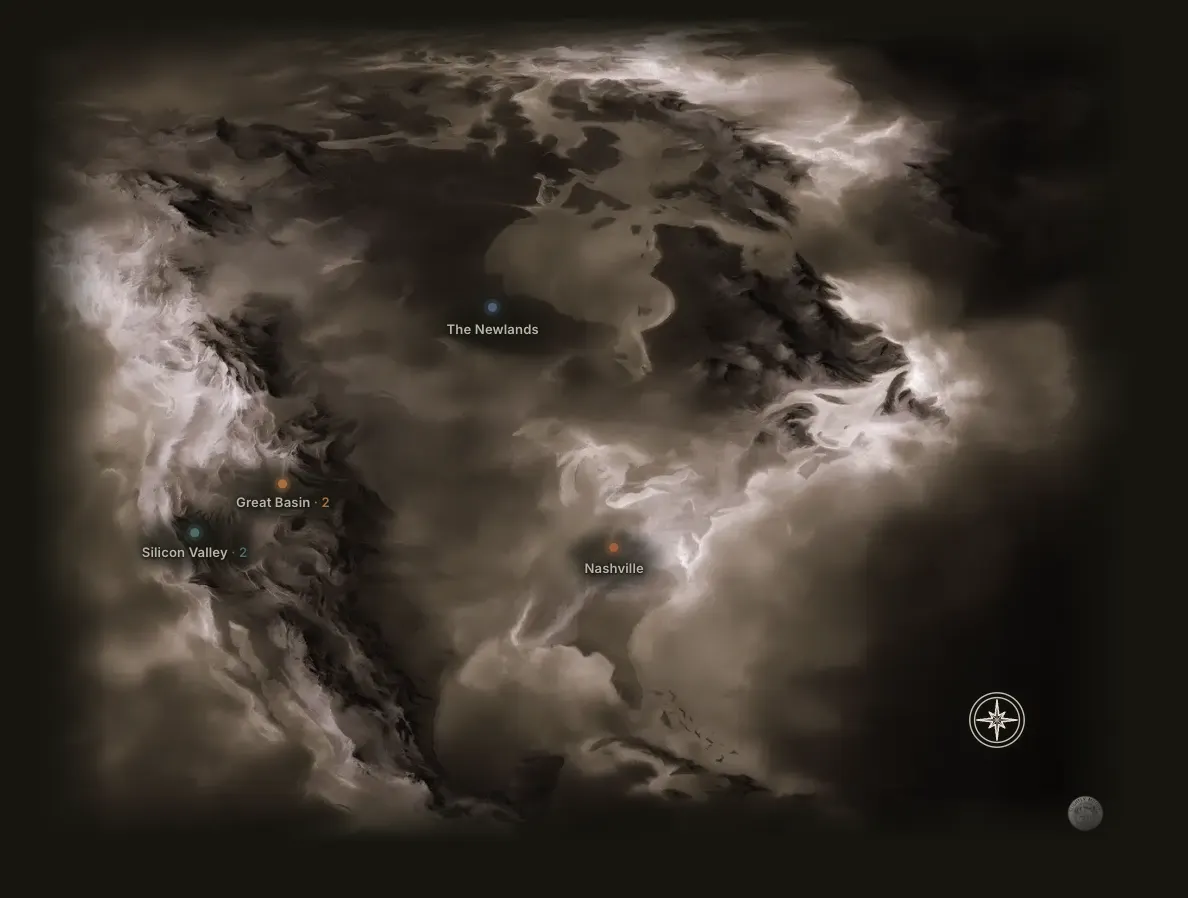
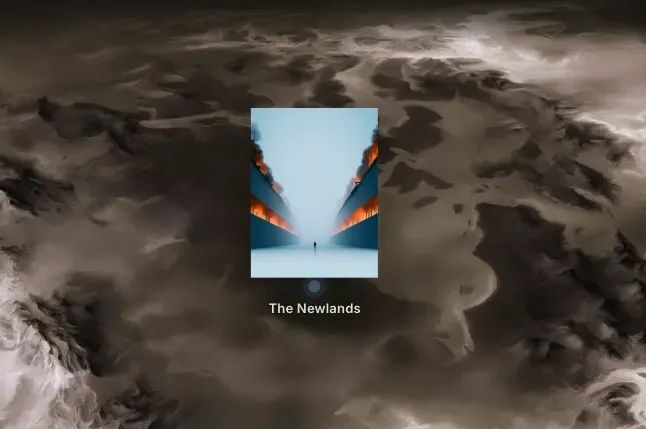
The new site is organized geographically as regions you can explore, each holding a different part of the work. The Great Basin holds the contemporary fiction and the photography. Nashville holds the music. Silicon Valley holds the thought leadership. And a region called The Newlands holds A Truer North, my new sci-fi series, which gets to sit on the same map as my present-day desert work without either one feeling out of place. The map can grow. Every time I start something new, it gets a place to live. That was the vision, and that’s what’s there now. And it fact, The Newlands will be populated with its first story tomorrow, so watch for that.
The How
Here’s the part people don’t believe at first.
I’m not a coder. I’ve said before that I’m not a musician, either, and yet you can hear the songs that I write. The same thing is true here: I am not a developer, and I built a fully custom website — no template, no website-builder company hosting it for me, no monthly subscription fee — that does exactly what I need it to do. It’s mine. I own it.
The way that happened is the whole point, so let me be specific.
It started with research: detailed conversations with Claude to define the look and feel I wanted, and then the functionality underneath it. Not “build me a website.” Rather, here is the experience I’m trying to create, here is what it needs to do, here is how it should feel to move through it, this is what I want it to look like. From there, it became a series of brief-writing sessions, directing tools like Claude’s Cowork and Code to build the actual assets and infrastructure. The site runs on professional-grade tools (Sanity and Astro) that are completely customizable, and I didn’t write the code that built it.
I’ll be honest that it wasn’t entirely without technical moments. There were a couple of points — creating environment variables, generating secret keys, deploying things to a server — where I felt the ground get a little technical under my feet. I’m technically capable enough not to panic, and that helped. But “technically capable enough not to panic” is a very different bar than “knows how to build a website from scratch,” and the gap between those two things used to be years of learning. Now it’s a series of well-directed conversations.
I want to show you what this actually looks like, because the reality is less dramatic and more interesting than people expect.
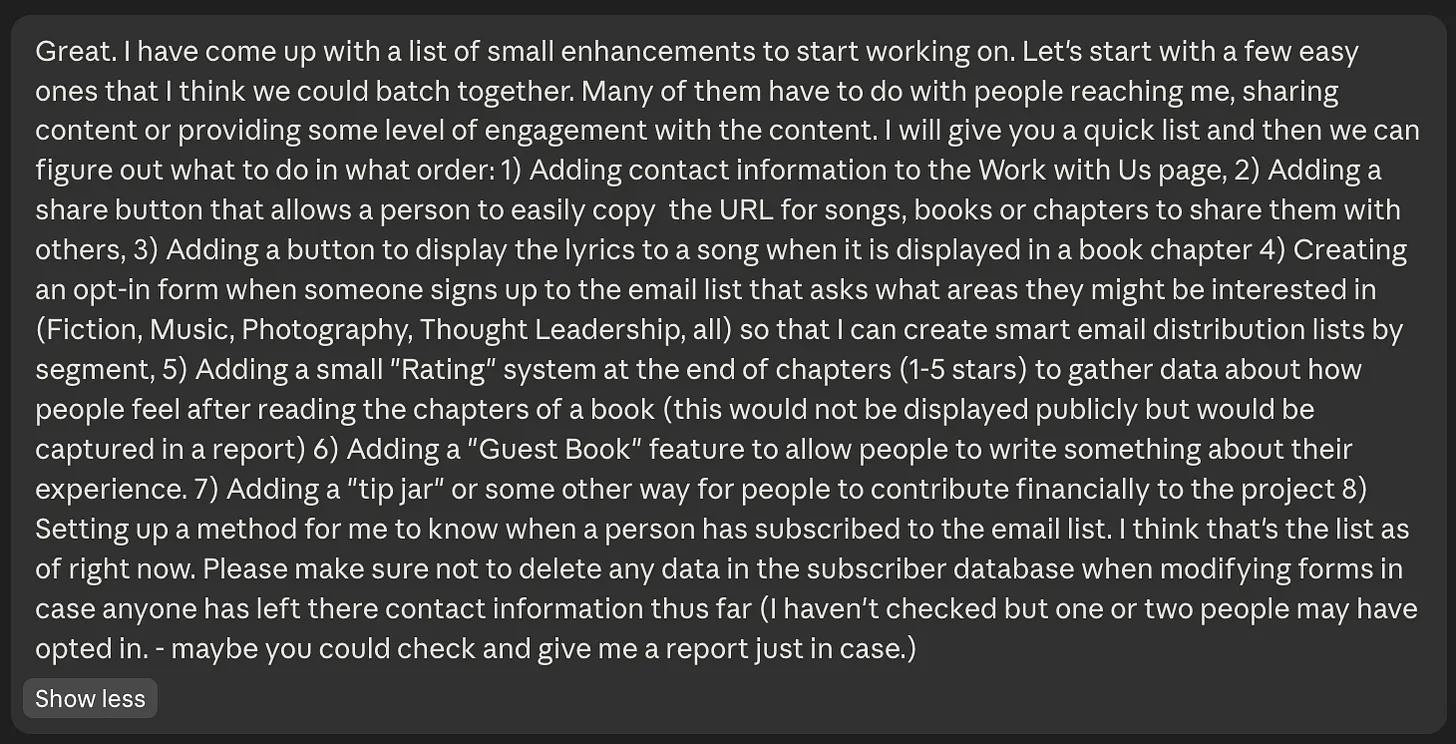
That’s a screenshot of me adding a whole batch of features to the site. Contact info on the Work With Us page. A share button so you can copy a link to any song, chapter, or book. A button to show a song’s lyrics inside a chapter. A segmented sign-up form, so when you join the email list you can tell me what you’re actually interested in — fiction, music, photography, thought leadership, or all of it — and I can stop sending everyone everything. A private rating system at the end of chapters so I can learn how the writing is landing. A guest book. And yes, a tip jar, which is now active, for the kind souls so inclined. :)
We just worked through them. In batches. Conversationally. And every one of those features is live on the site right now. There was nothing technical about that screenshot at all. It’s a person describing what he wants and a tool building it. Yes, there were lots of individual decisions that were made, but that list only took about two hours to accomplish. That’s incredible.
The Impact
This is the part I actually want you to take away, because it’s bigger than my website.
We are moving into a space where an individual creator is backed by something that functions like unlimited resources. Not unlimited money: unlimited capability. The first time you have the experience I just described — the first time you want a thing to exist and you simply describe it into existence, correctly, working — something reorganizes in your head. You stop asking “can I afford to have someone build that?” or “do I have time to learn how?” and you start asking a different question entirely.
The question is just: how do I do that?
That’s it. That’s the whole shift. You look at the thing you’re trying to make — the job to be done — and instead of stopping at the wall of “I don’t know how,” you ask how, and the tools are now good enough to get you there.
Last night, as an example, I worked with Claude’s Code to build an entire little studio for writing the descriptions of my photographs — a custom tool that generates the descriptions and the metadata for my images. That’s not a thing I bought. It’s not a thing I found. It’s a thing I needed, so I had it made, in an evening. A year ago that sentence would have been science fiction.
This is what I mean when I say this story isn’t about my website. The website is just my example. Everyone reading this has their own version — the thing you always wished existed for your work, the tool nobody makes because the market for it is exactly one person: you. The market of one used to be a dead end. Now it’s a brief.
I keep coming back to the same idea I had when I started this whole Slightly Moody experiment: this was never “make me a website” and poof. If you sit down and type “make me a website,” you get a generic thing that looks like everyone else’s generic thing, because you haven’t told it what you’re actually trying to make. The magic isn’t in the asking. It’s in knowing what you want badly enough to describe it well and then directing the tools, patiently, toward the thing you can already see in your head.
I could see this place in my head. Now it’s real, and you can walk around in it.
Go take a look — and do it in dark mode, which is how it’s meant to be seen. There’s a map waiting. Step inside.
A Truer North, my new sci-fi project debuts tomorrow. I can’t wait to share it with you.
The Slightly Moody Creative is the work of Joe English — fiction, music, and photography, on owned infrastructure. See all of it at slightlymoody.com.
Find me on Instagram at @slightly_moody_creative.