The Sit Boy · Chapter 1
The Astrologer

Act 1: Everything Falls
The bookshelves were too white.
Dixon had been thinking this for the last three years, really ever since they and the original exposed brick had been painted over in a shade the contractor had called “Swiss Coffee.” Dixon thought this color could be better described as the color of a headache. Every morning the Atlanta sun came through the two large windows on the east wall and hit those shelves like a flashbulb, turning his entire office into something that felt less like a room where a person worked and more like the center of the Sun. He had filled the shelves with books and awards and small artifacts from twenty years in the events industry. There was a chunk of pyrotechnic casing from a halftime show, a signed photo from a not-so-famous performer who had gone on to become extremely-very-famous, and a small brass telescope that didn’t work but looked like it belonged to a man who might own a small brass telescope. Yet still the white won. The objects sat on the shelves like hostages in a very well-lit prison.
He knew he should repaint them. He had been meaning to repaint them. He had, in fact, priced out the repainting twice, gotten quotes, discussed undertones with a woman at Sherwin-Williams who had strong feelings about warm versus cool greys, and then done nothing about it. This was not laziness on his part. This was a man who always had the big, hardbound version of the Pantone color book within arm’s reach. He could easily envision, design, and pick out the colors and textures of some massive event for thousands of people. But when it came to his own bookshelves, well, that was a project he’d get to, eventually. It was a case of the cobbler’s children, walking around barefoot. The color-obsessed designer’s office, aggressively and unhappily Swiss Coffee.
The office itself was a second-floor room that looked out over the kind of backyard that doesn’t exist outside the South. It was three-quarters of an acre of relentless green bordered by two creeks, one running along the side of the house and another tracing the far edge of the property like a moat for a kingdom of centipedes and humidity. The yard was, by most people’s assessment, beautiful. It was also, by Dixon’s private assessment, a weekly punishment that he had volunteered for and couldn’t figure out how to quit. He mowed it himself. Every Saturday. He mowed it in the Atlanta heat, which is not a temperature so much as a physical condition. You don’t experience Atlanta summer, you wear it. He would push his electric mower through grass that grew back out of spite, sweating through shirts that would never recover, while bugs of exceptional persistence landed on his neck and stayed. The mower was electric because Dixon, despite having lived in the South for a few years, had grown up in the Pacific Northwest, and the Pacific Northwest had instilled in him certain convictions about the planet that no amount of Georgia humidity could dissolve. He was going to do his part. He was going to save the damn planet one lawn mowing at a time, even if it meant stopping every twenty minutes to swap batteries while his neighbors rode past on gas-powered riding mowers the size of armored vehicles and looked at him with the particular blend of Southern pity and confusion that Atlanta reserved for men who made choices that were technically admirable but practically insane. He could afford a riding mower. He could afford a crew. But he had an electric push mower because the ice caps were melting and someone had to care, and apparently that someone was a man standing in ninety-six-degree heat watching a battery icon blink red while the grass he’d just cut grew back in real time. He could afford to hire someone. But somewhere in the layers of his upbringing, the idea had been deposited that a man mowed his own lawn, and he had not yet dug into that belief enough to stop mowing the darn lawn himself.
He was thinking about the yard because he was avoiding thinking about the Zoom call that was scheduled to begin in four minutes.
The call was a birthday present. She had given it to him the way she gave most gifts. She gave it with a confidence that suggested she had already decided he would love it and that his actual reaction was more of a formality than anything else. “I booked you a session with an astrologer,” she had said, in the same tone a person might use to say “I made reservations at that place you like.” As if the only question was what time, not whether a grown man who had successfully made it this far in life on his own needed a stranger in Hawaii to explain his birth chart to him.
He did not need this. He also did not not need this.
Dixon’s relationship with astrology occupied a space that most of his friends found either charming or mildly concerning, depending on how much wine they had consumed. He knew his chart. He knew everyone’s chart, or at least enough of it to be dangerous at dinner parties. He was a Libra Sun, which he understood to mean that he moved through the world with a certain, he wouldn’t say grace, but others might. He had a facility for making people feel like the most interesting person in the room, even when the room contained objectively more interesting people. His Rising sign was Virgo, which explained why he could spend forty-five minutes adjusting the kerning on a presentation that no one else would ever consciously notice, although they would probably feel it. It was the reason that an audience at one of his events felt when a room is right without knowing why. And it is also why there existed, in the downstairs bathroom, an entire situation involving toilet paper.
The toilet paper situation was not, strictly speaking, his. Dixon was decidedly relaxed about the orientation of toilet paper. He hung the toilet paper whichever way it landed on the holder, which was to say randomly. This was interpreted as the incorrect way, according to the framed picture that she had installed in the bathroom: a small, tasteful print that read “The Way We Roll” above an illustration of toilet paper hanging in the correct (over, not under) fashion. Dixon regarded this direction as a suggestion. He regarded most household directives as suggestions. He had, on more than one occasion, hung the toilet paper deliberately backward (under, not over, the loose end dangling against the wall like a flag of quiet rebellion), just to see how long it would take to be corrected. In his experience, the answer was never more than four hours. He imagined her floating through the house checking the TP at regular intervals and being miffed when he got it the wrong way round. He found all of this enormously satisfying in a way he would never have been able to explain to a therapist, though he suspected a therapist would have had things to say about it.
But his Virgo Rising was real, and it showed up where it mattered. Not in the toilet paper. It showed up in his work. Dixon could look at a set of design drawings for a stage or an environment and feel what the audience would experience. He didn’t have to dissect it intellectually, or understand it through analysis, but rather intuitively, the way a musician hears a song in their head before it’s even played. He could walk a client through the emotional journey of their event before a single light had been hung or a single dollar had been spent: here’s where they enter, and the ceiling is low, and they feel compressed, and then the hallway opens and the room is enormous and their breath catches, and the light is warm amber, and there’s a scent — something botanical, not floral — and by the time they reach their seat they feel like they’ve been invited into something rather than sold something. He could describe this with such specificity and conviction that his designers would look at their own work differently afterward, and clients would make decisions worth millions based on a feeling that Dixon had made real for them by putting into words that they could feel.
This was his gift. Not budgets, not logistics, other people handled those, and they were welcome to them. Dixon’s gift was the experience itself, the imagined moment, the ability to stand in an empty warehouse and see the finished thing so clearly that he could tell you what the audience would remember three days after the event. It was a kind of creative clairvoyance, if you wanted to be dramatic about it, and Dixon did not want to be dramatic about it, because the most effective version of this gift was the one that looked effortless. It was the one that looked like a man simply describing what was obvious, as if anyone could see what he saw, when in fact almost no one could.
His Moon was in Aquarius, which he interpreted as permission to have large, slightly impractical dreams about the future, dreams that he would then, because of the Virgo in him, immediately begin sketching on napkins and hotel notepads in a level of detail that made the impractical start to look downright achievable.
He had, on more than one occasion, delved into the charts of colleagues at a working dinner or lunch. This sometimes produced a range of responses from fascinated to alarmed, with one memorable outlier being a person who had pulled up her own chart on her phone and the two of them had spent the rest of their evening mapping the synastry between their two charts instead of discussing a production timeline, which had been the stated purpose of the meeting and which neither of them missed. He was also known to give astrological ‘weather reports’ at staff meetings, usually signing them off with something uplifting like “don’t worry, although this is going to be a tough time, we’ll get through it by supporting one another.” That was another of his gifts: allowing people to feel uplifted even in the face of daunting deadlines or pressure or odds.
But this was all just cocktail-party astrology. Horoscope-in-the-morning astrology. The kind of astrology that let him say “well, Mercury is in retrograde” when a client presentation went sideways, which was both a joke and not a joke, which was exactly where he liked to keep it. He had never paid a professional astrologer to examine his chart in depth, because to do that would be to cross a line between a man who found astrology interesting and a man who believed in it, and Dixon was not entirely sure which side of that line he wanted to be on.
The Zoom window opened. A woman appeared on screen.
She was in Hawaii. He could faintly see through a window behind her the particular green of the islands, that saturated, lush green that exists only in the tropics, as if the vegetation there had decided that subtlety was for colder climates. Hawaii had always been a significant place for Dixon in ways he didn’t fully understand and had stopped trying to. He had married his son’s mother there, years ago, in a ceremony on a beach that had been small and sincere and had ended with everyone in the ocean. The marriage hadn’t lasted, but the place had. It had stayed lodged in his personal mythology like a recurring dream with better weather. Every fifteen years or so, Hawaii surfaced in his life around some major relationship event, like a tropical checkpoint his soul kept returning to for processing. He didn’t talk about this much. It was the kind of observation that sounded reasonable inside his own head and potentially unhinged when spoken aloud, and Dixon had excellent instincts for which thoughts fell into each category.
The astrologer’s name was Mama Honu. Dixon thought, with the little Hawaiian he knew, that this meant Mother Turtle. Dixon found this both endearing and slightly intimidating, in the way good spiritual names should work. The name was likely intended to make you should feel simultaneously welcomed and mildly warned. He realized this could also be a completely made up name that would work well on tourists or people in far away places like Atlanta. She had dark hair pulled tightly back, steady eyes, and the very Hawaiian unhurried manner of a person who was not going to rush through anything regardless of what the calendar said. Dixon recognized this quality because he did not possess it. He was a man who was kept on a very tight schedule by his work. Mama Honu looked like she had never looked at a clock in her life and would find the concept of sticking to a timetable to be philosophically suspect.
“Let’s look at your chart,” she said, as if his chart were a physical object she was unfolding on a table between them.
What followed was eighty-five minutes of the most thorough astrological examination Dixon had ever experienced, which, given that his previous experiences, was perhaps not saying much. But Mama Honu was operating on a different level entirely. She was not selling comfort. She was not telling him what he wanted to hear. She was reading his chart the way a structural engineer reads blueprints. She was looking at Dixon’s plans for his load-bearing walls, his stress points, and the places where his architecture might not hold it all together.
She was also, he was fairly certain, a medium. She had mentioned early in the conversation that she combined astrological reading with intuitive work. “I talk to the chart and I talk to what’s around you,” she had said, which Dixon interpreted as meaning she spoke to spirits, or energies, or something that existed adjacent to this world. His Libra Sun found this beautiful, his Virgo Rising wanted to understand how it worked and his Aquarius Moon just wanted to believe it completely. He had encountered mediums before. A friend’s mother in Savannah had looked at him across a dining room table and said, without warning, “your father’s mother Lulu wants you to know she’s proud of you,” and he had felt the hair on his arms stand up because his father had never known his mother. Dixon’s father was an orphan. Dixon had only found out his grand-mother’s name recently after digging through ancestry and court records. And yet here was a stranger in Savannah, with no way of knowing any of this, telling him that this woman, this blank spot on his family tree, was somehow proud. Of him. Specifically. It had left Dixon with questions he still hadn’t resolved. He had walked out of that dining room a man who believed that some people could do things that other people couldn’t, and that this was perhaps no more remarkable than some people being able to sing on key and others causing pain when they attempted it.
So when Mama Honu said she was also reading what was “around” his chart, Dixon did not push back. He leaned forward slightly, which his laptop camera probably registered as interest and which was, in fact, interest.
She walked through his chart with the precision of someone who had done this thousands of times and still found each one worth her full attention. The Libra Sun: “You show up in the world as someone who values beauty, balance, and fairness. People experience you as charming, not in a manipulative way, but in the way that a well-designed home is charming. You make the space around you feel considered.” Dixon thought this was generous but not inaccurate. He did make spaces feel considered. He made experiences feel considered. He had once spent an entire afternoon agonizing over the exact color temperature of the lighting for a single small corridor, a space that attendees would walk through in under twelve seconds. He did this because those twelve seconds would set the emotional tone for everything that came after, and he knew that if the light was too cool they would feel clinical and if it was too warm they might feel manipulated. And he also know that the difference between clinical and manipulated was about two hundred Kelvin, and Dixon could feel this difference in his soul. Nobody else could feel it at all. Nobody else needed to. That was what they had him for.
The Virgo Rising: “Inside, you’re all detail. You see the things that other people miss, and it genuinely bothers you when something isn’t right — not wrong, exactly, but not right.” Dixon glanced involuntarily through the office door in the direction of the kitchen, where his spice rack sat in alphabetized perfection, a monument to a mind that could not leave cumin next to oregano when cinnamon was right there, lonely, between cardamom and cloves, where it belonged. He said nothing. “This is why you’re good at what you do,” Mama Honu continued. “Most creative people have wonderful vision and no idea how to make it real. You have the vision and the precision. That’s rare.” She tapped something on her screen. “It’s because you have a stellium of planets closely bunched in these first three houses, you see?”
He didn’t really see.
Dixon thought about the storyboard currently pinned to the wall behind him. It was forty-two frames, all hand-drawn, mapping an audience’s emotional arc through an event that was still eight months from existence. He decided that Mama Honu was probably not wrong.
The Aquarius Moon: “Your emotional core is about humanity. The future. Making things better for people. You dream bigger than most, but it’s not ego. It’s genuine optimism about what’s possible.” She paused. “You also probably have a hard time asking for help, because you’ve always been the person everyone else asks.”
Dixon stared at the camera. This was not a reading. This was a police report.
She went on. She talked about houses and aspects and transits with a fluency that made Dixon feel like he’d been doing arithmetic while she was doing calculus. His chart, she explained, was unusual. Nearly everything was clustered in his first, second, and third houses, all those planetary energies packed together like passengers on a crowded bus, all heading in the same direction but occasionally elbowing each other for the window seat. “All your planets are working together toward something,” she said, “although I don’t think you always know what.”
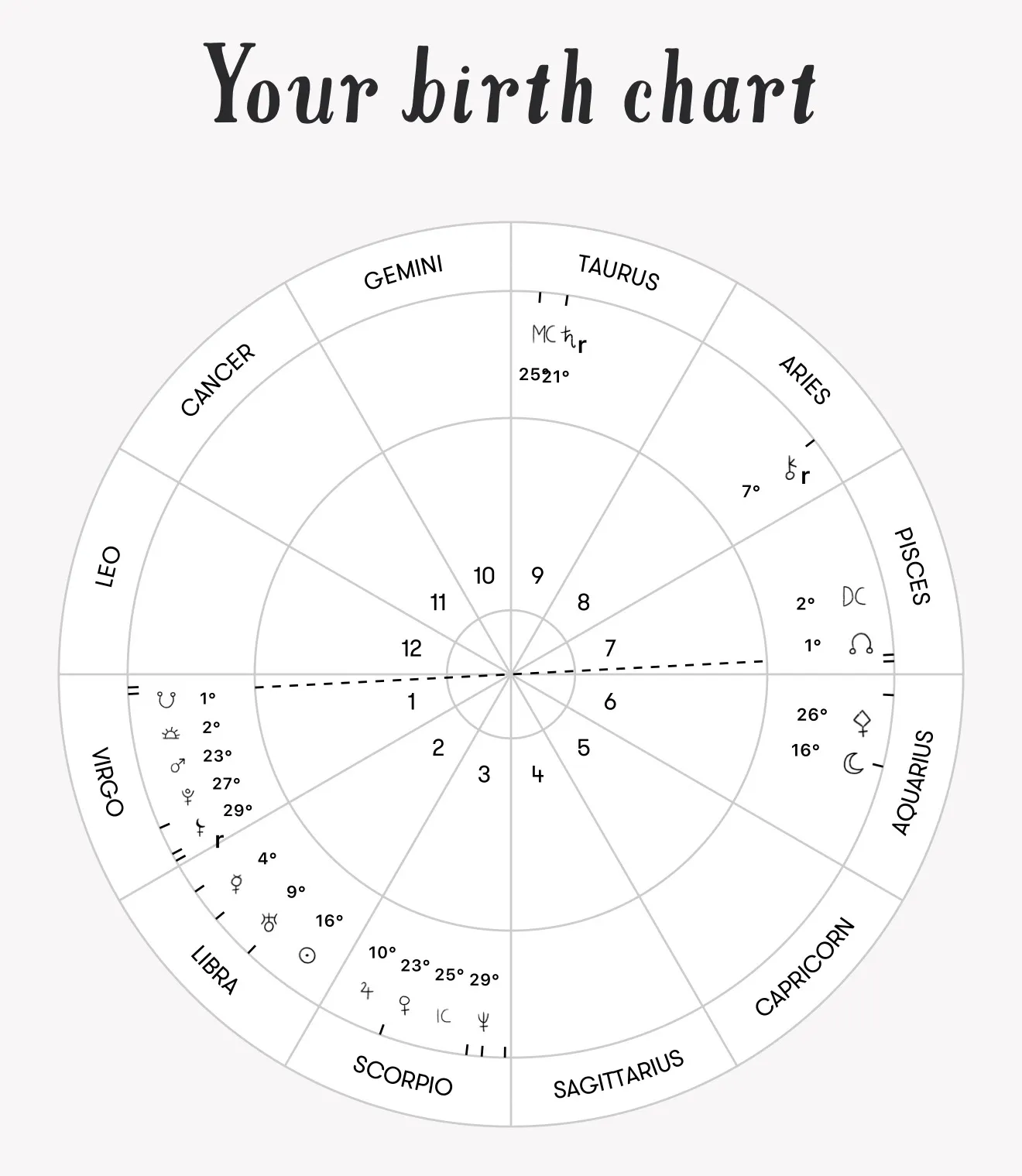
This was, Dixon reflected, the most accurate sentence anyone had ever said about him. He was absolutely working toward something. He had been working toward something his entire adult life with the steady conviction of a man who could see the destination clearly but kept discovering that the map was in a language he didn’t speak. He just kept changing his mind about what the something was, which made the working-toward-it part feel less like a journey and more like an ambitious dog chasing several cars at once.
Eighty-five minutes in. His back was stiff from sitting. His office chair had been purchased with the confidence of a man who believed that spending real money on ergonomics would solve the problem of having a human spine, and it had not. He privately preferred his previous chair, which was a two-hundred-dollar thing from a regular office store, unremarkable in every way, and which had supported his back with the quiet competence of a piece of furniture that didn’t know it was supposed to be special. The new chair had adjustable lumbar support and a tilt mechanism with seven settings, each of which produced a slightly different variety of discomfort. He kept it because replacing his new expensive chair with his old cheap one felt like an admission of failure, and also because the receipt was in a drawer somewhere and looking at it would not make him feel very good about his choices.
Through the window behind his monitor, the backyard sprawled in its full suburban enormity. The two creeks. The three-quarters of an acre. The grass that would need mowing on Saturday regardless of what the planets were doing, because the grass did not care about his chart.
He was looking at the yard and thinking about the mowing and vaguely wondering if Mama Honu could see in his chart whether he was destined to push that mower across this particular grass forever. He wondered whether there was a planetary aspect for “man who could hire someone but doesn’t,” when she said, almost without taking a breath from whatever she’d been saying about his North Node:
“And your life is going to completely change in 2024.”
Then she moved on.
Dixon’s brain froze, buffered, and then replayed the sentence to make sure it had heard it correctly, like a DVR catching up to live television.
“Hold on,” he said with genuine concern. “Can we reel that back?”
Mama Honu looked at him with the patience of a woman who had delivered this kind of news before and knew exactly what was coming next.
“What do you mean, my life is going to change? How big of a change are we talking here?” he asked solemnly.
“Big,” she said.
“Can I miss this?” he asked with a growing sense of panic.
“No,” she said flatly.
“Is this like a once-in-a-decade change, or maybe like a once-in-a-lifetime change?” no fully starting to freak out.
She regarded him with the particular steadiness of someone who is about to say something they know the other person isn’t ready to hear and has made peace with saying it anyway. Dixon recognized this look. He had used it professionally. It was the look you gave a client when they asked if the creative concept would work as-is and it would not, in fact, work as-is, and what was needed was not a tweak but a fundamental reimagining that would cost twice as much and take three times as long and be, in the end, the only version anyone remembered.
“This is the type of change a soul might go through many reemergences in this world without experiencing,” she said. “It’s a complete change in direction of your life. Once you have gone through this change, nothing will look the same as it does now.” She said this and then paused and waited for Dixon to catch up.
Dixon looked at his monitor. Then at the shelves. Then at the sky out the window. Then at the yard. Eventually he caught up.
“I’m going to need more on this,” he said, which was the Virgo Rising talking. Give me detail, give me a timeline, give me something I can sketch out on a napkin.
“It will start subtly,” she said. “In early 2023, things will begin to shift. You’ll feel like you need a change, but don’t do anything. Just be patient. The universe will take care of it. Once the change starts, you won’t be able to miss it or stop it. The first phase will wrap up by the middle of 2024.”
“The first phase?” he said desperately. The panic was started to become acute.
“Yes. This is just the beginning. There will be more. Probably until early 2026. Then you’ll mostly know where you’re going.” Again she gazed pleasantly into the camera after she finished speaking.
Dixon considered this: that would be nearly three years. Nearly three years of soul-level change that a typical person might go through multiple lifetimes without experiencing. Dixon was sitting in an overpriced chair that he liked less than its predecessor, in a room with shelves that were too white, looking at a yard he mowed himself with an electric push mower because the planet deserved better, in a house that contained everything he had built over the last several years of his life, and a woman in Hawaii was telling him — calmly, without drama, as if she were reading a weather forecast for a storm she could see on the radar but that hadn’t arrived yet — that none of it would survive.
“OK,” she said, with the cheerful finality of a person who has just delivered a prophecy and considers the matter settled and in a very unironic way coming from a person that seemed not to care about keeping track of time at all: “Well, we’re out of time. It’s been so nice talking to you. Aloha!”
The Zoom window closed. The screen returned to his desktop wallpaper, which was a photograph of a sunset he’d taken on Maui. Hawaii again, always Hawaii, orbiting his life like a slow and fragrant planet. Dixon sat in his office and listened to the silence of a weekday afternoon in suburban Atlanta. The air conditioning hummed. Somewhere outside, a lawn service truck, someone else’s lawn service, rumbled along through the neighborhood.
He looked around the office. He looked at the shelves and the awards. He looked at the brass telescope that didn’t work and the storyboards pinned to the far wall. He looked out at the view of the yard. He thought about the spice rack in the kitchen and all of the other things in the house.
He could not imagine any of this changing.
That was the thing. It was not that he didn’t believe the astrologer. He believed her the way you believe a doctor who tells you something you don’t want to hear. He believed her completely, instantly, and in a part of his brain that he immediately locked the door on and decided to revisit later, sometime much later, or possibly never. Somehow he believed her. He just couldn’t see it. And Dixon’s entire professional life was built on the ability to see things that didn’t exist yet. His gift was to stand in an empty room and feel the finished experience as if it were already happening around him. He could see a gala that wouldn’t happen for nine months. He could see a concert that was still a sketch on a napkin. He could see the face of a person in an audience who didn’t know yet that the hallway they were about to walk through would change from cool to warm light in a way that would make them feel, for reasons they’d never identify, that they had arrived somewhere that mattered.
He could see all of that. But he could not see his own life changing.
The shelves were full. The awards were mounted. The old chair was in the guest room now, exiled to a corner where it supported a stack of magazines and a jacket he kept meaning to take to the dry cleaner. The lawn mower was in the garage, batteries on the charger. People whose lives were about to completely change didn’t have electric lawn mowers charging in the garage and storyboards pinned to walls with color-coded pushpins. People whose lives were about to completely change were people in movies, people in memoirs, people who had not carefully organized their spice rack by the letters of the alphabet and their creative process by emotional arc.
He stood up, not dramatically, not with purpose, just the way a man stands after a ninety-minute Zoom call. In other words, he stood stiffly. He walked to the window. The backyard was doing what it always did, being green, being large, being a space that required maintenance he performed without joy but with a diligence that he sometimes mistook for satisfaction and was beginning to suspect was something closer to habit. A cardinal landed on the fence and regarded him with the absolute indifference of an animal that does not know or care that its feathers are the precise red that Dixon would have chosen if someone had asked him to design a bird for a Southern backyard in afternoon light. No one had asked him. The cardinal had designed itself, or God had, or evolution had, or some combination of forces that did not consult a creative director, and it was perfect anyway.
The cardinal left. Dixon stayed.
OK, he thought, in the quiet of his own excellent mind. So I’m probably going to get a new job.
He nodded to himself. That made sense. He’d been at the company for a while. The work was still good. He was still good at it, still the person they called when a concept wasn’t landing and they needed someone to walk into the room and say “the problem is that the entrance sequence doesn’t breathe, give it ten more seconds and a scent cue and it’ll work,” and then it would work, and everyone would nod as if they’d known all along. But the thrill was dimmer. The storyboards came easier, which should have felt like mastery but felt instead like repetition. Yes, a new job, maybe a bigger role, maybe something that would require him to see in a direction he hadn’t looked yet. That would qualify as a change, wouldn’t it? A soul-level, once-in-many-lifetimes change might be a slight overstatement, but astrologers were in the business of emphasis. You didn’t pay for “things will be roughly the same but slightly different.” You paid for celestial drama. And Mama Honu had delivered celestial drama with the casual efficiency of a woman handing you a menu in a restaurant where every dish would rearrange your understanding of food and she already knew what you were going to order.
A new job. Yes. Maybe a new city, even. Although the house was here, and the yard was here, and she was here. Magnolia and Buddy, the dogs, were here. They all lived here, together. How could all of that change?
He might also get a new haircut. He’d been thinking about it.
He walked back to his desk, sat down in his expensive uncomfortable chair and pulled up the storyboard file he’d been working on before the call. He was working on an expensive event for famous people. Dixon’s job was to design a journey from arrival to seat to presentation, a sequence of spaces and sensations that would make each person feel, for the duration of the evening at least, that they were inside something extraordinary rather than merely attending something expensive. This was a distinction that most people couldn’t articulate and that Dixon could feel in his nervous system. Extraordinary and expensive shared a zip code but lived in different houses, and his job was to make sure the audience ended up at the right address.
He opened the file. He looked at the frames. He adjusted the lighting notes on frame twenty-six, He wrote: “warmer, more amber, not honey, think late afternoon in October, the kind of light that makes people look like better versions of themselves without knowing why”. And he felt, briefly, the familiar satisfaction of seeing the thing that wasn’t there yet, the experience that existed only in his mind and on this screen and would, in a few months, exist for a room full of people who would never know his name but would remember how the evening felt.
This was enough. This had always been enough.
The cursor blinked. The air conditioning hummed. The sun hit the white shelves and the room glowed like always, too bright, relentlessly bright, every object visible and accounted for and exactly where he had put it.
In thirteen months, those shelves would be empty. The awards taken down, the books boxed up, the brass telescope wrapped in newspaper and sold to a stranger for eight dollars at an estate sale that Dixon would not attend because he would be on the far side of the country, wearing a headset, producing a show while his home was being sorted into price stickers by a woman named Brenda from Marietta who would describe the telescope to a potential buyer as “nautical-themed décor, very cute.”
The good chair, the two-hundred-dollar one, the one in the guest room under the magazines, would be the one he’d miss. The expensive one would sell for a fraction of what he’d paid and he would feel nothing about this, which would tell him something about things, money and the relationship he had with both of them.
But Dixon didn’t know any of this yet. He sat in the wrong chair and looked at the storyboard and adjusted the lighting note on frame twenty-seven. He wrote: “cooler now, a shift, the audience should feel the temperature change before they understand it” and the sun moved a degree across the white shelves, and the afternoon settled into the house with the slow, heavy certainty of a Georgia day that has decided it will last forever.
The future sat in the corner of the office like a quiet dog waiting to be noticed. Patient. Enormous. Not going anywhere.
Later, weeks later, maybe months, he would think about that afternoon and try to identify the moment when he should have known. When the feeling in his chest had actually been the first tremor of everything shifting.
He would not be able to find it. The moment didn’t announce itself. It never does.
The shelves glowed. The yard waited. The lawn mower sat in the garage, patient as a prophecy, ready for a Saturday that would come fewer times than he thought.
He worked on the storyboard. He adjusted the light in frame twenty-eight. He felt, for reasons he could not name, that it was very important to get the feeling right, the exact feeling a stranger would have in a room that didn’t exist yet, on a night that hadn’t happened yet, in a life that was, without his knowledge or consent, already in the process of becoming someone else’s.
He was correct about this, though not in the way he imagined.
He was always correct about the feeling. That was his gift. He just couldn’t do it for himself.
Published from the road in British Columbia, Canada.
Enjoying the story? Support the work →
All text, images and music copyright (2026), Slightly Moody Creative LLC and Joe English.